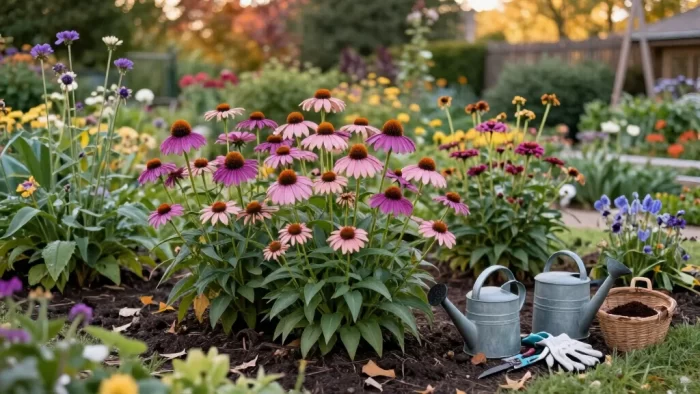
September is when I start paying closer attention to my coneflowers instead of rushing to cut everything back.
I’ve learned that Things to Do for Your Coneflowers in September are surprisingly simple, but timing matters if you want healthy plants and plenty of interest later in the season.
I usually focus on checking faded blooms, watching for pests or disease, keeping the soil from drying out completely, and leaving some seed heads for birds.
A little coneflower care, thoughtful fall garden maintenance, and avoiding unnecessary pruning can help these hardy perennials transition into autumn beautifully. Sometimes, doing less is exactly what the garden needs.
- 1. Give Every Plant a Slow September Inspection
- 2. Deadhead Selectively, but Save the Best Seed Heads
- 3. Water Deeply When September Rain Falls Short
- Water Deeply When September Rain Falls Short
- Rocky Mountain Goods Soaker Hose – Heavy duty rubber – Saves 70% water -…
- 30 Inch Soft Rain Watering Wand 600003, Gentle Shower Spray, Heavy Duty …
- Dramm Rain Wand with One Touch Thumb Valve – Gentle Full Flow Shower Hea…
- STYDDI Soaker Hose, 1/2" x 25 FT Round Rubber Garden Soaker Hose, Heavy …
- Reotemp 15 Inch Garden and Compost Moisture Meter, Garden Tool Ideal for…
- Water Deeply When September Rain Falls Short
- 4. Add a Thin Layer of Compost Without Overfeeding
- 5. Refresh the Mulch, but Keep the Crowns Clear
- 6. Stake Floppy Stems Before Rain Pulls Them Down
- 7. Divide or Move Crowded Coneflowers Carefully
- Divide or Move Crowded Coneflowers Carefully
- Perennial Fork with Short T-Handle – Hand Garden Fork for Digging, Divid…
- DeWit Perennial Fork with Short Handle
- Keyfit Tools Spartan Garden Knife Perennial Splitter Divider Super Sharp…
- Garden Hand Fork, 22.6 In Long Handle Stainless Steel Weed Fork
- Dramm Premium High Grade Long Spout Watering Can, for Indoor/Outdoor Hou…
- Divide or Move Crowded Coneflowers Carefully
- 8. Remove Diseased Debris and Check for Pests
- Remove Diseased Debris and Check for Pests
- Forged Steel Bypass Pruning Shears, 1" Cut Capacity Garden Clippers
- Non-Stick Softgrip Micro-Tip Pruning Snip, 2 Pack
- Corona Tools DualCUT Forged Steel Bypass Hand Pruner – 1″ Cutting Capaci…
- MaxTite 70% Isopropyl Alcohol (Half-Gallon (2 Pack, 32 fl oz) – Includes…
- Garden Hose Nozzle, Heavy Duty Metal Spray Nozzle | Upgraded, High Press…
- You Might Also Like
- Remove Diseased Debris and Check for Pests
- 9. Leave a Little Winter Habitat Behind
- Leave a Little Winter Habitat Behind
- Corona BP 3180D Forged Classic Bypass Pruner with 1" Cutting Capacity, 1…
- Felco F2 Pruning Shears – 9.25" Swiss-Made Garden Clippers for Professio…
- PowerGear2 Bypass Pruning Shears, 3/4" Cut Capacity Garden Clippers
- Corona Tools DualCUT Forged Steel Bypass Hand Pruner – 1″ Cutting Capaci…
- OneClick Small Fan Broom, for Flower Beds and Narrow Spaces
- Key Takeaways
- Leave a Little Winter Habitat Behind
- Conclusion: Let September Be Gentle on Your Coneflowers
- Frequently Asked Questions
1. Give Every Plant a Slow September Inspection

Walk around your coneflower bed before pruning, watering, or feeding. Look past fading blooms and inspect stems, leaves, crowns, and soil. Healthy plants should have firm green growth, while spreading spots, gray mildew, or sudden wilting need attention.
Check the soil two inches down before watering, especially beneath mulch or nearby trees. Note which plants need support, which need cleanup, and which are simply finishing their season.
Check these details first:
– Inspect crowns for buried stems or wet, rotting mulch
– Look beneath leaves for aphids, beetles, webbing, or eggs
– Remove only leaves with spreading disease or serious damage
This calm review prevents unnecessary work and guides every later September task.
2. Deadhead Selectively, but Save the Best Seed Heads
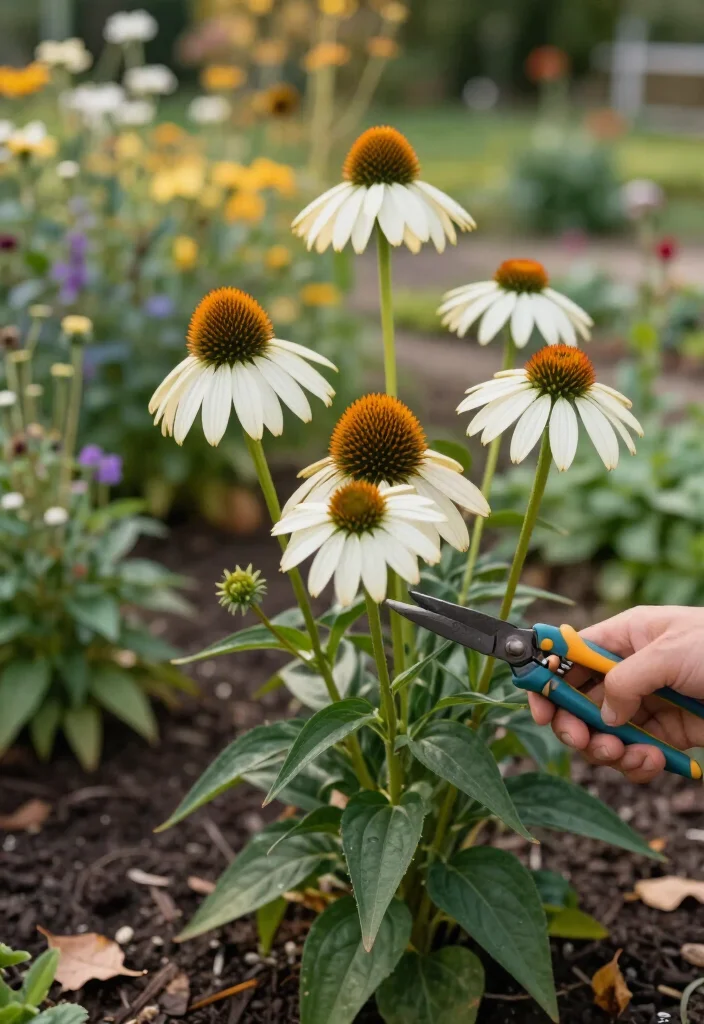
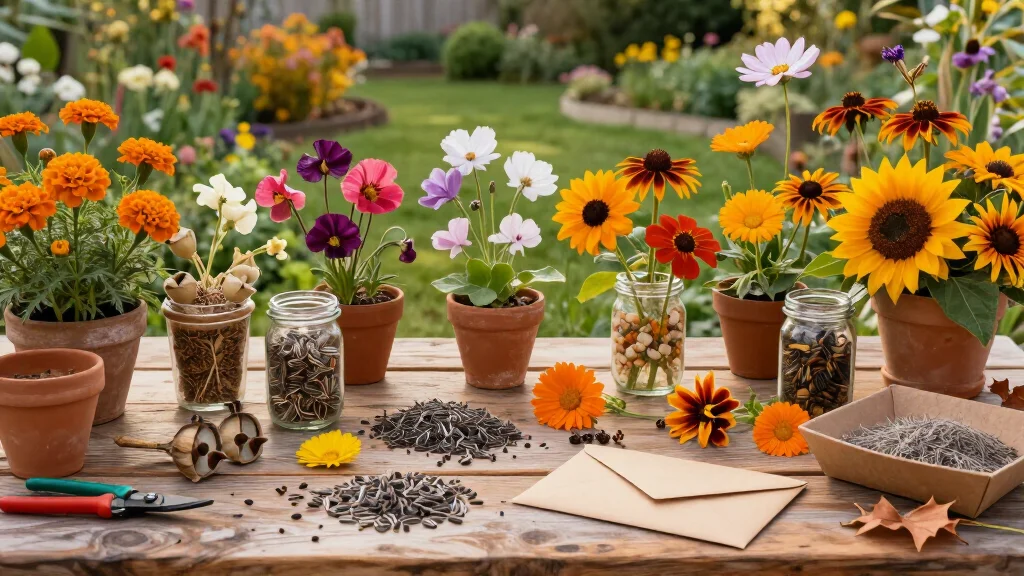
September deadheading should tidy the bed without removing every source of winter food. Cut faded blooms when brown petals and dry cones no longer add color, but leave strong seed heads for goldfinches. A few upright cones also bring warm texture beside grasses and asters.
Use sharp, clean shears and cut just above healthy leaves or a side branch. Remove more blooms when you want extra flowers, or leave most heads when wildlife matters more.
Choose blooms carefully:
– Leave dry, firm cones packed with accessible seeds
– Cut collapsing flowers that block paths or nearby plants
– Remove slimy, rotten blooms before decay spreads
Selective pruning keeps the garden neat while preserving food, structure, and natural interest.
3. Water Deeply When September Rain Falls Short
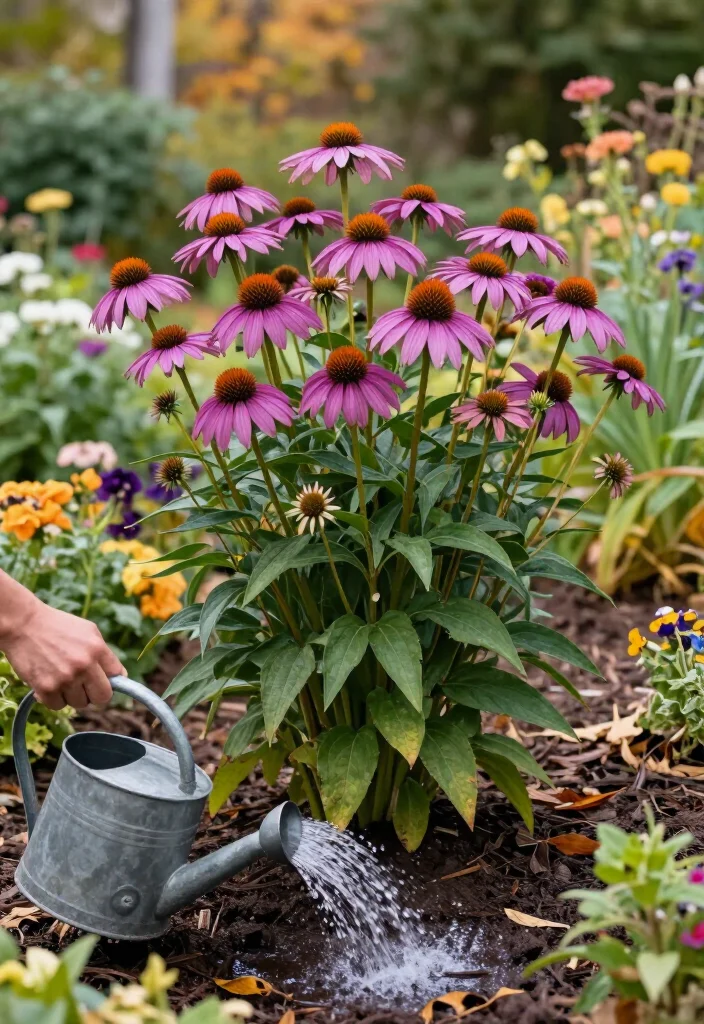
Cool nights can hide dry soil beneath coneflowers. Check two to three inches down, then water when that layer feels dry. Deep moisture helps roots stay strong through late fall, especially in sandy beds or beneath thirsty trees.
Soak slowly at the soil line until water reaches six to eight inches deep. Morning watering is best because splashed leaves dry quickly, reducing fungal risk.
Water with care:
– Use a soaker hose or gentle wand for steady moisture
– Check new divisions more often than established clumps
– Keep mulch nearby, but never let soil remain soggy
Deep, occasional watering builds stronger roots than daily surface sprinkling and keeps plants ready for changing weather.
Water Deeply When September Rain Falls Short
Editor’s Choice




4. Add a Thin Layer of Compost Without Overfeeding
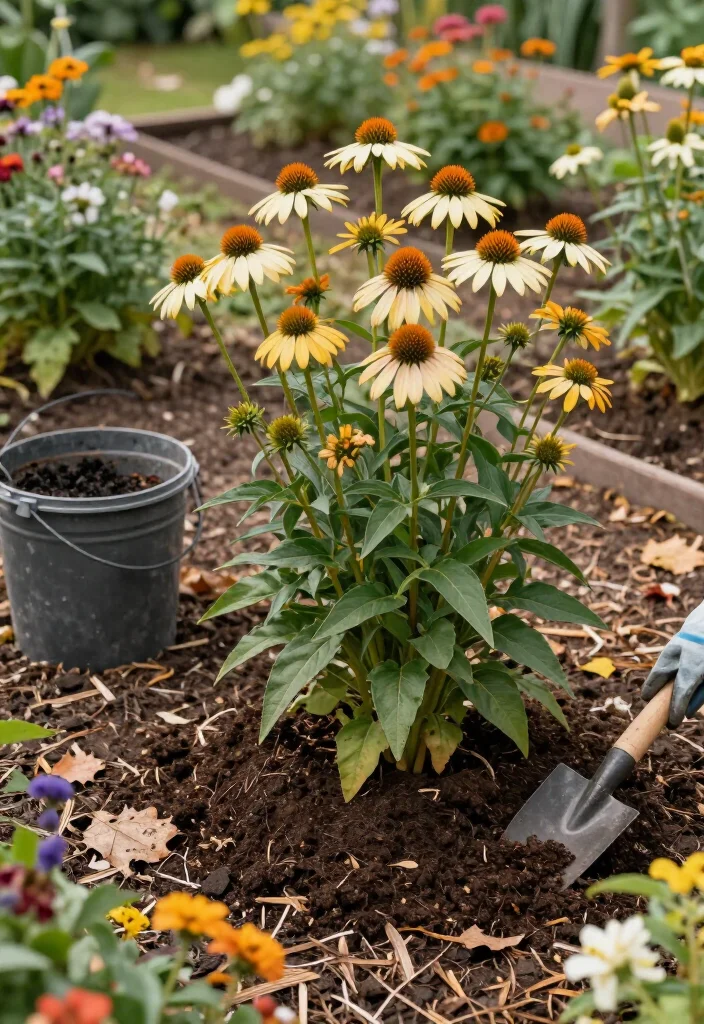
Coneflowers rarely need strong fertilizer in September. A thin layer of dark, crumbly compost improves soil without forcing soft new growth before frost. This gentle feeding also helps sandy or tired beds hold moisture more evenly.
Spread half an inch to one inch around each plant, leaving the crown and stems uncovered. Skip compost when plants already grow vigorously in rich soil, and consider a soil test before adding nutrients.
Feed the bed wisely:
– Choose finished compost instead of fresh manure
– Keep compost several inches away from crowns
– Water gently afterward when surrounding soil feels dry
Slow soil improvement supports future blooms without creating floppy stems or tender growth.
Add a Thin Layer of Compost Without Overfeeding
Editor’s Choice



5. Refresh the Mulch, but Keep the Crowns Clear
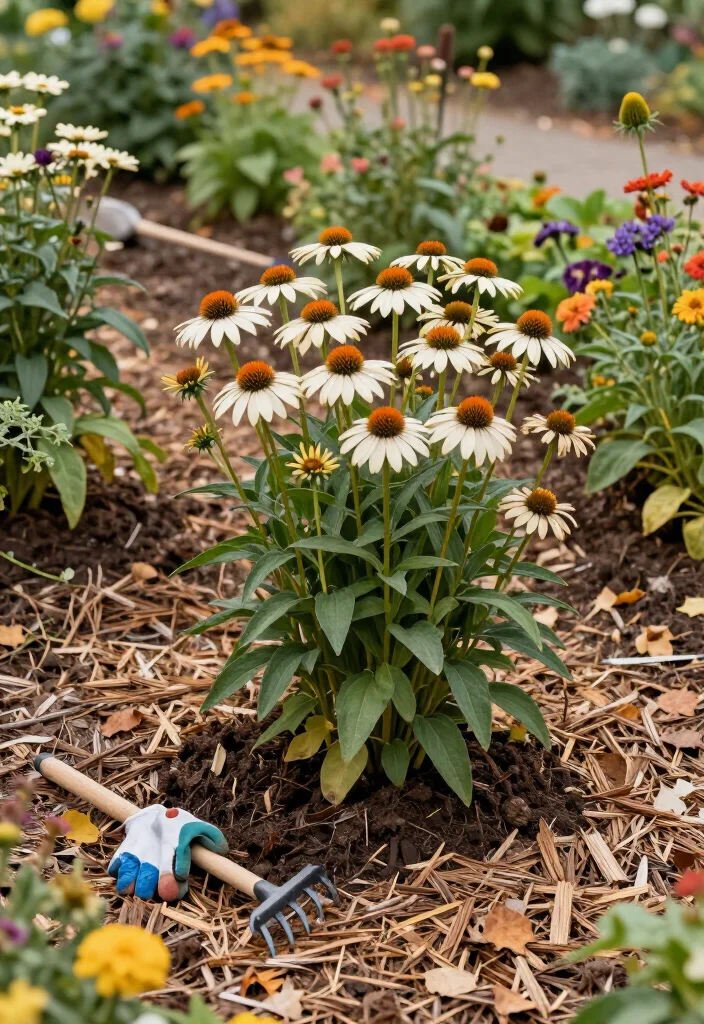
Fresh mulch helps September coneflowers hold moisture and handle shifting temperatures. First remove weeds, wet leaves, and compacted debris from around the stems. Then add two to three inches of shredded bark, chopped leaves, pine straw, or leaf mold.
Leave a bare ring around every crown so air can move freely. Check soil beneath the mulch before watering, since the surface may look damp while roots remain dry.
Avoid common mulch problems:
– Keep mulch two inches away from crowns and stems
– Use loose, finished material that smells earthy
– Remove matted leaves after heavy autumn rain
Breathable mulch protects roots, limits weeds, and keeps the bed tidy without encouraging crown rot.
You might also like

6. Stake Floppy Stems Before Rain Pulls Them Down
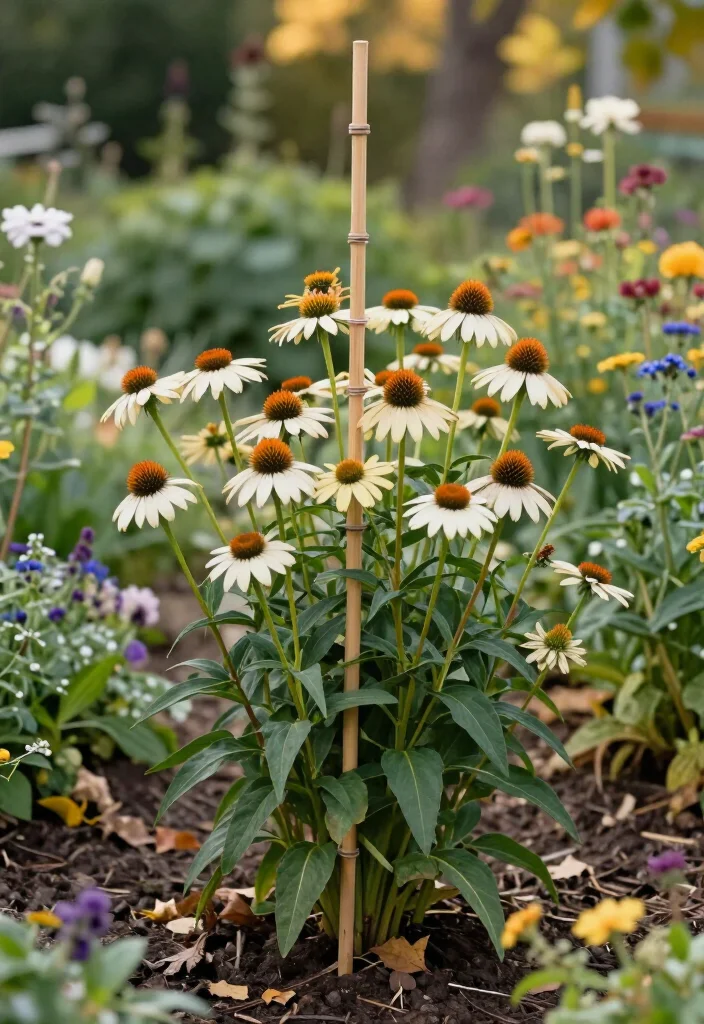
A gently bending coneflower may look natural, but fallen stems can cover paths and smaller plants. Add support when heavy seed heads, wind, or rain repeatedly pulls stems down. Choose bamboo, a natural twig, or a low metal ring that blends with the garden.
Place support behind the clump and use soft fabric ties in a loose figure-eight. Check whether shade, rich soil, or excess fertilizer caused weak growth before adding more stakes.
Support stems gently:
– Tie groups loosely instead of binding every stem
– Cut broken stems cleanly below damaged sections
– Avoid bright plastic ties that pinch growing tissue
Well-placed support protects the crown, keeps paths open, and preserves a relaxed autumn shape.
7. Divide or Move Crowded Coneflowers Carefully
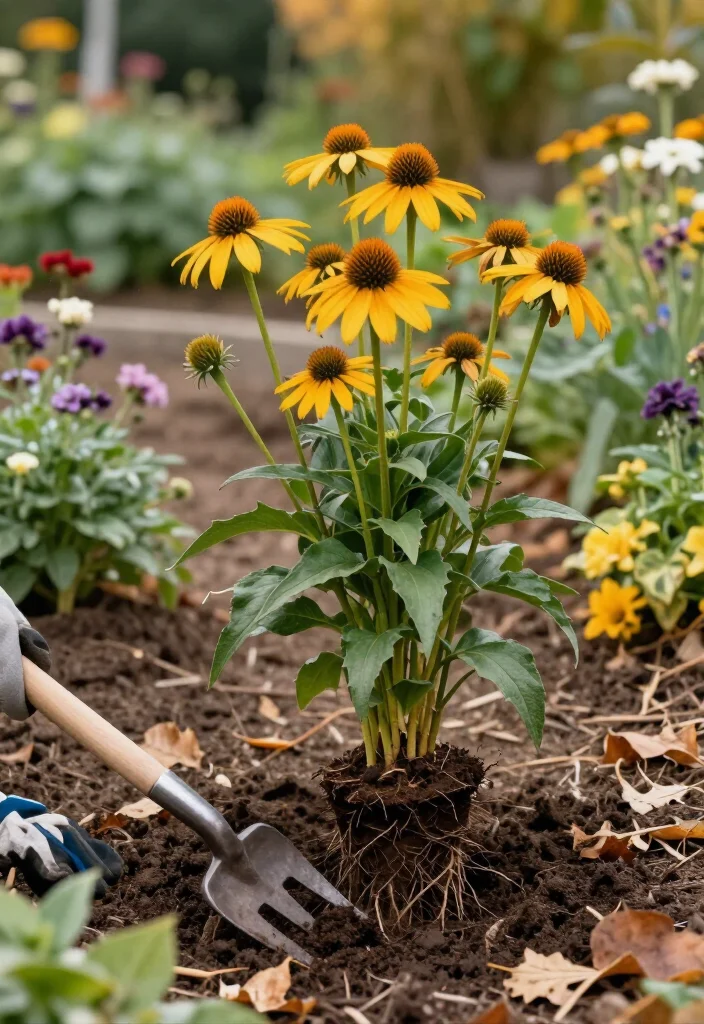
Divide coneflowers in September only when mild weather remains and the soil drains well. Mature clumps with a dead center or crowded edges are good candidates. Water the plant the day before, then lift it carefully with a garden fork.
Separate two or three strong sections instead of making tiny pieces. Replant each division at its original depth, with the crown level with the soil, and water slowly afterward.
Give divisions a strong start:
– Keep several healthy shoots and generous living roots
– Prepare planting holes before lifting the parent clump
– Add light mulch while keeping crowns completely uncovered
Patience matters after transplanting. Steady moisture and gentle care help new divisions settle before winter.
Divide or Move Crowded Coneflowers Carefully
Editor’s Choice


8. Remove Diseased Debris and Check for Pests
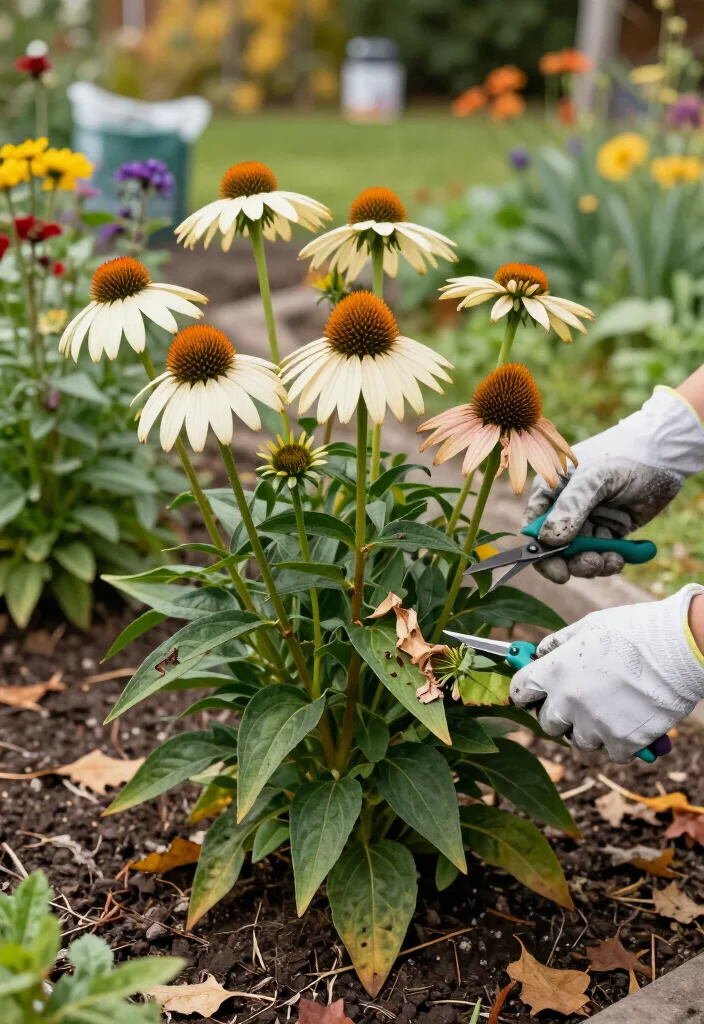
September cleanup should target real problems, not every yellow leaf. Remove foliage with spreading black spots, powdery mildew, soft crowns, or collapsing stems. Healthy stems and a little insect nibbling can remain while the plant stores energy for winter.
Cut diseased material into a bag, never onto the soil or compost pile. Wipe shears with rubbing alcohol between cuts, and inspect leaf undersides for aphids, beetles, and caterpillars.
Handle problems carefully:
– Improve airflow by thinning crowded stems and weeds
– Knock aphids away with a gentle water stream
– Avoid broad sprays while bees visit flowers
Clean tools, dry foliage, and sensible pruning protect plants without harming helpful garden insects.
Remove Diseased Debris and Check for Pests
Editor’s Choice


You Might Also Like
9. Leave a Little Winter Habitat Behind
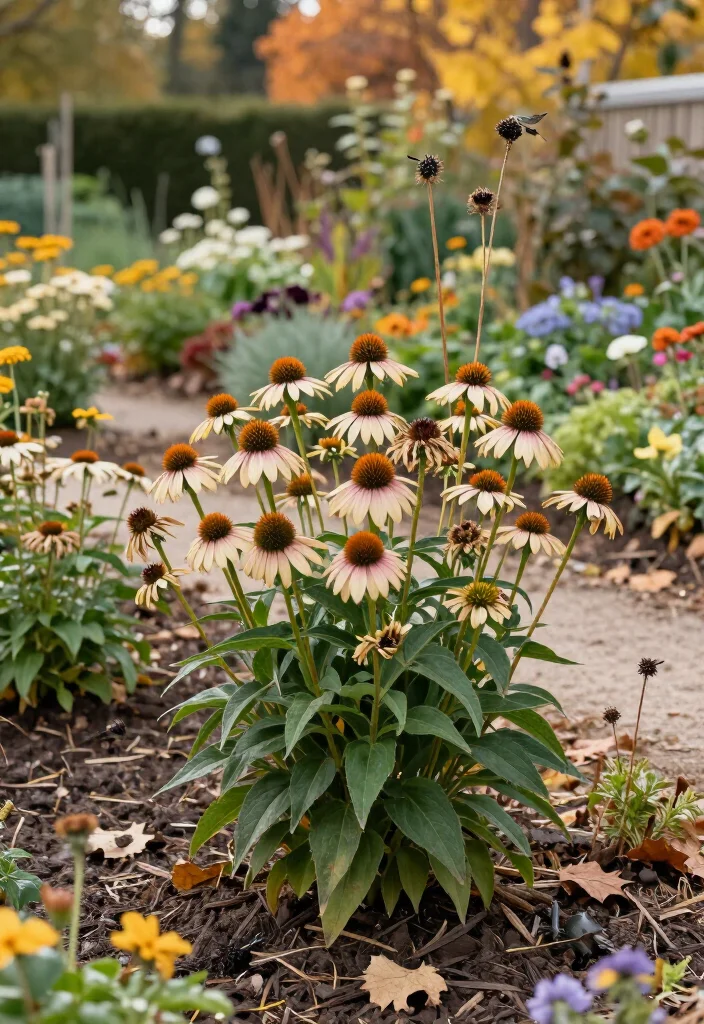
Do not cut every coneflower to the ground in September. Dry stems shelter insects, catch snow, and provide seeds for goldfinches when summer food fades. Leave upright groups where they add texture beside ornamental grasses, sedum, and asters.
Remove only diseased, broken, or unsafe stems, especially those blocking paths. Delay major cutting until late winter or early spring unless poor weather or disease requires earlier cleanup.
Keep useful winter cover:
– Leave firm seed heads where birds can reach them
– Retain sturdy hollow stems for overwintering insects
– Clear wet debris that mats tightly against crowns
This lighter approach supports wildlife, protects garden character, and makes spring cleanup more purposeful.
Leave a Little Winter Habitat Behind
Editor’s Choice



Conclusion: Let September Be Gentle on Your Coneflowers
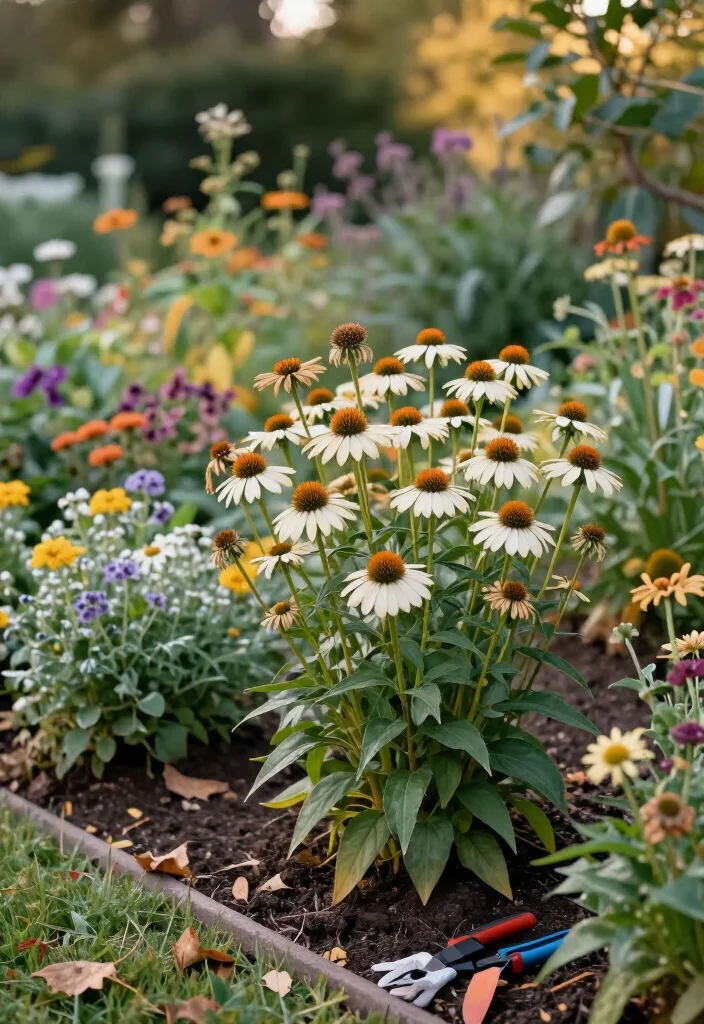
Coneflower care in September is a steady mix of noticing, helping, and leaving well enough alone. Water dry plants, refresh the soil, support weak stems, remove real problems, and keep a few seed heads standing for birds and winter interest. With these simple fall gardening habits, your perennial flowers can finish the season beautifully and return ready for another round of color next year.
Note: We aim to provide accurate product links, but some may occasionally expire or become unavailable. If this happens, please search directly on Amazon for the product or a suitable alternative.
This post contains Amazon affiliate links, meaning we may earn a small commission if you purchase through our links, at no extra cost to you.
Frequently Asked Questions
Q. Should I cut back coneflowers in September?
Not necessarily. If the plants are healthy, you can leave spent flower heads standing for birds and winter interest. Cut back diseased or damaged growth when necessary.
Q. Should I deadhead coneflowers in September?
You can deadhead them if you want to encourage additional blooms and maintain a tidier appearance. Leave some mature seed heads if you want to provide food for birds or collect seeds.
Q. How often should I water coneflowers in September?
Check the soil and water when it becomes noticeably dry, especially during unusually hot or dry weather. Established coneflowers are relatively drought tolerant once their roots are developed.
Q. Should I fertilize coneflowers in September?
Usually, heavy fertilizing late in the growing season isn’t necessary. Excess fertilizer can encourage soft new growth when the plant should be preparing for dormancy. Soil conditions and plant health should guide any feeding.
Q. Can I collect coneflower seeds in September?
Yes, if the seed heads have matured and dried. Allow them to become brown and dry, then collect and store the seeds in a cool, dry place. Remember that seeds from hybrid varieties may not produce plants identical to the parent.
