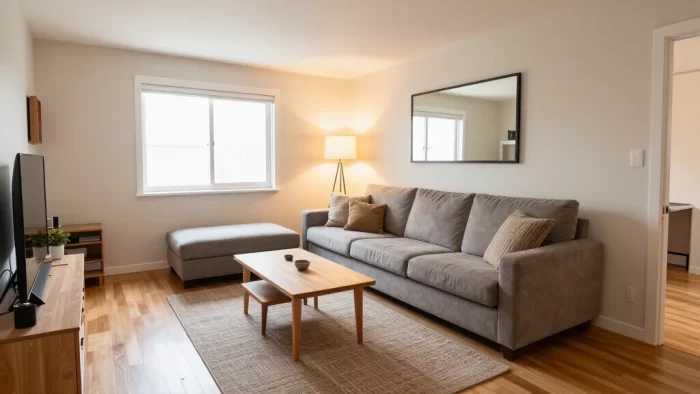
That beautiful sofa can look perfect in the showroom and completely different once it comes through your front door.
I’ve seen how a Sofa Too Big for Your Room can make even a nicely decorated space feel cramped, leaving little room to walk, relax, or enjoy the rest of the furniture.
The good news is that the problem isn’t always the sofa itself. Measuring the room, improving furniture placement, choosing the right living room layout, and keeping enough walking space can make a surprising difference.
Before buying a replacement, I’d first try a few layout changes—you may be able to make the room feel comfortable again without spending more money.
- 1. Measure First, Then Make a Tiny Floor Plan
- 2. Pull the Sofa Away From the Wall
- 3. Float the Seating to Create a Real Path
- 4. Swap Visual Bulk for Slim Sofa-Side Pieces
- 5. Trade One Big Coffee Table for Nesting Tables
- 6. Keep Furniture Low to Protect Sightlines
- Keep Furniture Low to Protect Sightlines
- Modway Render 48" Mid-Century Modern Low Profile Media Console TV Stand,…
- Modway Render Mid-Century Modern Low Profile Corner Media TV Stand in Wa…
- Small Coffee Table, Low Table with Solid Wood Legs, 23.6" Mini Oval Acce…
- ALASDO Ottoman Storage Ottoman Footrest Stool Foldable Foot Rest Footsto…
- Oval Coffee Table for Living Room, Natural, 19.7"D x 31.5"W x 16"H
- Keep Furniture Low to Protect Sightlines
- Dimensions & Size Guide
- 7. Let the Rug Connect the Seating Instead of Shrinking It
- Let the Rug Connect the Seating Instead of Shri…
- Area Rug 8×10 – Montauk Collection – Large – Ivory & Grey, Handmade Flat…
- 6×9 Area Rugs Living Room Rug: Washable Modern Abstract Rugs Neutral Non…
- Adirondack Area Rug 6×9, Modern Beige & Slate ADR207B
- Washable Rug 8×10 Area Rugs: Modern Geometric Area Rug for Living Room N…
- Non Slip Rug Pad Gripper 8 x 10 Feet Extra Thick Pads for Any Hard Surfa…
- You might also like
- Let the Rug Connect the Seating Instead of Shri…
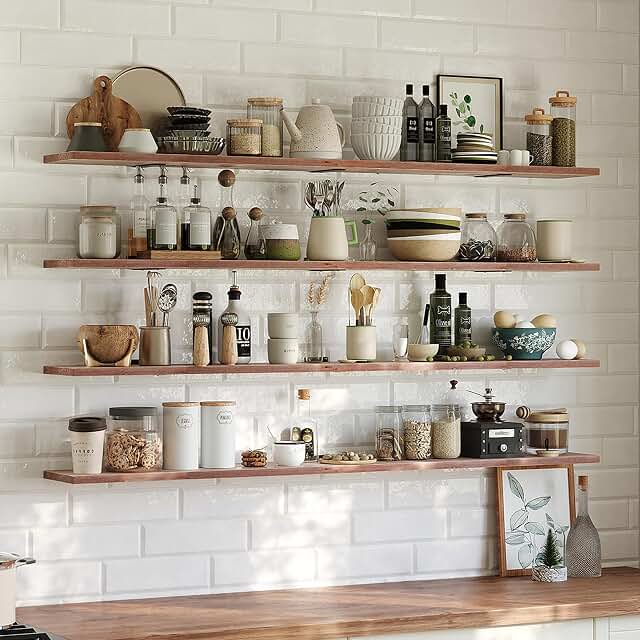
- 8. Move Storage Up the Wall
- Move Storage Up the Wall
- Floating TV Unit, 47'' Wall Mounted TV Cabinet, Floating Shelves with Do…
- 60 Inch Long Floating Shelves, Gray Wood Wall Shelf, Set of 4 | Solid pi…
- WOPITUES Long Wall Shelves 32″W x 8″D, Floating Book Shelves Max Load 65lbs
- Amazon Basics Wood Floating Wall Shelves, 3-Pack, White, 15.8" x 5" x 1.8"
- Americanflat 14" Floating Shelves for Wall – Set of 3 – Made of Engineer…
- Move Storage Up the Wall
- 9. Add a Mirror Where It Can Borrow Light
- 10. Choose an Ottoman That Works in Three Directions
- 11. Use a Narrow Console to Give the Sofa a Backdrop
- 12. Pick Furniture That Performs More Than One Job
- 13. Use One Calm Color Story to Reduce Visual Clutter
- Use One Calm Color Story to Reduce Visual Clutter
- Textured Neutral Throw Pillow Covers 20×20 Inch Set of 2 Soft Woven Chen…
- Set of 4 Soft Textured Throw Pillow Covers 18×18 Inch Cozy Decorative Fa…
- Abani Cream Area Rug – 5'x 8' – Living Room & Bedroom – Textured Weave D…
- MIULEE Cream Linen Curtains 52×84 Inch 2 Panels for Bedroom Living Room
- MIULEE Soft Decorative Chenille Pillow Covers Blue Series 18×18 Pack of 4
- Use One Calm Color Story to Reduce Visual Clutter
- 14. Hang Curtains High and Keep the Window Clear
- 15. Edit the Path Until Walking Feels Effortless
- Conclusion: Let the Sofa Stay, but Let the Room Breathe
- Frequently Asked Questions
1. Measure First, Then Make a Tiny Floor Plan
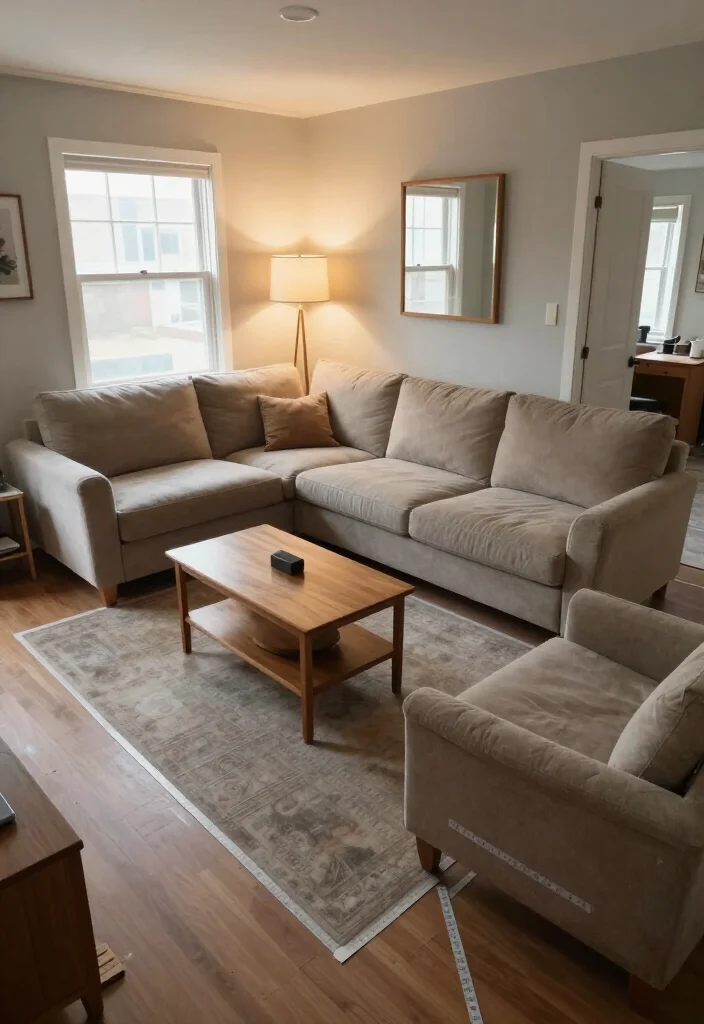
Measure-first planning keeps a large sofa from stealing usable space. Record wall lengths, door swings, windows, radiators, and the sofa’s deepest points, including arms and cushions. Mark the coffee table too, since it often causes cramped walkways.
Use painter’s tape to outline each piece directly on the floor. Leave about 30 inches for main paths and 16 inches between the sofa and table when possible. A graph-paper plan also helps you test layouts before lifting anything.
Try these planning steps:
– Measure the sofa, table, and chairs at their widest points
– Mark radiators, vents, outlets, and doors before arranging furniture
– Reserve one clear route from the entry to the seating
– Outline the rug before choosing its final size
A simple plan reveals which piece truly causes the crowding. It also creates a calmer room with easier movement.
2. Pull the Sofa Away From the Wall
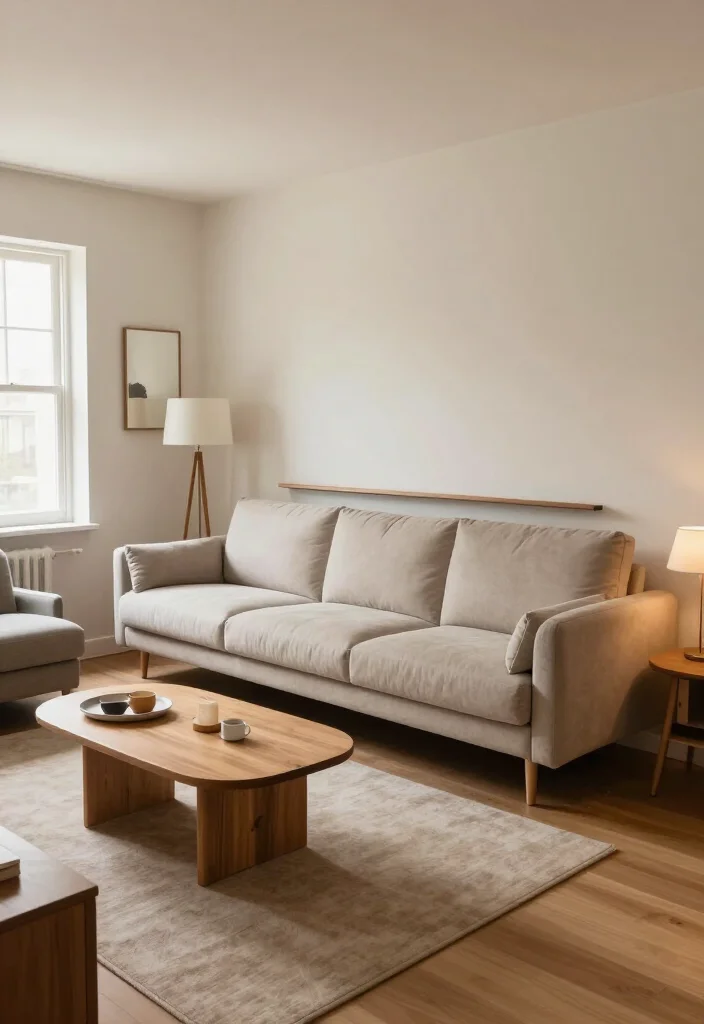
Pulling a large sofa slightly forward can make the room feel less crowded. A four-inch gap creates a slim shadow line, keeps the baseboard visible, and stops the couch from looking trapped against the wall. This small change adds breathing room without losing seating.
Start with a narrow gap and test the walkway for a day. You can use the space for a slim console or lamp cord, but leave it empty if the path feels tight. Angle the sofa gently toward a window, fireplace, or television when possible.
Try this wall-release method:
– Pull the sofa four inches forward before making larger changes
– Keep the visible sofa back tidy and free from clutter
– Add a narrow console only when walking remains comfortable
– Hide cords behind the sofa with a low-profile cable cover
This floating position makes the sofa feel intentional. Open space around it helps the entire room look lighter.
📹 Related Video: Create a Dynamic & Sophisticated Look, Pull sofas away from the wall
3. Float the Seating to Create a Real Path
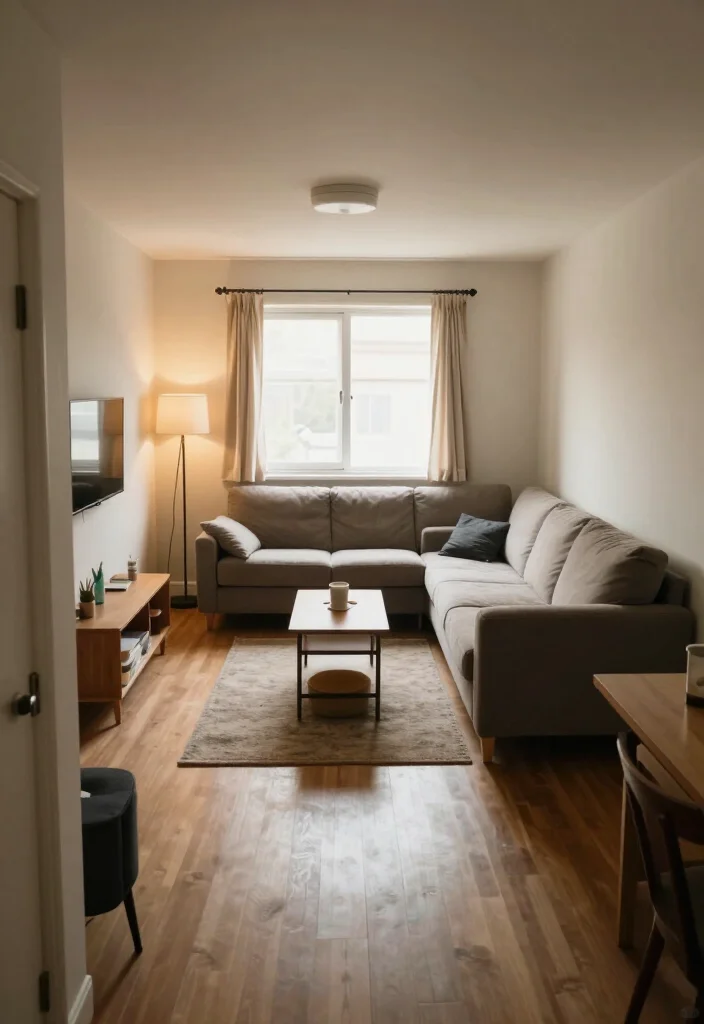
Floating the seating can make a deep sofa feel smaller and more purposeful. Place it slightly inside the room, then protect the route connecting the entry with the kitchen, window, or hallway. The open strip around one side creates visual layers and improves movement.
Let the sofa act as the main anchor instead of floating every piece. A compact chair, small table, and rug can form one simple seating group. Keep tall furniture away from the sofa’s back so light and sightlines continue through the room.
Build a floating layout with these steps:
– Identify the busiest walking route before placing the sofa
– Keep one side of the seating group open to the entry
– Connect the pieces with a medium-sized low-pile rug
– Keep baskets and plants outside the main walkway
A clear, straight path feels generous even when narrow. The open floor becomes part of the design.
Float the Seating to Create a Real Path
Editor’s Choice




4. Swap Visual Bulk for Slim Sofa-Side Pieces
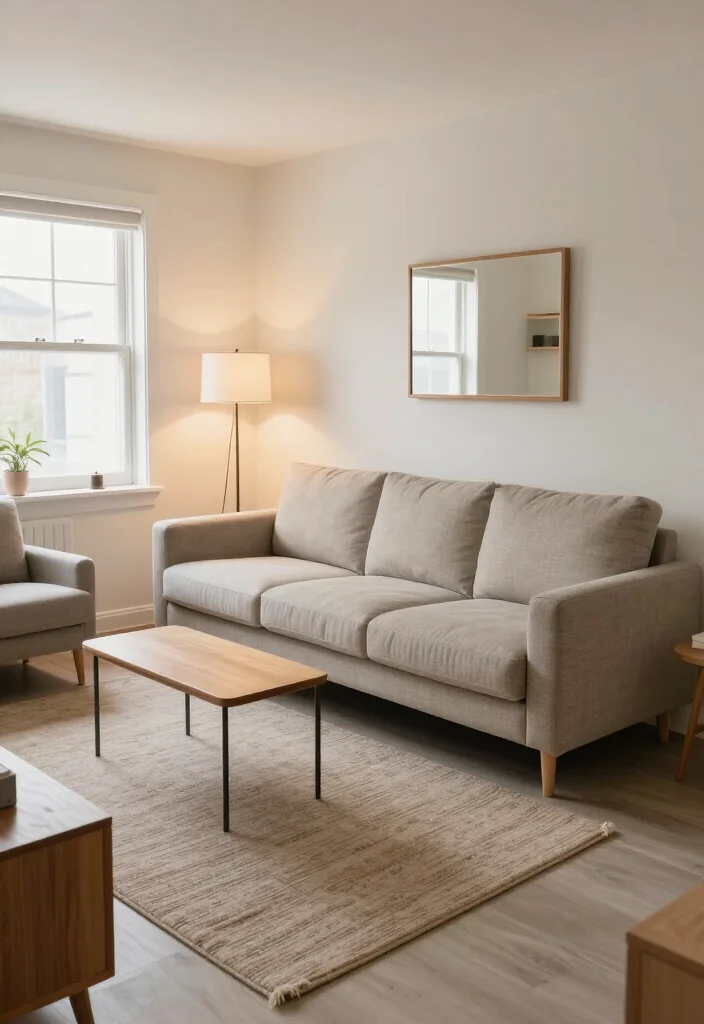
Slim supporting pieces can reduce the visual weight of an oversized sofa. Replace a chunky table, thick chair, or broad lamp with open legs, narrow frames, and lighter materials. Visible floor beneath each item helps the seating area feel less packed.
Choose a C-shaped table, a small drawer table, or a thin metal lamp. An open wood chair or woven seat can add comfort while allowing light to pass through. Keep useful storage, but avoid deep cabinets beside the sofa.
Use these lighter proportions:
– Pair the sofa with a table close to arm height
– Choose chairs with narrow arms and visible wooden legs
– Install lamps with small bases beside the seating
– Use one soft ottoman instead of several bulky pieces
Comfort does not require visual heaviness. Quiet side pieces let the sofa provide softness while the room keeps its breathing space.
5. Trade One Big Coffee Table for Nesting Tables
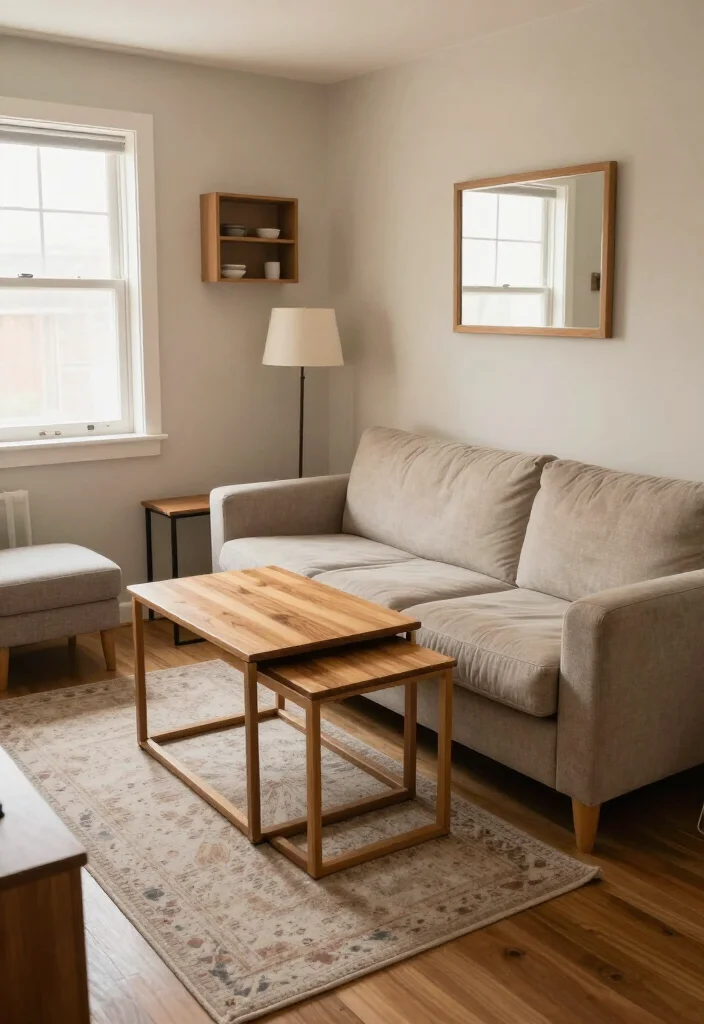
Nesting tables give you useful surfaces without permanently filling the center of the room. Keep the smaller table tucked beneath the larger one during quiet days, then pull it out for guests, snacks, or laptop use. Their flexible footprint works especially well beside a deep sofa or chaise.
Choose round tops, light wood, glass, or slim metal legs to preserve open sightlines. Keep about 16 inches between the larger table and sofa, while protecting the main walkway around the set.
Make nesting tables work harder:
– Place the larger table 16 to 18 inches from the sofa
– Pull the smaller table beside chairs when guests arrive
– Use a tray to group remotes, cups, and small items
– Slide both tables aside when cleaning or opening pathways
This flexible arrangement makes the center feel less fixed. You gain function without adding another bulky block.
6. Keep Furniture Low to Protect Sightlines
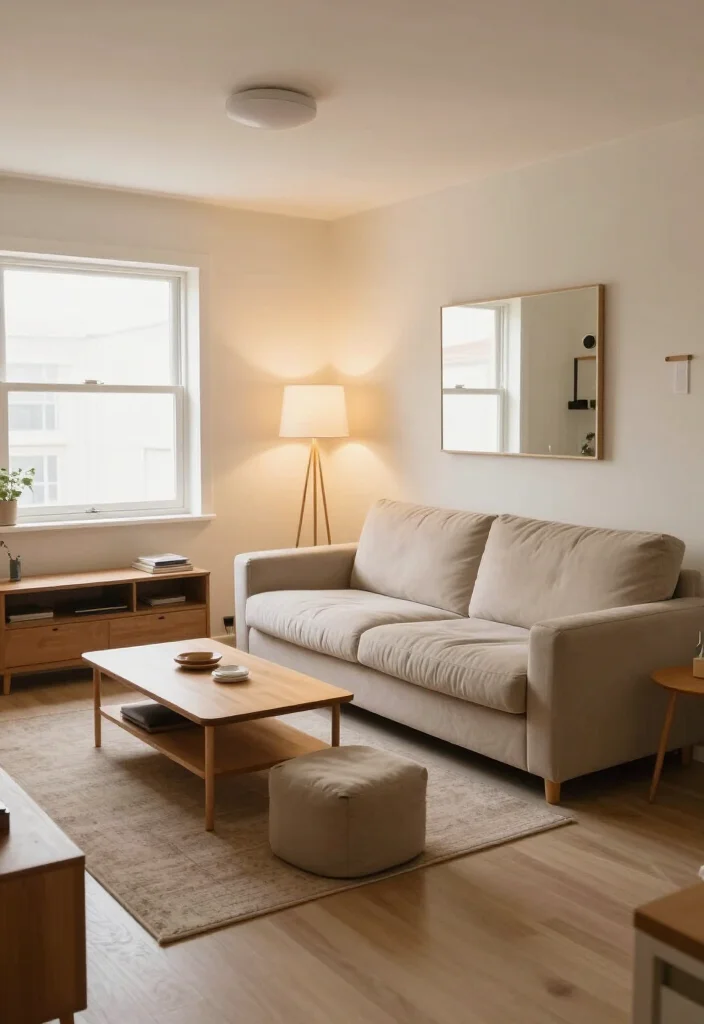
Low furniture lets your eyes travel across the room, which makes a deep sofa feel less dominant. Use a short media console, low coffee table, and compact ottoman to keep light moving between the seating and walls. Open sightlines connect separate areas visually.
Mount the television safely or replace a tall cabinet with a shallow console. Keep accessories low, such as a bowl, books, or a short plant. Add height only at the edges, where a lamp or tall plant will not block the room.
Protect open views with these choices:
– Choose furniture that sits below the window sill
– Keep tall storage on walls instead of across floors
– Place floor lamps in corners away from walking routes
– Use one tall plant beside, not in front of, windows
Low pieces expose more floor and invite daylight deeper inside. Your large sofa can stay comfortable without closing in the room.
Keep Furniture Low to Protect Sightlines
Editor’s Choice




Dimensions & Size Guide
If your sofa feels too big for the room, start with numbers instead of guesswork. Measure the sofa at its widest and deepest points, including arms, legs, and a chaise. A small living room layout needs at least one clear walking route that measures 30 to 36 inches wide. Keep 16 to 18 inches between the sofa and coffee table so you can sit down without bumping your knees. In a 10-by-12-foot room, a compact sofa with a slim coffee table often leaves more breathing space than a deep standard sofa.
Start With Sofa Size and Walkways
Most compact sofas measure 60 to 72 inches wide and 32 to 36 inches deep. A full sofa often measures 72 to 96 inches wide and 36 to 40 inches deep. Look for a depth of 30 to 34 inches when your room feels tight from front to back. Keep at least 30 inches open between the sofa and a doorway, media unit, or main walking route. If you place the sofa near a wall, leave 2 to 6 inches behind it for a softer look and easier cleaning, unless you need a walking path behind the sofa.
Seat height also affects how large the sofa feels. A seat height of 17 to 19 inches suits most adults and keeps the furniture from looking too tall. Low arms and an open base can make a deep sofa feel lighter. Measure the sofa box, not only the seat cushions, since wide arms can add 6 to 12 inches to the total width.
Quick Reference
Use these ranges when you compare sofas, loveseats, tables, and sectionals for a small living room layout. The room sizes below assume you keep a 30-inch walking route and leave room for a small side table or lamp.
48 to 60-inch loveseat – Best for: very small rooms or two-person seating, Minimum space needed: 8 by 10 feet
60 to 72-inch apartment sofa – Best for: small living rooms with one chair, Minimum space needed: 9 by 10 feet
72 to 84-inch compact sofa – Best for: three people without deep cushions, Minimum space needed: 9 by 11 feet
84 to 96-inch full sofa – Best for: larger rooms with a separate chair, Minimum space needed: 10 by 12 feet
90 to 110-inch sectional with a 60 to 75-inch return – Best for: open rooms with one main seating zone, Minimum space needed: 11 by 13 feet
36 to 42-inch round coffee table – Best for: compact seating groups, Minimum space needed: 16 to 18 inches from the sofa and 24 to 30 inches around the walking side
Space Planning Tips
A furniture arrangement looks better when you test it before you carry anything across the room. Mark the sofa footprint with painter’s tape, then walk around it with a laundry basket or full shopping bag. This quick test shows if the path feels easy or cramped. Use these steps before you buy or move furniture:
1. Draw the room on graph paper, using one square for every 6 inches. Mark doors, windows, radiators, vents, and outlets.
2. Measure the narrowest part of the room, not just the longest wall. A sofa can fit along one wall yet block a door swing or walkway.
3. Tape the sofa, coffee table, rug, and chairs on the floor. Include the full arm width and chaise length, since people often measure only the cushions.
4. Check every delivery point. Measure the front door, hall, stair turn, elevator, and sharp corners. A sofa that fits the room may still fail to enter the home.
5. Keep the rug large enough to connect the seating. An 8-by-10-foot rug often suits a sofa and chair, while a 5-by-7-foot rug may make the group look disconnected.
Pro Tip: Measure the room’s narrowest open route first. If your sofa leaves less than 30 inches for walking, the sofa is too big for the room, even if it fits against the wall. Choose a shallower sofa, remove one chair, or swap a bulky coffee table for nesting tables.
7. Let the Rug Connect the Seating Instead of Shrinking It
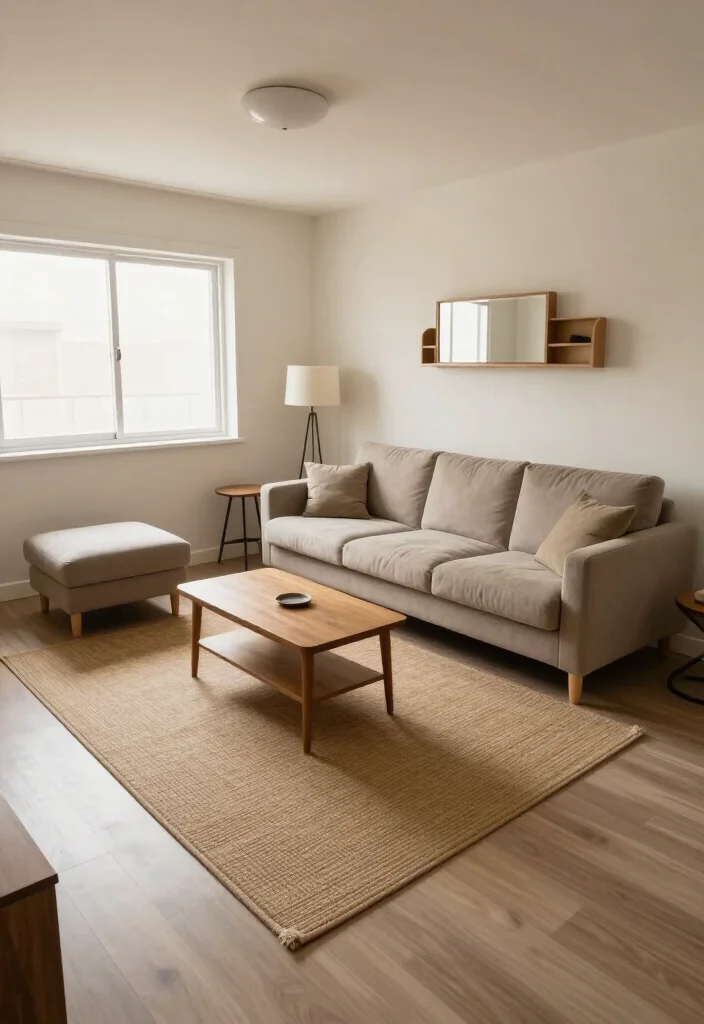
A correctly sized rug can make a large sofa look settled rather than oversized. Place its front edge beneath the sofa and include the coffee table plus the front legs of nearby chairs. This visual connection turns separate pieces into one calm seating zone.
Choose a low-pile rug with a subtle stripe, faded geometric pattern, or tonal color. Leave some exposed floor around the edges, and keep the main walkway outside the rug when possible. A woven flatweave adds warmth without visual heaviness.
Check the rug placement carefully:
– Set the sofa’s front legs firmly on the rug
– Keep the coffee table completely within the rug area
– Include chair or ottoman front legs in the grouping
– Secure the rug with a pad on smooth flooring
A connected rug gives the sofa a clear visual home. The exposed floor around it stays open, useful, and easy to cross.
Let the Rug Connect the Seating Instead of Shri…
Editor’s Choice


You might also like
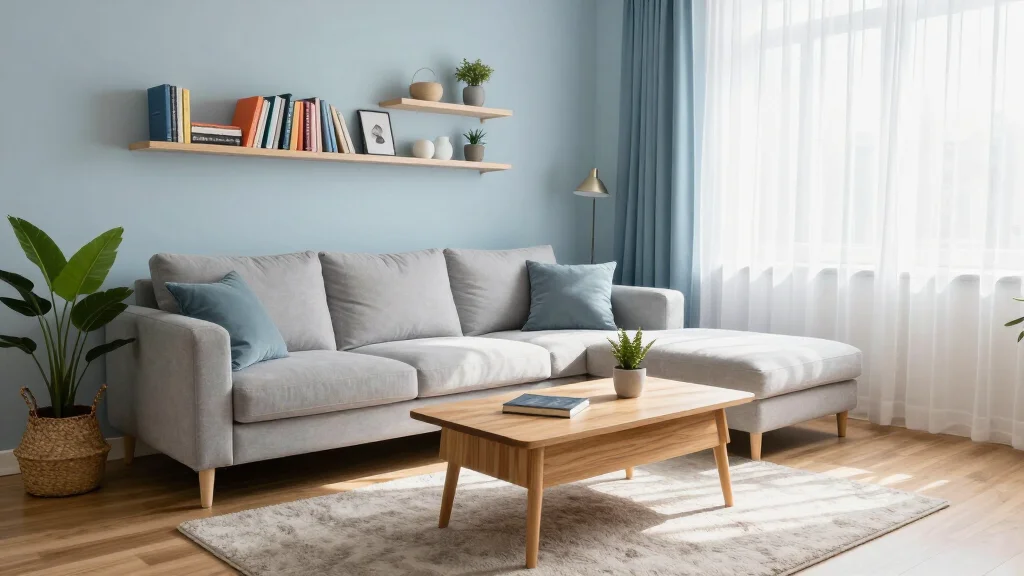
8. Move Storage Up the Wall
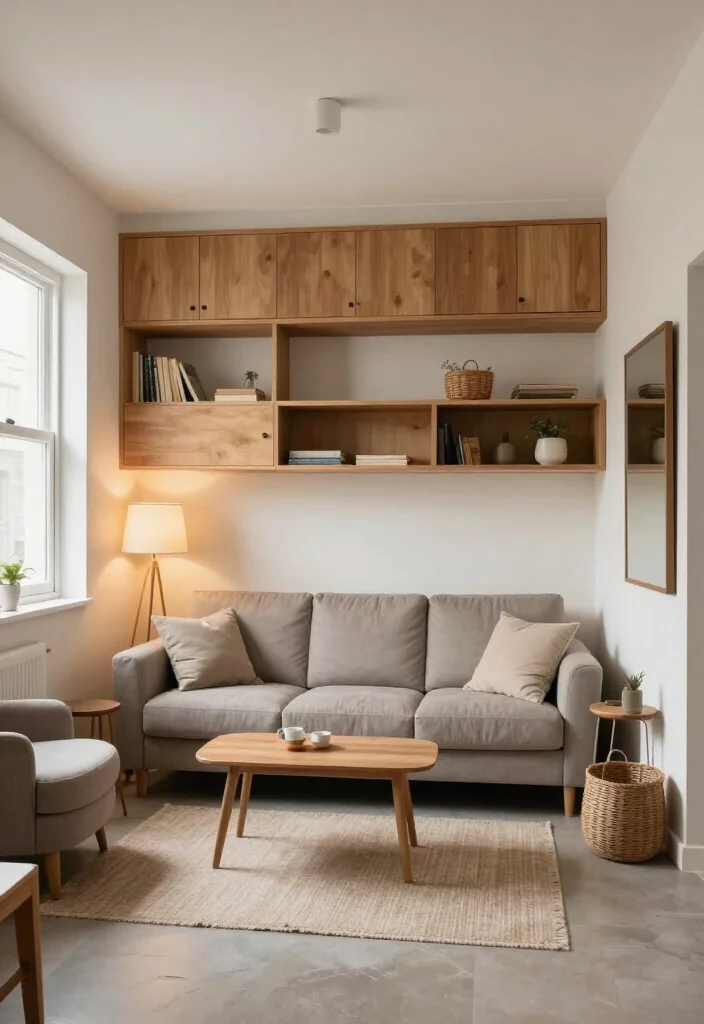
Moving storage upward clears the floor around a large sofa. Wall shelves, shallow cabinets, and mounted television units can hold books, games, and everyday clutter without creating another bulky obstacle. Keeping the floor visible makes the entire room feel more open.
Group storage on one main wall rather than covering every surface. Use closed boxes for small items and leave some shelf space empty. Secure every cabinet properly, especially in homes with children or pets.
Use vertical storage with care:
– Install shallow shelves above a console or side table
– Group baskets together to hide small everyday items
– Leave space between shelves and the ceiling
– Keep heavy objects low and secure mounted furniture
Vertical storage solves real clutter without shrinking the walkway. A quieter wall elsewhere gives the room balance and keeps the sofa from competing with busy displays.
Move Storage Up the Wall
Editor’s Choice



9. Add a Mirror Where It Can Borrow Light
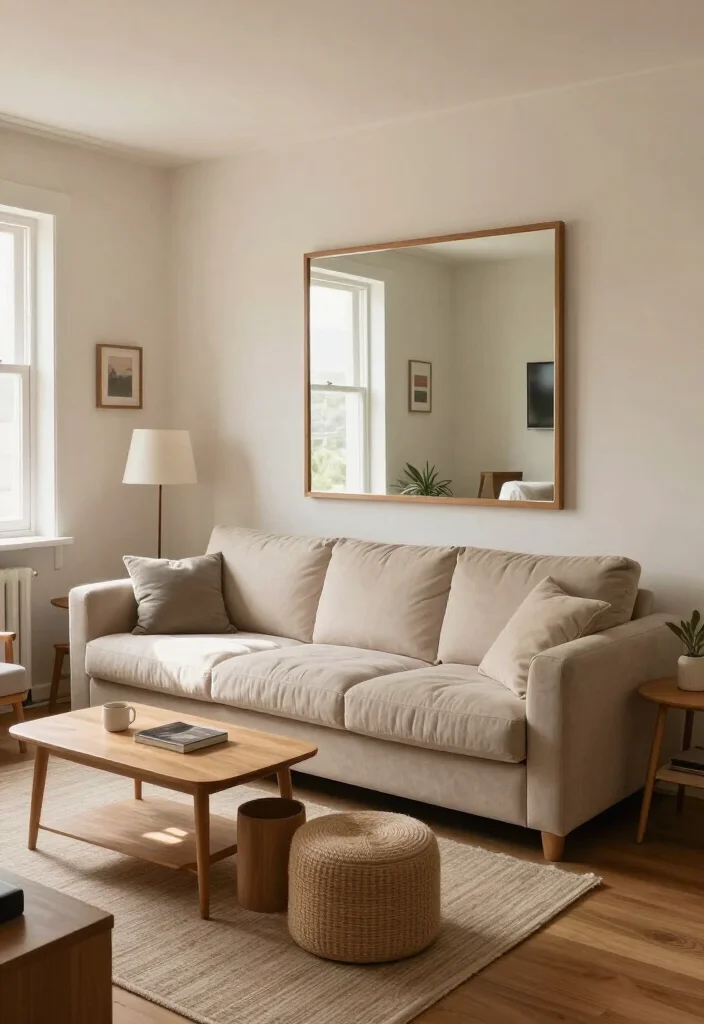
A well-placed mirror can make a compact room feel brighter and more open. Hang it across from or beside a window so it reflects daylight into darker corners. Above a low console, a wide mirror can balance a sofa’s width without adding furniture.
Choose a thin frame or frameless design when the room already feels busy. Check the reflection before mounting it, since a messy corner will simply appear twice. Add a nearby lamp to keep the reflected area useful after sunset.
Make the mirror work harder:
– Hang it near eye level above a low console
– Reflect a window, lamp, or clear walkway
– Choose one large mirror instead of many small pieces
– Leave calm wall space around its frame
A mirror supports good planning but cannot fix a blocked path. Use it after opening the walkway, then pair its brightness with soft curtains and warm lighting.
10. Choose an Ottoman That Works in Three Directions
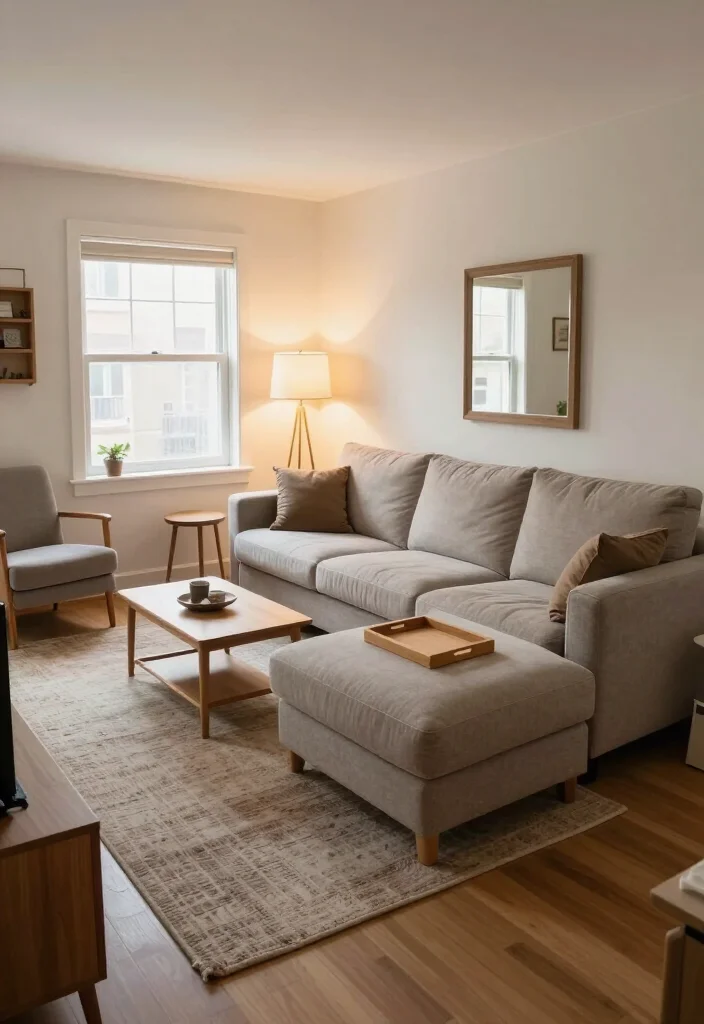
A flexible ottoman can replace a footstool, extra seat, and small table. Its low profile keeps sightlines open beside a large sofa, while a firm top supports a tray. Choose a round shape for tight paths or a narrow rectangle near a chaise.
Pick durable fabric, washable covers, or hidden storage when the ottoman will serve daily needs. Keep it close enough for comfort, but leave room to walk around it. A lighter piece is easier to move when guests arrive.
Use the ottoman with purpose:
– Choose rounded corners for busy, narrow walking routes
– Add a tray when drinks need a stable surface
– Store throws, toys, or pillows inside a lift-top design
– Move it beside a chair when visitors need seating
One hardworking ottoman reduces clutter without reducing comfort. Its changing position helps the room adapt throughout the day.
11. Use a Narrow Console to Give the Sofa a Backdrop
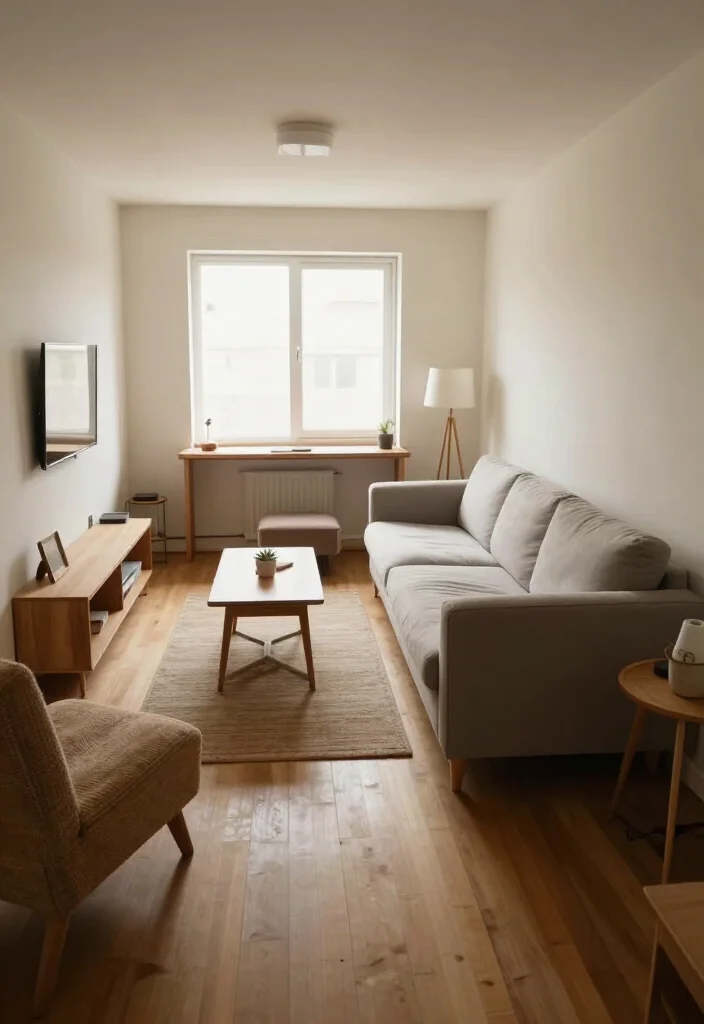
A narrow console behind a floating sofa creates a finished edge without adding much bulk. It gives you space for a small lamp, tray, or plant while making the sofa look intentionally placed. This works especially well when the couch divides a living area from an entry or dining space.
Measure the passage first, then choose a console about 8 to 12 inches deep. Open legs or a wall-mounted design keep the floor visible. Leave enough space for cleaning, curtains, and comfortable walking.
Style the sofa backdrop thoughtfully:
– Choose a console no higher than the sofa back
– Add one small lamp with a narrow base
– Hide cords behind the console instead of across floors
– Leave open space beneath the console legs
A slim console adds function without becoming another heavy cabinet. Its horizontal line helps organize the room while the visible floor keeps everything feeling light.
12. Pick Furniture That Performs More Than One Job
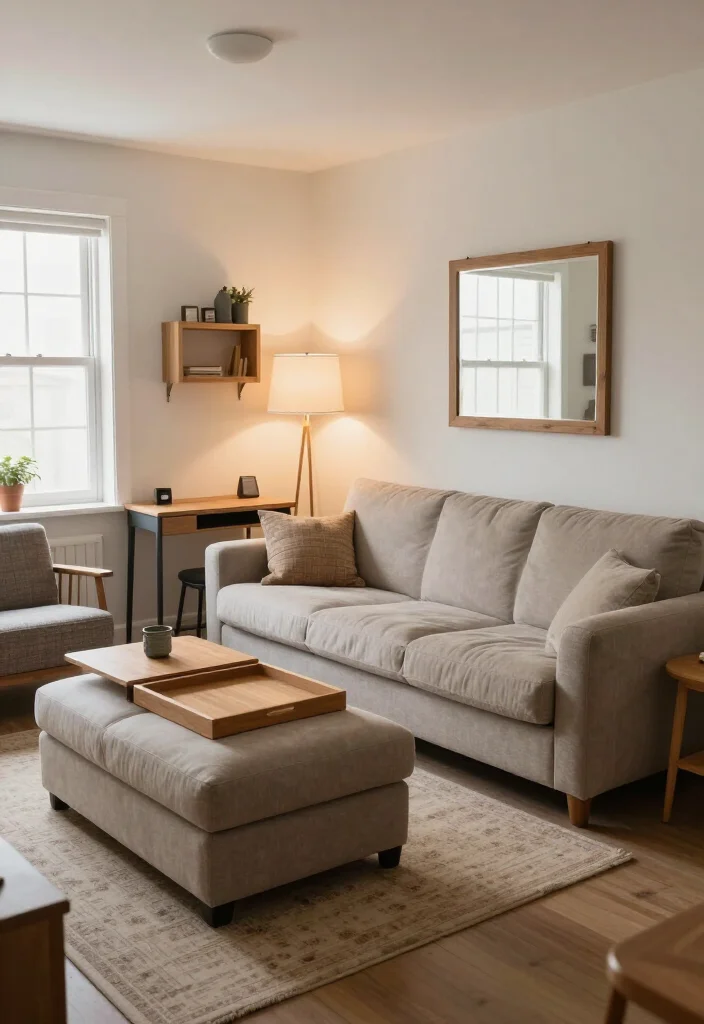
Multipurpose furniture helps a small room support real life with fewer objects. Choose a storage ottoman, lift-top table, bench, or slim desk that solves a specific daily problem. When the sofa already takes up major floor space, every supporting piece should earn its place.
Notice where clutter gathers first. Use hidden storage for blankets, a console drawer for mail, or a lift-top table for laptop work. Check that drawers and lids open fully without blocking the main route.
Choose useful combinations:
– Pair an ottoman with storage and a firm tray top
– Use a narrow console as entry storage and a desk
– Select a bench that stores shoes beneath its seat
– Install a wall cabinet to hide chargers and paperwork
One or two hardworking pieces can replace several smaller items. The room stays comfortable, flexible, and easier to clear when guests arrive.
You Might Also Like
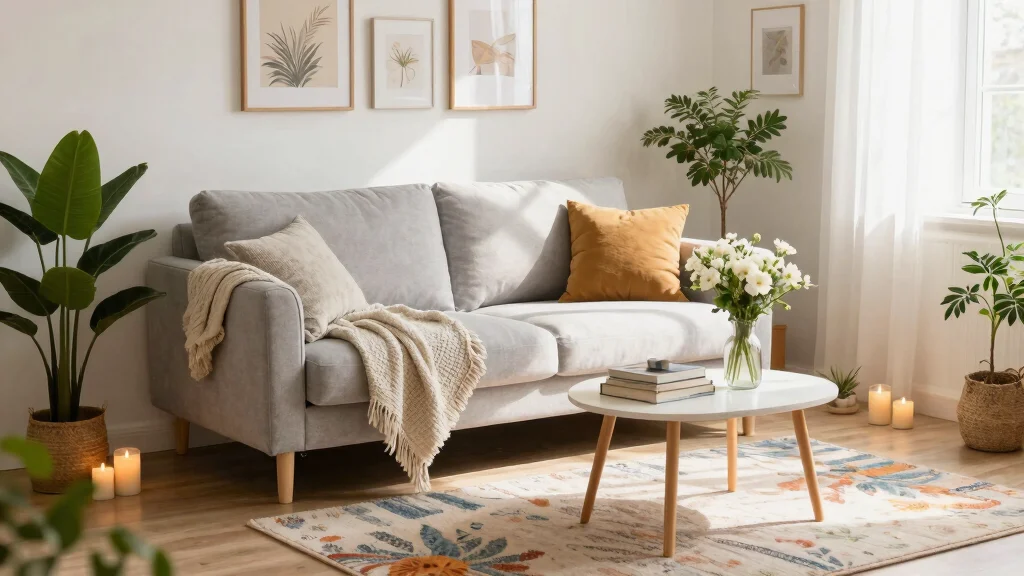
13. Use One Calm Color Story to Reduce Visual Clutter
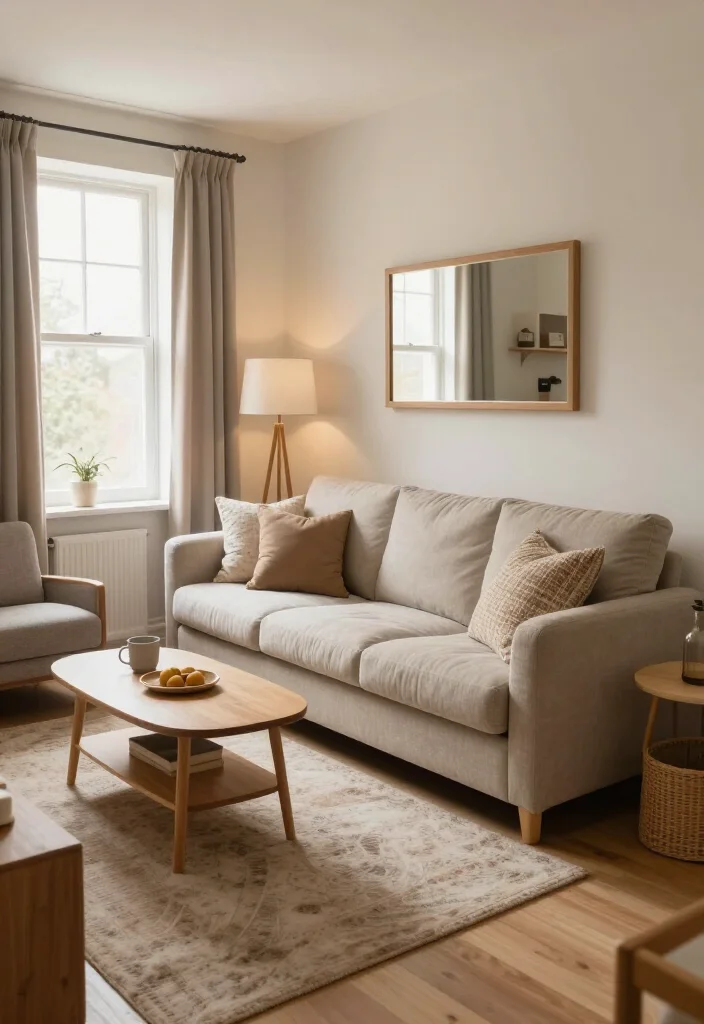
A calm color story can make a large sofa blend naturally into a small room. Repeat two or three related shades across walls, rugs, curtains, and pillows so the eye moves smoothly around the space. Soft cream, muted blue, dusty green, and warm taupe all create gentle flow.
Add interest through texture instead of many bright colors. Linen, boucle, woven wool, smooth wood, and ribbed ceramics bring depth without making every boundary stand out. A dark sofa can still work when surrounding surfaces stay lighter.
Build a simple palette:
– Choose one quiet neutral for walls or curtains
– Repeat the sofa color in two smaller pieces
– Add one accent shade through pillows or art
– Use natural wood to warm pale rooms
Color repetition makes the sofa feel intentional rather than oversized. Texture keeps the result warm, layered, and personal without adding visual noise.
Use One Calm Color Story to Reduce Visual Clutter
Editor’s Choice


14. Hang Curtains High and Keep the Window Clear
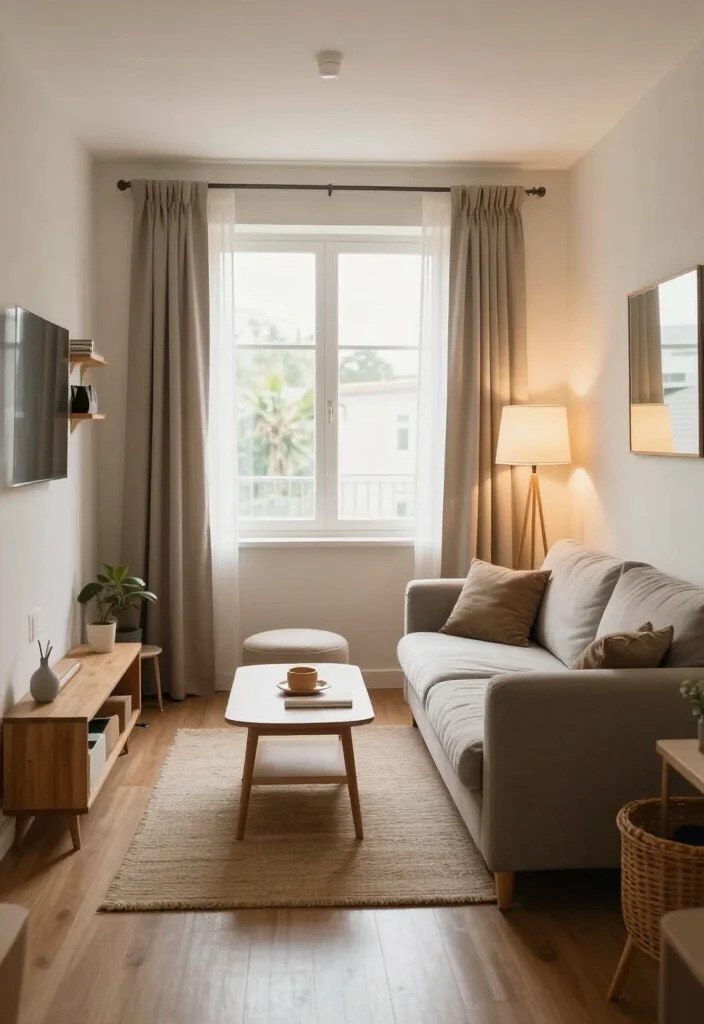
Clear windows bring light, height, and visual depth into a compact living room. Hang the curtain rod close to the ceiling and wider than the window when the wall allows. Floor-length fabric creates a long vertical line, helping a large sofa feel less dominant.
Choose light or medium-weight curtains that filter sunlight without blocking it. Keep furniture below the sill when possible, and make sure the sofa does not stop windows, radiators, or vents from working properly.
Give the window more breathing room:
– Stack open curtains outside the glass area
– Choose fabric that echoes the wall or sofa color
– Keep tall plants beside the window, not in front
– Leave space for cleaning and moving the panels
Open windows stop the room from feeling sealed. Pair them with low furniture, a pale rug, and warm lamps for brightness that lasts into evening.
15. Edit the Path Until Walking Feels Effortless
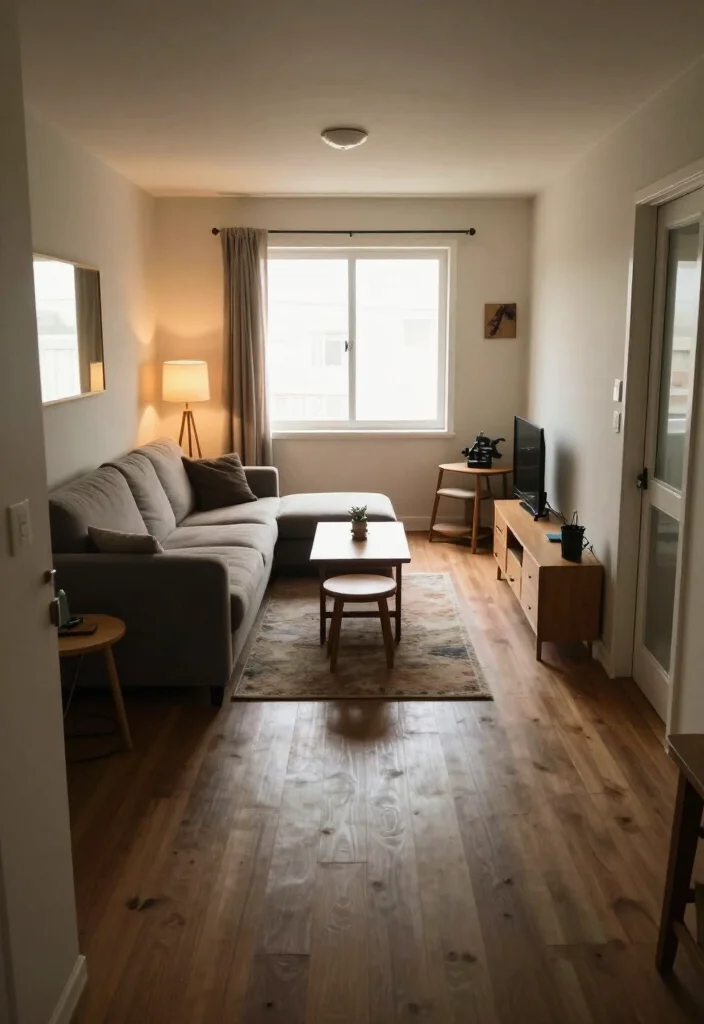
An easy walkway is the clearest sign that your furniture arrangement works. Test the room by carrying groceries, opening windows, sitting with a drink, and walking from the entry to the kitchen. If you turn sideways or bump a table, the layout needs another edit.
Protect one obvious route and remove small obstacles from it. Check doors, drawers, storage ottomans, and windows at full range. Practical clearance matters as much as a beautiful view.
Use this final layout test:
– Walk from the entry to every important destination
– Check the path at night under lamps and shadows
– Open drawers, doors, windows, and cabinets fully
– Remove one item when the room feels crowded
A successful small living room feels effortless on an ordinary day. Clear paths let the oversized sofa remain cozy without making movement frustrating.
Conclusion: Let the Sofa Stay, but Let the Room Breathe
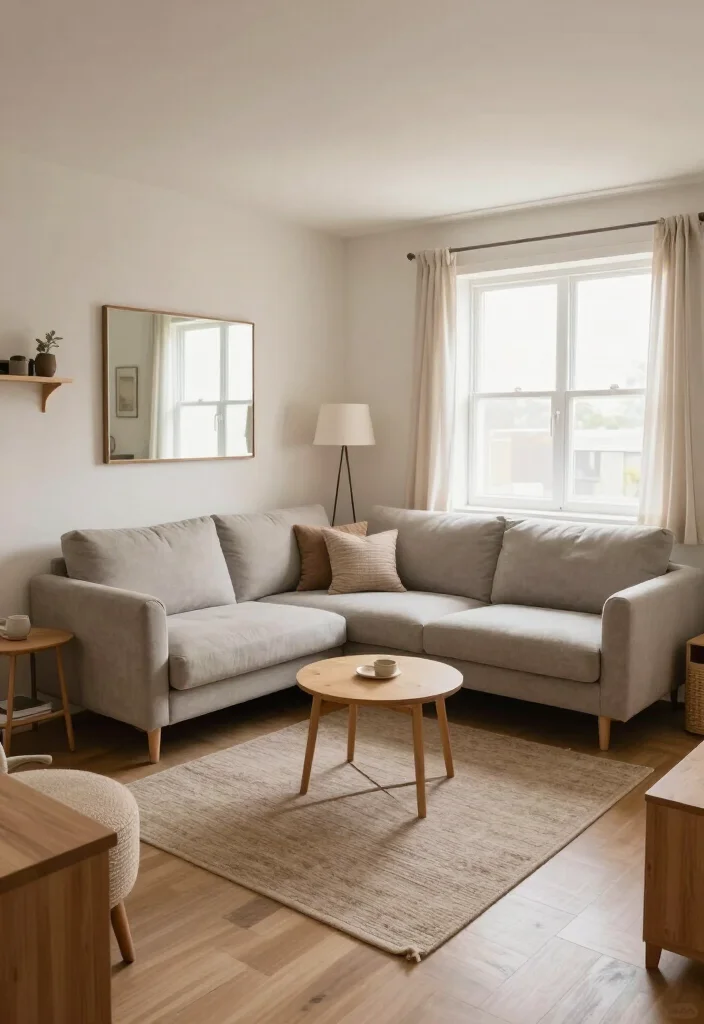
A sofa too big for room does not automatically mean a furniture shopping emergency. Measure carefully, open the pathways, lighten the supporting pieces, move storage upward, and use rugs, mirrors, color, and flexible tables to give the room a clearer rhythm. The best small living room layout is comfortable first, attractive second, and easy to adjust when real life gets messy.
Try one change this weekend and live with it for a day before making another. You may find that the sofa was never the whole problem; it just needed better space around it.
Note: We aim to provide accurate product links, but some may occasionally expire or become unavailable. If this happens, please search directly on Amazon for the product or a suitable alternative.
This post contains Amazon affiliate links, meaning we may earn a small commission if you purchase through our links, at no extra cost to you.
Frequently Asked Questions
Q. How do I know if my sofa is too big for my room?
If the sofa leaves very little walking space, blocks doors or windows, overwhelms other furniture, or makes the room difficult to use comfortably, it may be too large for the space.
Q. Can I make an oversized sofa work in a small living room?
Sometimes. Try repositioning the sofa, removing unnecessary furniture, using a smaller coffee table, and keeping pathways open. The right layout can make a large sofa feel less overwhelming.
Q. How much space should I leave around a sofa?
Aim for comfortable walking paths rather than following one universal measurement. Main pathways should remain easy to navigate, and doors, drawers, vents, and windows should not be obstructed.
Q. Should I replace a sofa that is too large?
Not necessarily. Before replacing it, experiment with furniture placement and remove pieces that compete for space. If the room still feels cramped and difficult to use, a smaller sofa may be worth considering.
Q. What type of sofa works best in a small room?
Compact sofas, apartment-size sofas, loveseats, and models with slimmer arms can work well. Sofas with raised legs can also create a more open visual appearance by exposing more floor underneath.
