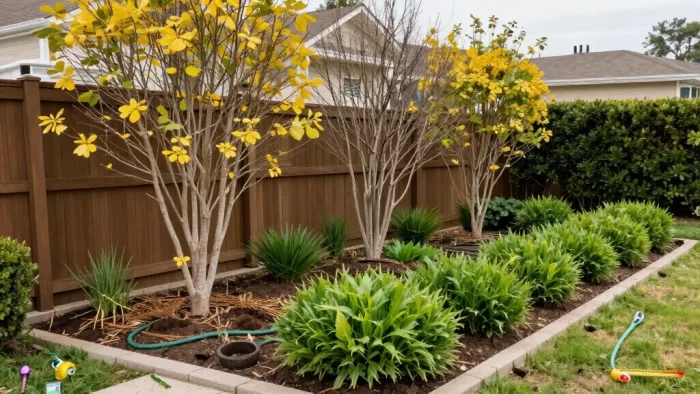
I know how frustrating it feels to plant a living screen, wait season after season, and still see straight into the neighbor’s yard. If your Privacy Trees Aren’t Growing as Fast as Promised, the problem may not be the tree itself.
Soil conditions, sunlight, watering habits, spacing, climate, and transplant stress can all affect real-world growth.
I’ve learned that understanding fast-growing privacy trees, privacy screen landscaping, and evergreen tree growth is far more useful than relying on an optimistic nursery label.
Sometimes the solution is better care; other times, the species simply isn’t right for the site. Before replacing everything, it’s worth figuring out what’s actually slowing those trees down.
- 1. The Tree Is a Poor Match for Your Climate and Yard
- The Tree Is a Poor Match for Your Climate and Yard
- EVO-20 DLI Light Meter – Smart Sunlight Classifier for Garden & Landscap…
- MySoil Soil Test Kit, Unlock Your Lawn & Garden Potential, Complete & Ac…
- Essential Soil Test by SimpleLab | Soil Quality Tester for 5 parameters …
- Tropo Precision Rain Gauge, CoCoRaHS Approved, High-Capacity, Dual Units
- EarthWorks for Home Soil Test Kit, pH and Nutrient Lab Analysis, 1 kit
- The Tree Is a Poor Match for Your Climate and Yard
- 2. The Root Flare Is Buried Too Deep
- 3. Watering Is Either Too Little, Too Much, or Too Random
- 4. Compacted Soil Is Choking the Roots
- Compacted Soil Is Choking the Roots
- AMS 59032 Pocket Penetrometer, Soil Strength Penetrometer, Handheld, Lig…
- MySoil Soil Test Kit, Unlock Your Lawn & Garden Potential, Complete & Ac…
- Wood Mulch 30 Quart, Premium Dark Natural Shredded Mulch for Landscaping…
- Digging Assistor Auxiliary Tool for Soil Loosening and Ground Turning, L…
- AgraTronix 8180 Soil Compaction Tester – 24 in. Probe, 300 PSI, Rubber G…
- Compacted Soil Is Choking the Roots
- 5. The Trees Are Fighting for Light and Root Space
- 6. Pruning Is Removing the Growth You Need
- 7. Fertilizer Is Being Used as a Shortcut
- Fertilizer Is Being Used as a Shortcut
- MySoil Soil Test Kit, Unlock Your Lawn & Garden Potential, Complete & Ac…
- Soil Test Kit | Understand What Your Lawn or Garden Soil Needs, Not Sure…
- Organic Evergreen-Tone 4-3-4 Natural & Organic Fertilizer and Plant Food…
- 10-10-10 Plant Fertilizer Slow Release – 10 10 10 All Purpose Granular G…
- Rapitest 4-Way Digital Soil Analyzer for pH, Moisture, Temperature, and …
- Fertilizer Is Being Used as a Shortcut
- 8. Pests or Disease Are Quietly Stealing New Growth
- Pests or Disease Are Quietly Stealing New Growth
- Insecticidal Soap, 32 oz Ready-to-Use Spray Multi-Purpose Insect Control…
- Big Leaf Energy Organic Neem Oil Spray for Plants, Indoor + Outdoor, 16oz
- Chapin 20084: 1 Gallon Pump Sprayer – Lawn & Garden Sprayer for Weeds, P…
- Fiskars Forged Steel Bypass Pruning Shears, 1" Cut Capacity Garden Clippers
- 10X Rechargeable Jewelers Loupe Magnifier with LED Lights and 3 Reticle …
- You Might Also Like
- Pests or Disease Are Quietly Stealing New Growth
- 9. Transplant Shock and Seasonal Timing Are Being Misread
- Transplant Shock and Seasonal Timing Are Being …
- 4-Pack 15 Gallon Tree Watering Bags and Rings, Slow Release Automatic Dr…
- 20gal Tree Watering Ring with Coconut Fiber Mulch Ring, Deep Root&Slow R…
- Wood Mulch 30 Quart, Premium Dark Natural Shredded Mulch for Landscaping…
- Tree Trunk Protector 48 Inch Tall, 6 Pcs Metal Mesh Tree Guards with Glo…
- Sintuff 36 Pcs Heavy Duty Tree Stake Kits Stake and Support for Young Le…
- Transplant Shock and Seasonal Timing Are Being …
- Assessment Checklist: What to Check Before You Start
- A Fuller Privacy Screen Starts with Better Clues, Not More Guesswork
- Frequently Asked Questions
- Q. Why aren’t my privacy trees growing as fast as advertised?
- Q. How long does it take privacy trees to create a screen?
- Q. Should I fertilize privacy trees to make them grow faster?
- Q. Can planting privacy trees too close together slow their growth?
- Q. What should I do if my privacy trees still aren’t growing?
1. The Tree Is a Poor Match for Your Climate and Yard
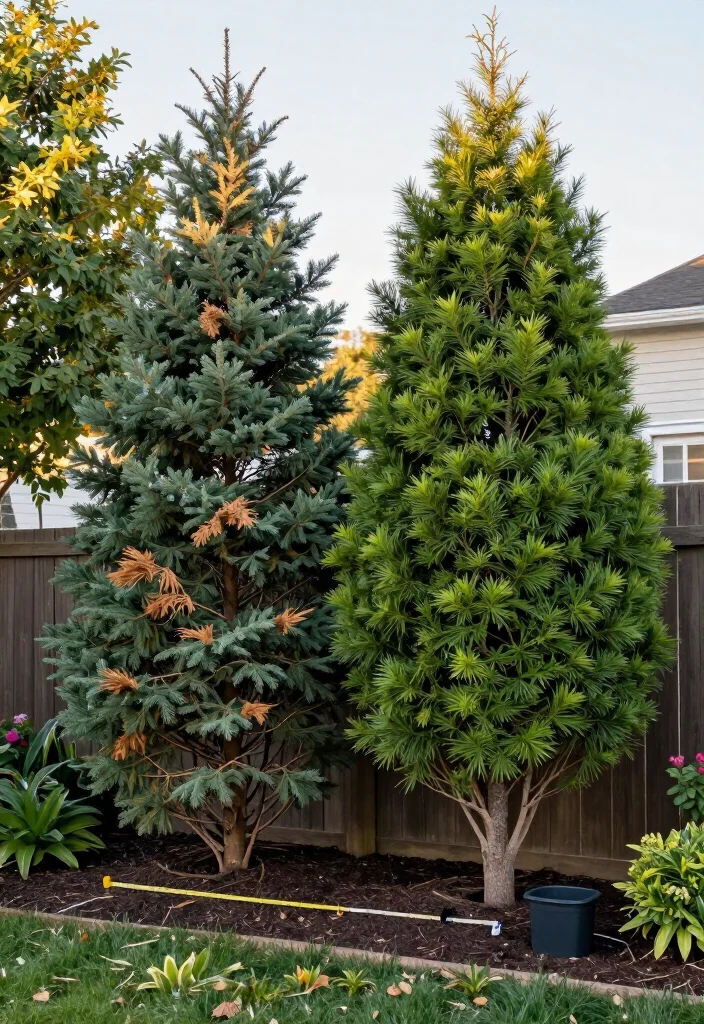
Fast growth starts with a tree that fits your yard. A nursery tag may promise rapid height, yet cold winters, dry summers, clay soil, and strong wind can change the result. The right evergreen or deciduous choice stays healthier, uses water better, and creates a thicker screen.
Check hardiness, mature width, sunlight, and rainfall before planting. Local nurseries and nearby healthy hedges can show which species handles your conditions.
Use this quick site check:
– Record summer sun, winter shade, wind, frost, and reflected wall heat.
– Measure mature width and leave room for healthy root growth.
– Choose species proven locally as evergreen or seasonally deciduous.
A well-matched tree grows steadily, giving you a fuller hedge and fewer replacements.
The Tree Is a Poor Match for Your Climate and Yard
Editor’s Choice




2. The Root Flare Is Buried Too Deep
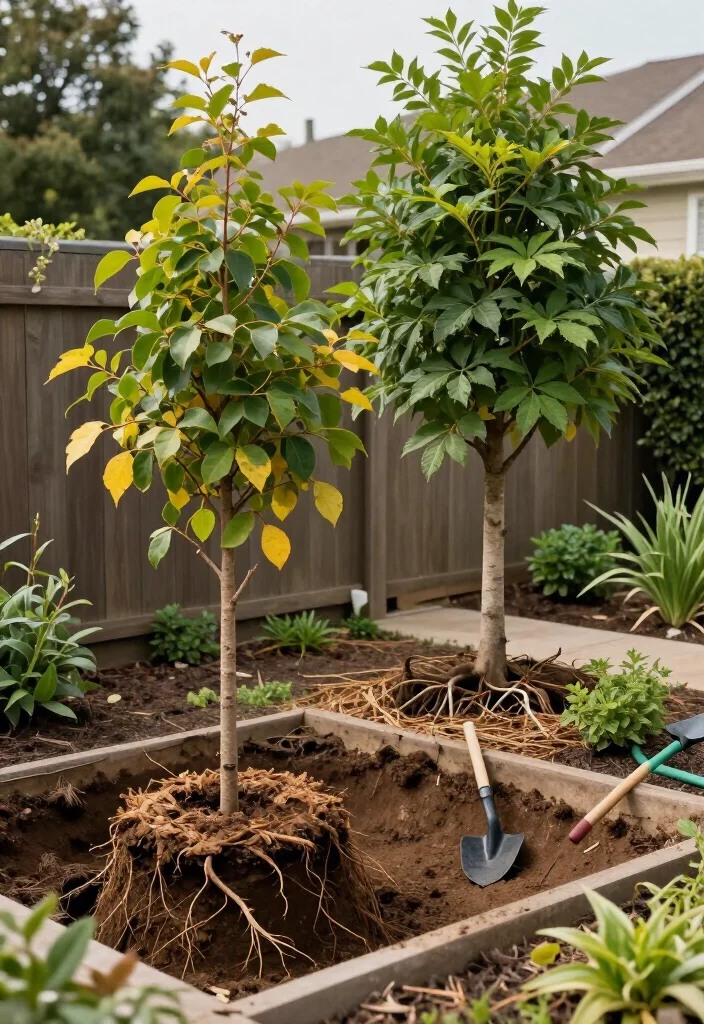
A tree planted too deeply may survive while barely growing. Soil covering the root flare limits oxygen, keeps bark damp, and makes new roots struggle outward. Yellow leaves, weak shoots, and early leaf drop can follow.
Find the point where the trunk widens and major roots begin. Set that flare at soil level or slightly above it, then pull mulch several inches away from the bark. Young trees can sometimes be lifted during dormancy, while larger specimens need arborist advice.
Use these planting checks:
– Dig wider, never deeper, than the root ball’s height.
– Set roots on firm native soil, not loose compost.
– Spread two to four inches of mulch across the root zone.
– Keep the trunk flare visible after watering and settling.
Correct planting depth helps roots breathe, spread, and support stronger privacy growth.
3. Watering Is Either Too Little, Too Much, or Too Random
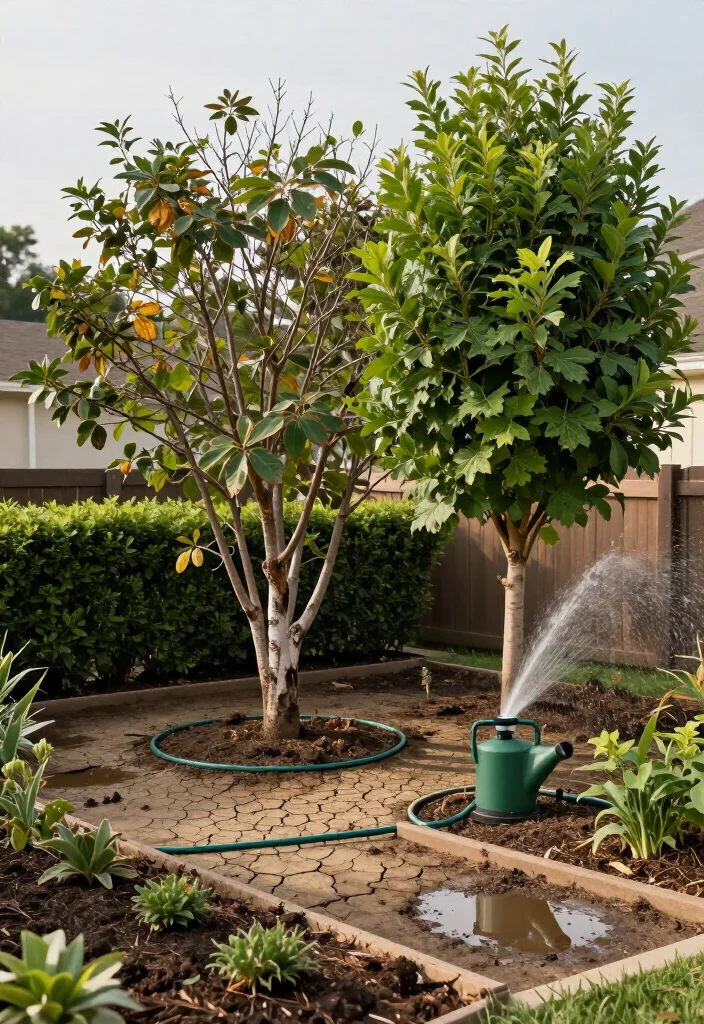
Privacy trees need steady moisture while roots expand beyond the original root ball. A quick surface sprinkle may miss deeper roots, while daily watering in clay can leave them starved of air. Both problems cause pale leaves, scorch, weak shoots, and little height gain.
Check soil several inches down before watering. It should feel moist, not muddy or dusty. Use a soaker hose or drip line around the root zone, then extend it outward as the tree grows.
Build a better watering routine:
– Check moisture two or three times weekly during heat.
– Water slowly until moisture reaches several inches deep.
– Reduce irrigation after soaking rain, not brief showers.
– Keep mulch two to four inches deep and away from bark.
Consistent deep watering gives roots the stable conditions needed for stronger hedge growth.
4. Compacted Soil Is Choking the Roots
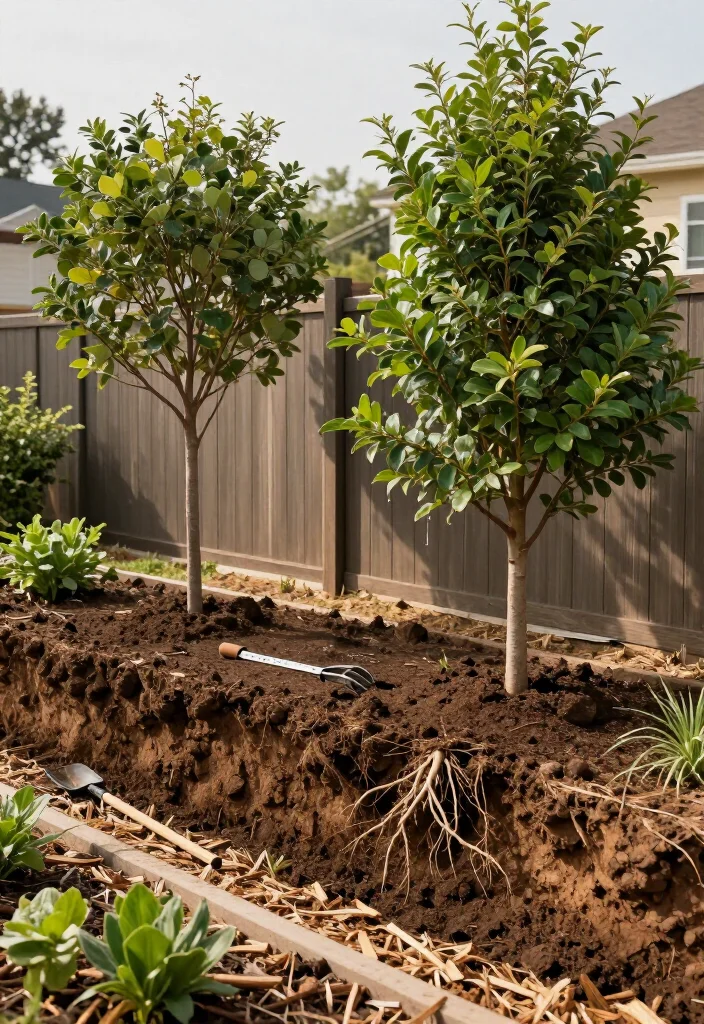
Compacted soil squeezes out the air pockets roots need. Construction traffic, footpaths, clay, and heavy equipment can make water run off while feeder roots struggle to spread. Trees may remain alive but produce short shoots, thin foliage, and frequent midday wilting.
Push a screwdriver into the soil after rain. If it barely enters, the root zone may be too tight. Remove competing grass, loosen light compaction gently, and spread wood chips across the surface instead of digging aggressively around roots.
Try these practical fixes:
– Keep vehicles, stored materials, and foot traffic away.
– Apply two to four inches of arborist wood chips.
– Use a soil test before adding lime or fertilizer.
– Request professional air-spading for severe mature-tree compaction.
Healthier soil structure improves oxygen, drainage, and root spread, allowing privacy trees to produce stronger new growth.
Compacted Soil Is Choking the Roots
Editor’s Choice


5. The Trees Are Fighting for Light and Root Space
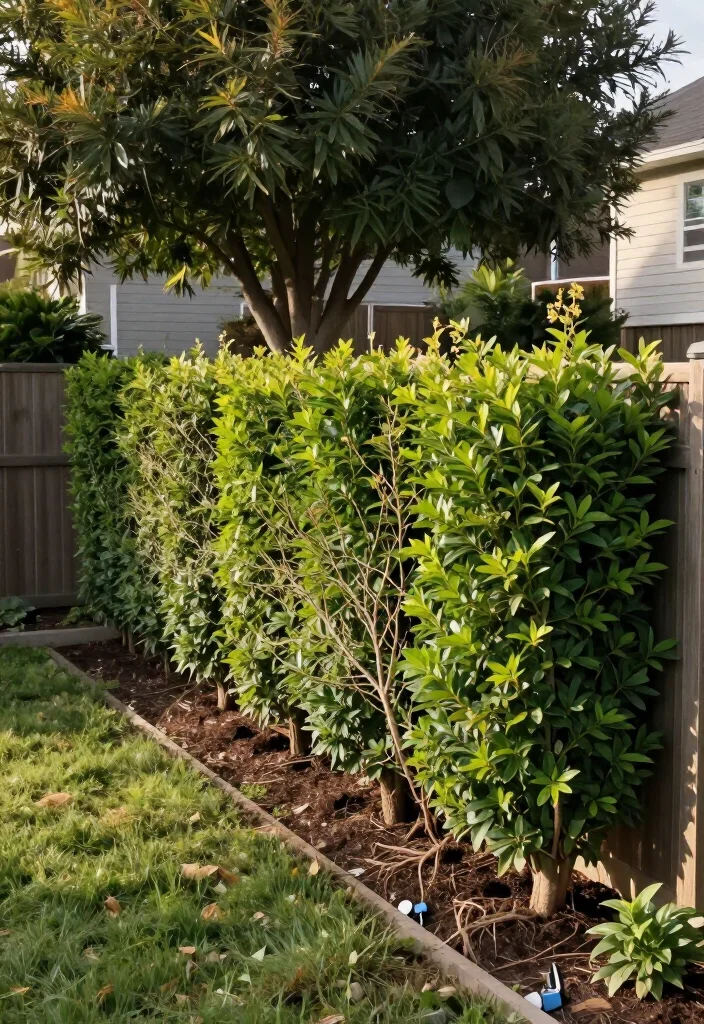
Crowded privacy trees often compete with mature trees, fences, walls, and one another. Shade can create thin, one-sided growth, bare lower branches, and shoots reaching toward open sky. Large neighboring roots may also take water before young trees can use it.
Watch the planting line in morning, midday, and afternoon light. If branches create the main shade, hire a qualified professional rather than topping the larger tree. If spacing is too tight, removing a weak specimen may help the remaining plants fill out.
Check the row before adding fertilizer:
– Compare mature width with the distance between trunks.
– Choose shade-tolerant species for genuinely dim boundaries.
– Leave access for pruning, watering, and air movement.
– Separate watering plans when large trees have different needs.
Balanced light and spacing help lower branches stay green and turn a thin row into useful hedge screening.
You might also like
6. Pruning Is Removing the Growth You Need
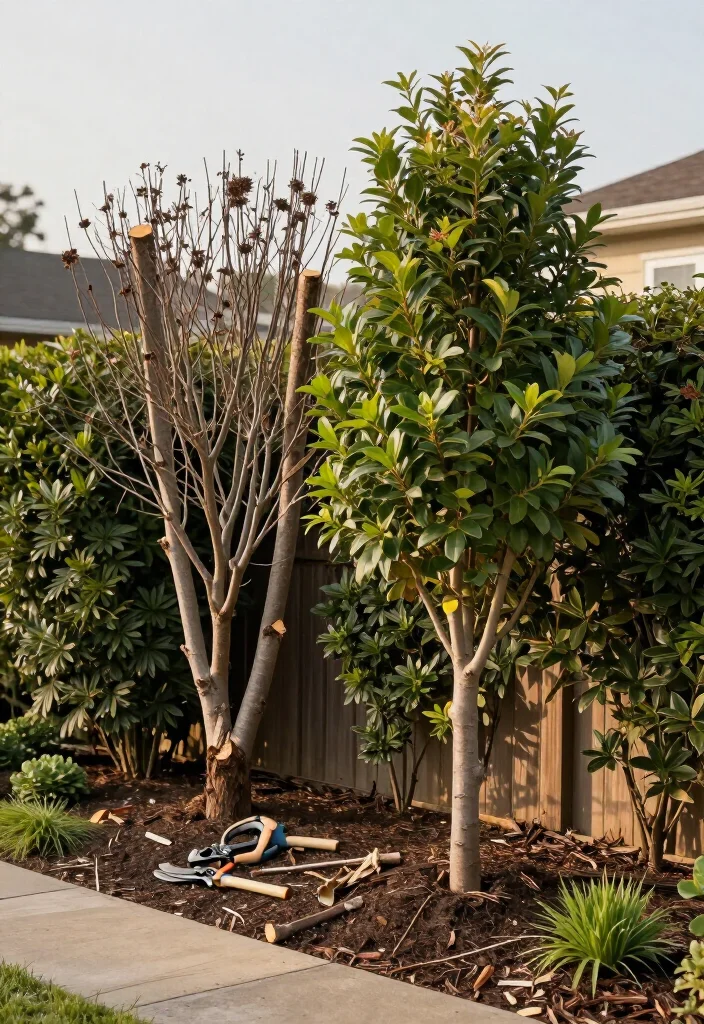
Young privacy trees can look untidy before they look full. Repeated topping or shearing removes leaves and buds that produce energy, while cutting into bare brown wood may leave permanent gaps. The goal is gentle shaping, not constant height control.
Remove dead, damaged, or crossing branches first. Lightly shorten long green shoots during the proper season, and keep the hedge base wider than its top so sunlight reaches lower foliage.
Use a careful pruning routine:
– Learn whether the species buds from old or green wood.
– Remove no more than one-quarter of live growth yearly.
– Cut just above healthy buds or side branches.
– Stop pruning during drought, heat, or transplant shock.
Thoughtful pruning preserves energy while encouraging fuller branching and a denser privacy screen.
7. Fertilizer Is Being Used as a Shortcut
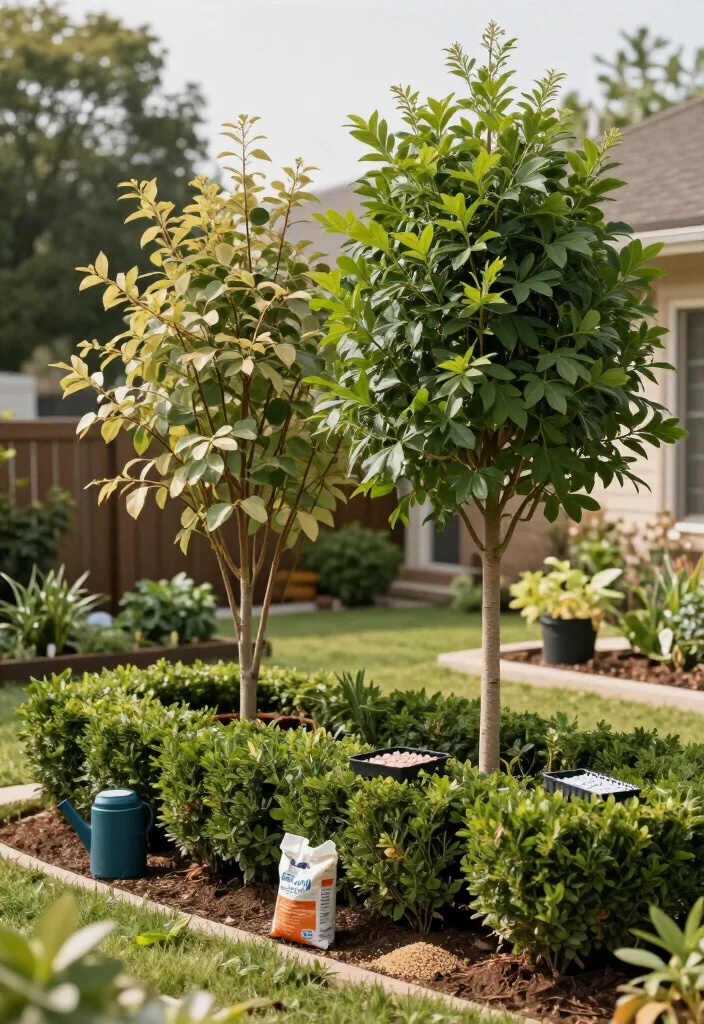
Fertilizer cannot repair buried roots, dry soil, poor light, or compacted ground. Too much nitrogen may create soft, floppy shoots that attract pests and suffer winter injury. Yellow leaves can also result from wet roots, drought, high pH, or iron problems.
Test the soil before feeding, then fix moisture and drainage first. If a deficiency is confirmed, choose a slow-release tree fertilizer and apply the labeled amount across the root zone, never in a pile beside the trunk.
Follow these feeding rules:
– Avoid heavy fertilizer on drought-stressed or new trees.
– Skip late-season feeding that encourages tender shoots.
– Never use lawn weed-and-feed near sensitive trees.
– Stop when growth becomes unusually dark, long, or floppy.
Balanced nutrition supports sturdy roots and shoots without forcing fragile growth that weakens the hedge.
Fertilizer Is Being Used as a Shortcut
Editor’s Choice


8. Pests or Disease Are Quietly Stealing New Growth
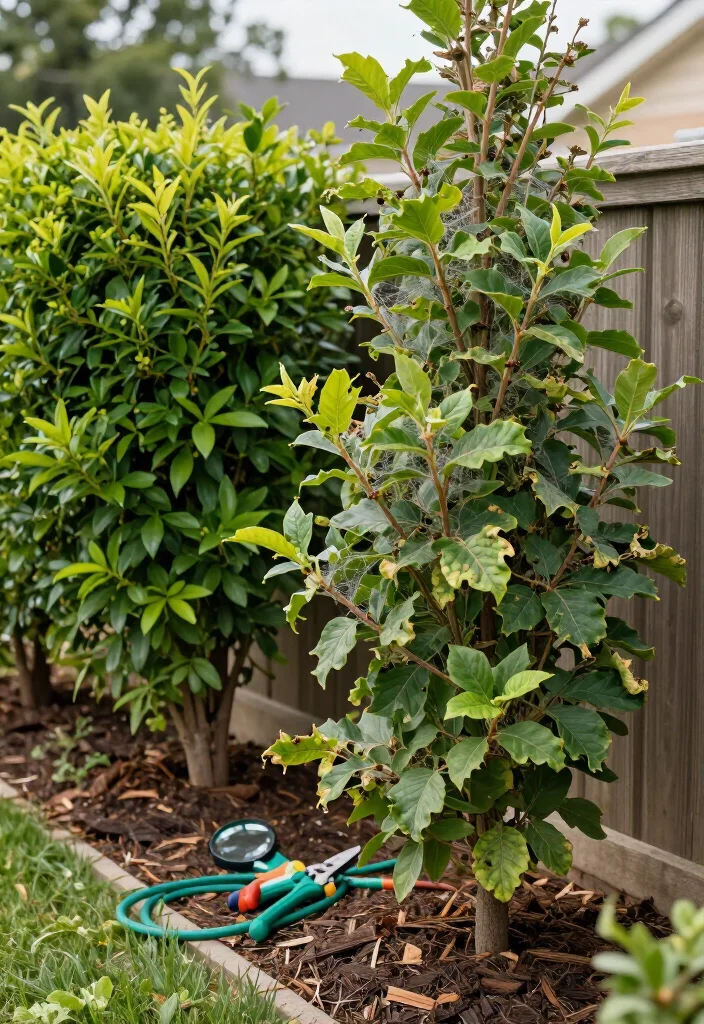
A privacy tree can stay mostly green while pests damage the tender shoots that build a thicker screen. Aphids curl leaves, mites create fine speckles, scale looks like small bumps, and fungal problems cause spots or dieback. Dense rows make spreading easier when air stays damp.
Inspect new growth, leaf undersides, stems, and the soil line weekly. Look for sticky residue, webbing, black mold, holes, peeling bark, or matching damage across several trees. Take close photographs if the cause is unclear.
Use the least harsh suitable response:
– Spray sturdy foliage with water to dislodge small pests.
– Prune dead or infected branches with clean tools.
– Improve spacing and avoid wet leaves overnight.
– Confirm the diagnosis before applying oil or insecticide.
Early detection protects healthy shoots and prevents one struggling tree from weakening the entire hedge.
Pests or Disease Are Quietly Stealing New Growth
Editor’s Choice


You Might Also Like

9. Transplant Shock and Seasonal Timing Are Being Misread
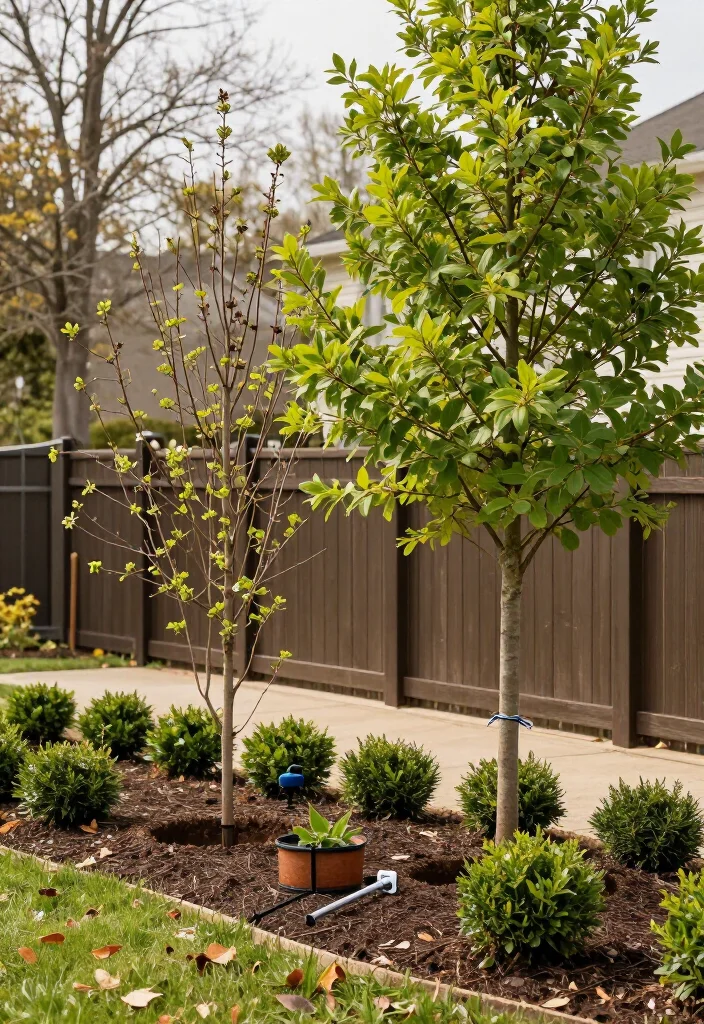
A newly planted tree may pause aboveground growth while rebuilding fine roots. Transport, digging, container growth, and a new soil texture all create stress. Evergreens can look unchanged while quietly recovering beneath the surface.
Judge progress across a full growing season, not every few weeks. Many trees push in spring, slow during summer heat, and rest through winter. Record height, width, leaf color, and shoot length from season to season for a clearer picture.
Support steady recovery with these steps:
– Water deeply while roots reestablish in the new soil.
– Keep mulch over roots but away from the trunk.
– Avoid heavy pruning and strong fertilizer during shock.
– Protect young trees from pets, wind, and equipment.
Patience paired with steady care lets roots settle first, then supports a stronger and longer-lasting privacy screen.
Transplant Shock and Seasonal Timing Are Being …
Editor’s Choice


Assessment Checklist: What to Check Before You Start
When your privacy trees are not growing, start with clues instead of adding more fertilizer or water. A slow-growing hedge can come from poor tree choice, buried roots, dry soil, weak light, or pest damage. Use this checklist before you prune, feed, move, or replace any trees.
Checks to Make First ✔
□ Match the tree to your climate and yard – Check the tree’s hardiness zone, mature height, mature width, sun needs, and soil needs on its nursery tag. A tree that dislikes your winter cold, summer heat, or wet soil may never create the fast hedge screening you expected.
□ Find the root flare – Look for the spot where the trunk widens into the top roots, then check that it sits at soil level or slightly above it. If mulch or soil covers the flare by more than 1 inch, pull it back because buried bark can stay wet and weaken the trunk.
□ Test your watering pattern – Push a finger or wood skewer 2 to 3 inches into the soil near the root ball. Dry soil points to too little water, while standing water or sour-smelling soil points to poor drainage; newly planted trees often need a slow, deep soak once or twice each week during dry weather.
□ Check for compacted soil – Dig a 12-inch test hole outside the root ball and press a screwdriver into the soil. If the tool will not enter easily, or the soil forms hard chunks, roots may lack air and room to spread.
□ Measure sunlight and planting space – Track direct sun for one full day and aim for the hours listed for your tree, often 6 to 8 hours for many screening plants. Measure tree-to-tree spacing and compare it with the mature width, since crowded roots and shaded branches can slow growth.
□ Review your pruning history – Write down when you pruned and how much you removed during the past year. Cutting off new branch tips too often can remove the shoots that would have added height and width to your privacy screen.
□ Test before adding fertilizer – Use a soil test to check pH and nutrient levels before applying plant food. Extra nitrogen may create soft, weak growth or damage roots, while the right soil changes can help only when a real nutrient shortage exists.
□ Inspect leaves, needles, and new shoots – Look under leaves and along stems for webbing, sticky sap, holes, scale, discolored needles, or dead tips. Marked damage on fresh growth can point to insects or disease that quietly steal energy from the tree.
□ Record planting date and season – Note when you planted, how the root ball looked, and whether the tree faced heat, frost, or drought soon after planting. Transplant shock can slow growth for a year or more, so compare progress across full seasons instead of judging the tree after only a few weeks.
Why This Matters: This checklist turns a vague slow-growth complaint into clear clues you can act on. You can link yellow needles to water or root trouble, thin branches to poor light or pruning, and weak new shoots to pests or nutrient problems. You also avoid costly changes, such as replacing trees that only need better watering or more time. 💡 Once you know the likely cause, choose one fix, track the tree for 4 to 8 weeks, and adjust your tree care only when the evidence points that way.
A Fuller Privacy Screen Starts with Better Clues, Not More Guesswork
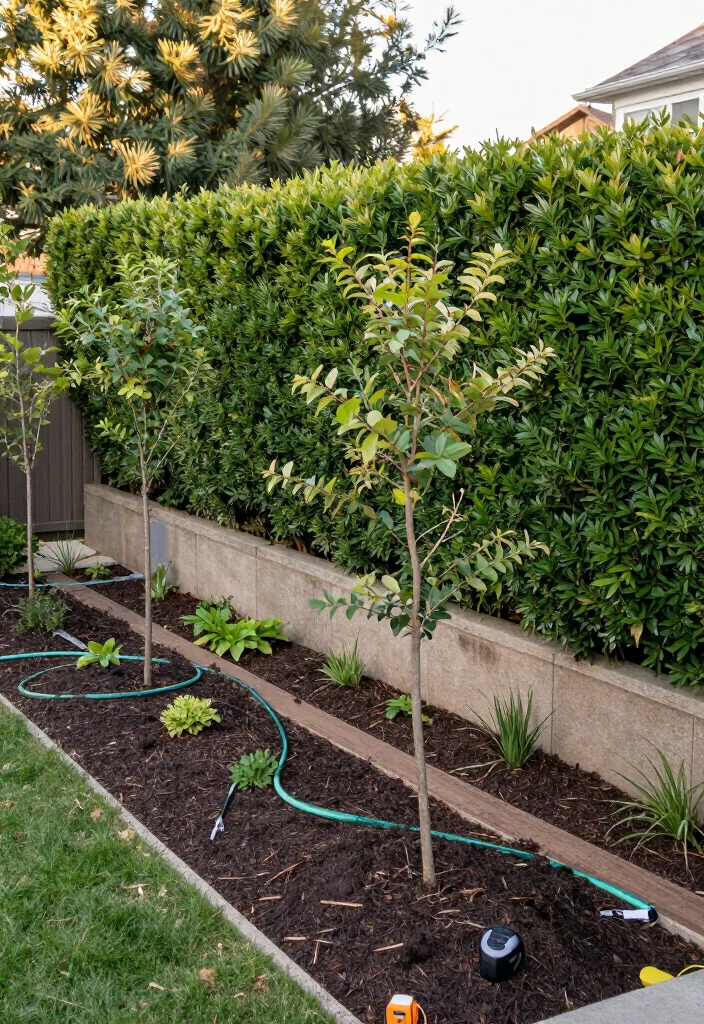
Slow growth is frustrating, but it is also useful information. Sparse foliage, yellow leaves, bare branches, weak shoots, and dry soil each point toward a different kind of stress.
Instead of adding fertilizer, pruning harder, or watering on a random schedule, work through the basics in order: species, planting depth, moisture, soil, light, spacing, pruning, nutrients, pests, and timing. The right fix is usually simple once the clue is connected to the cause.
Give the trees a fair chance to respond. Record measurements, make one or two sensible changes, and watch the new growth rather than expecting damaged leaves to repair themselves.
Healthy privacy trees build their screen through strong roots and steady seasons, not overnight promises. With thoughtful tree care, even a disappointing hedge row can become thicker, greener, and far more useful for backyard privacy.
Note: We aim to provide accurate product links, but some may occasionally expire or become unavailable. If this happens, please search directly on Amazon for the product or a suitable alternative.
This post contains Amazon affiliate links, meaning we may earn a small commission if you purchase through our links, at no extra cost to you.
Frequently Asked Questions
Q. Why aren’t my privacy trees growing as fast as advertised?
Advertised growth rates generally assume favorable growing conditions. Poor soil, insufficient or excessive water, inadequate sunlight, climate differences, root competition, pests, disease, and transplant stress can all reduce actual growth.
Q. How long does it take privacy trees to create a screen?
It depends on the species, starting size, spacing, climate, and growing conditions. Even fast-growing trees usually need time to establish their roots before producing substantial above-ground growth, so a dense screen may take several growing seasons.
Q. Should I fertilize privacy trees to make them grow faster?
Not automatically. Fertilizing without knowing what the soil needs can be ineffective or potentially harmful. A soil test can help identify nutrient deficiencies and guide appropriate fertilization rather than simply applying more fertilizer.
Q. Can planting privacy trees too close together slow their growth?
Yes. Overcrowded trees can eventually compete for sunlight, water, nutrients, and root space while also reducing airflow. Follow spacing recommendations based on the mature width of the particular species and the type of screen you want.
Q. What should I do if my privacy trees still aren’t growing?
Check sunlight, soil drainage, watering, mulch depth, planting depth, and signs of pests or disease first. Also confirm that the species is appropriate for your USDA hardiness zone and site conditions. If growth remains unusually poor or the trees show decline, a qualified local arborist or extension service can help diagnose the underlying problem.
