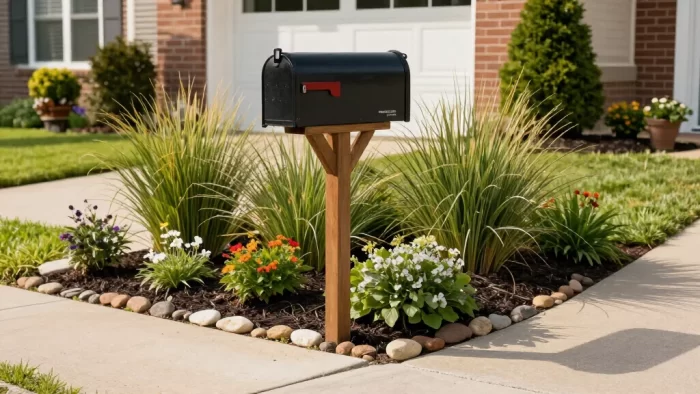
A mailbox may be small, but I’ve learned it can change the entire first impression of a front yard. When I started paying more attention to Mailbox Landscaping Ideas, I realized the area around the post often looked unfinished rather than intentionally designed.
A few well-chosen plants, a simple edging border, and some seasonal color can make a big difference. I especially like combining front yard landscaping, low-growing flowers, and curb appeal ideas without creating a garden that is difficult to maintain.
The best part? You don’t need a huge budget or a complicated design to turn an ordinary mailbox into a charming focal point.
- 1. A Cheerful Cottage Flower Border
- 2. Clean Gravel and Ornamental Grass
- 3. Evergreen Layers for Year-Round Color
- 4. A Softly Lit Mailbox Bed
- A Softly Lit Mailbox Bed
- 12 Pack Solar Lights Outdoor, Modern Solar Pathway Lights Outdoor, Water…
- SUNVIE 12-Pack Low Voltage Pathway Lights Wired with Spotlights LED Outd…
- Mancra Solar Pathway Lights, 8 Pack LED Solar Lights Outdoor Waterproof,…
- SUNVIE LED Low Voltage Landscape Lighting 12V Landscape Lighting Kit wit…
- Solar Pathway Lights Outdoor, 8 Pack Warm White Tungsten Filament Solar …
- A Softly Lit Mailbox Bed
- 5. A Native Pollinator-Friendly Border
- 6. Brick Edging for a Classic Finish
- 7. Black-and-White Contrast That Feels Fresh
- 8. Two Matching Planters at the Base
- 9. A Curved Stone Garden with Blue and White Blooms
- A Curved Stone Garden with Blue and White Blooms
- Premium Jumbo Landscaping Rocks, Gray/Black, 5-8 Inch, 30 lb Bucket, Lar…
- Pulovin 20 lbs River Rocks for Landscaping, Planters, 2"-3" Garden Rocks
- Landscape Edging Stone for Lawn Edging,12 Pack 24 Bricks 15.5FT Kit
- Step-in Decorative Landscape Edging, 2.5 in. Tall Garden Border, 10ft, Gray
- CARPATHEN Drip Irrigation System Kit for Garden Watering, Sprinkler, 100 ft
- A Curved Stone Garden with Blue and White Blooms
- Top Varieties for Different Conditions
- 10. Seasonal Color That Changes with the Year
- 11. A Water-Wise Succulent and Stone Bed
- 12. Rustic Farmhouse Details with Natural Texture
- 13. A Narrow Bed for Small Front Yards
- 14. A Short Walkway That Makes the Mailbox Feel Placed
- A Short Walkway That Makes the Mailbox Feel Placed
- 2 Pcs Natural Stepping Stones Outdoor, Irregular Garden Stepping Stones,…
- 4Pcs Large Stepping Stones Outdoor Garden Walkway,Durable Pavers for Patio
- 6 PCS Natural River Rock Stepping Stones for Garden Walkway – 9.5'' Hexa…
- TierraVerde Rubber Stepping Stones, Natural Rock Look, 18"x22", 4-Pack
- 6 PCS River Rock Stepping Stones Outdoor, 12 Inch Diameter Round Pavers …
- A Short Walkway That Makes the Mailbox Feel Placed
- 15. Shade-Loving Woodland Texture
- Shade-Loving Woodland Texture
- Heuchera Coral Bells Live Plant Collection – 3 Pack 2.5” Starter Plugs –…
- 5 Lady Fern Plants, Live Perennial Fern Bare Root Starters, Tall Decorat…
- 3 Containers of Mixed Lenten Rose/Hellebore in 2.5 Inch Pots- Great for …
- Sweet Woodruff Live Plant, Fragrant White Star Flowers, Deer Resistant G…
- Hosta (4 Pack) – Patriot, Live Shade Perennial, 10" Tall by 4" Wide in 1…
- Shade-Loving Woodland Texture
- 16. Classic Red, Green, and White Planting
- 17. A Budget-Friendly Weekend Refresh
- A Budget-Friendly Weekend Refresh
- Fiskars Deluxe Stand-Up Weed Puller Tool, 4 Serrated Stainless Steel Claws
- Black Touch Up Paint Pen for All Surfaces – Ideal for Doors, Windows, Me…
- Landscape Edging Stone for Lawn Edging,12 Pack 24 Bricks 15.5FT Kit
- Beuta Landscape Edging | Garden Edging Border | Polyrock Bricks for Lawn…
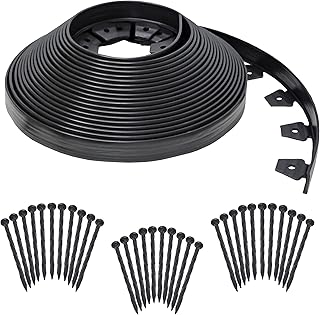
- No-Dig Landscape Edging Kit – 100 ft., Black
- Key Takeaways
- A Budget-Friendly Weekend Refresh
- Conclusion: Give Your Mailbox Its Moment
- Frequently Asked Questions
1. A Cheerful Cottage Flower Border
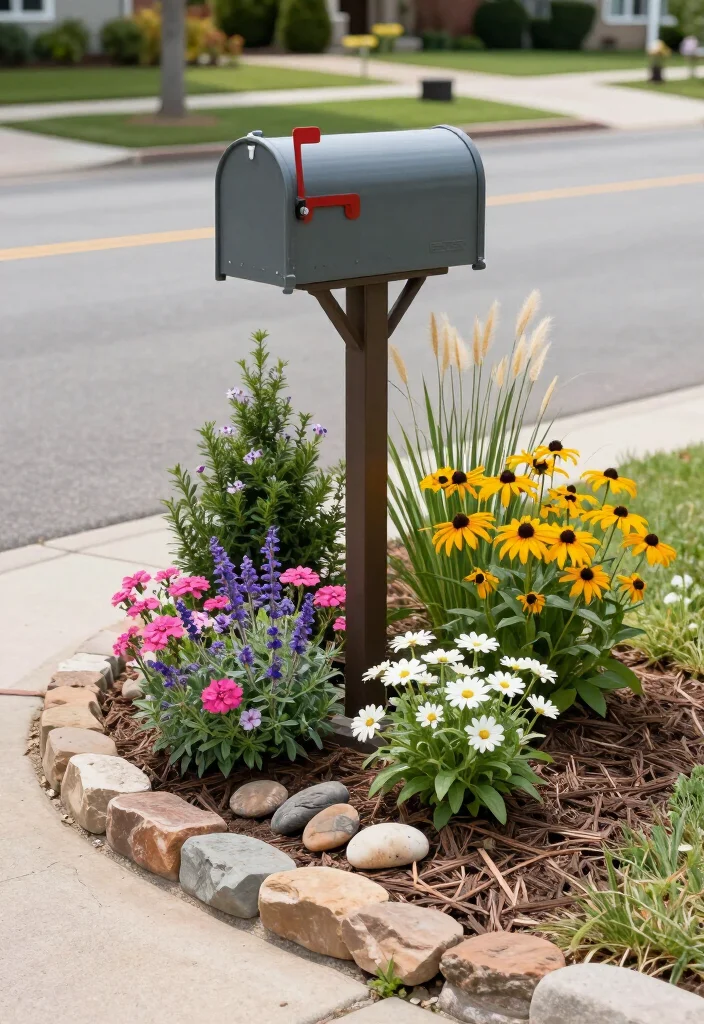
A cottage flower border gives your mailbox a warm, welcoming charm. Curved lines, soft colors, and relaxed blooms make the entrance feel friendly instead of formal. Try salvia, coneflowers, catmint, black-eyed Susans, and pink dianthus around the post. Keep the mailbox door completely clear.
Layer shorter flowers near the street, medium plants around the post, and taller blooms behind it. Add two inches of bark mulch to hold moisture and define the bed. Reclaimed edging or inexpensive stone can keep mulch from washing away.
Shape the border with these simple choices:
– Pair pink dianthus with purple catmint near the sidewalk
– Plant tall coneflowers behind the mailbox post
– Add dwarf spirea for structure after flowers fade
– Trim spent blooms to encourage fresh color
Repeated colors make this abundant style feel intentional. Soft textures and layered flowers create cheerful curb appeal without making mail delivery difficult.
2. Clean Gravel and Ornamental Grass
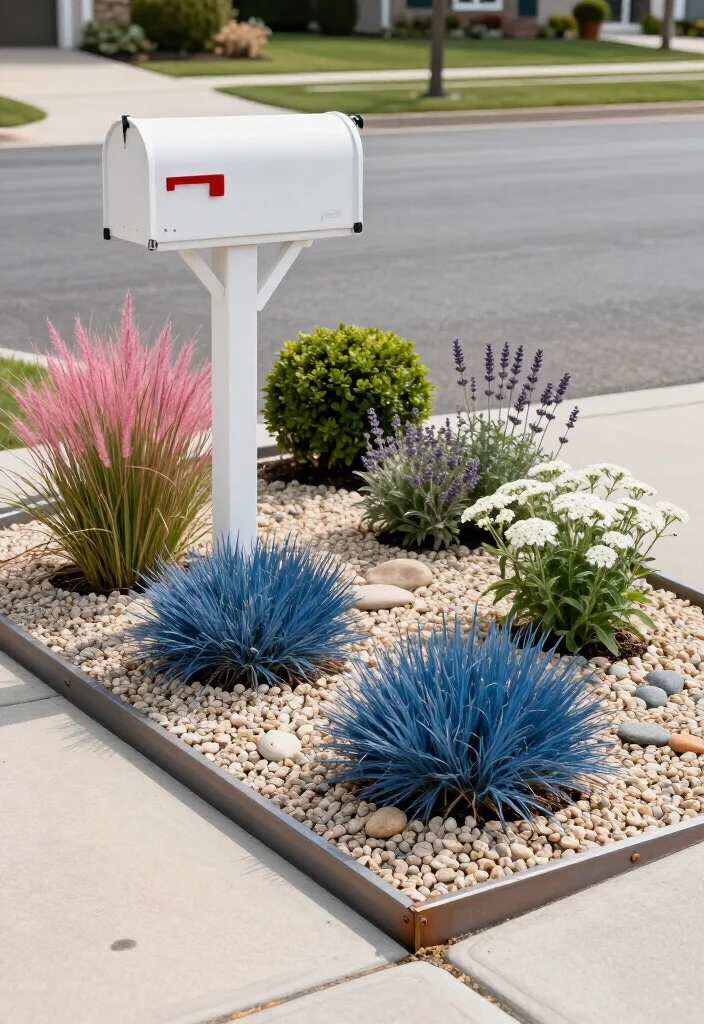
Gravel and ornamental grass create a crisp mailbox bed with little daily work. The simple palette suits black, white, or galvanized boxes and keeps the post visually strong. Use pea gravel, warm tan stone, or smooth river rock with blue fescue, switchgrass, or pink muhly grass. Leave open spaces between plants.
Define the bed with steel edging, pavers, or large stones. Landscape fabric is optional, while a three-inch gravel layer usually provides a cleaner finish. Choose plants that tolerate heat and drought, then repeat them for a calmer modern look.
Build the arrangement with these practical touches:
– Pair blue fescue with warm tan gravel
– Install steel edging beside the sidewalk
– Plant taller grasses behind the mailbox
– Rake gravel each season to refresh its surface
Simple textures make this design feel polished and current. The result stays tidy while giving the mailbox a clear, confident focal point.
📹 Related Video: 10 Perennial Grasses! Ornamental Grass for your Garden Year Round Interest, Low Maintenance, Privacy
3. Evergreen Layers for Year-Round Color
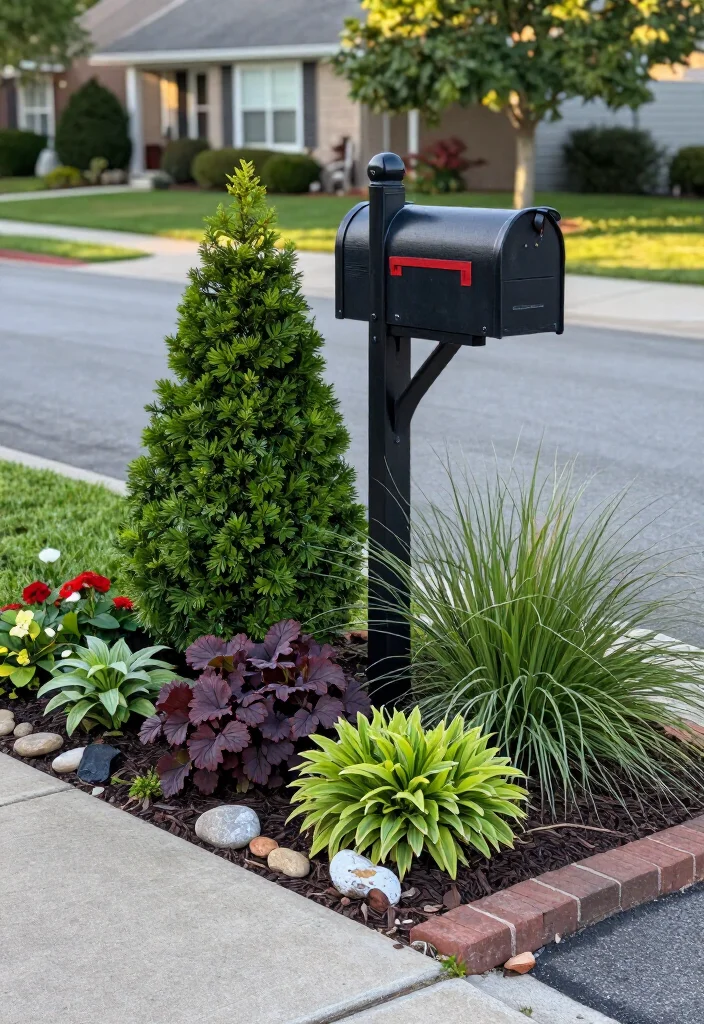
Evergreen layers keep your mailbox attractive after summer flowers disappear. A rounded shrub, low foliage, and a few seasonal blooms create steady structure through frost, rain, and fallen leaves. Try dwarf boxwood, inkberry, compact juniper, heuchera, or liriope, depending on your climate. Check each plant’s mature width before planting.
Place the tallest evergreen behind or beside the box, then repeat lower plants along the front edge. Add daffodils or alliums for spring color without disturbing the permanent framework. Water new shrubs regularly during their first growing season.
Use this balanced planting recipe:
– Choose one rounded evergreen for year-round shape
– Repeat three low plants along the border
– Add two seasonal flowers for changing color
– Spread mulch around, never against, the post
Different leaf shapes provide interest between blooms. Evergreen texture makes the mailbox feel like a planned landscape feature in every season.
4. A Softly Lit Mailbox Bed
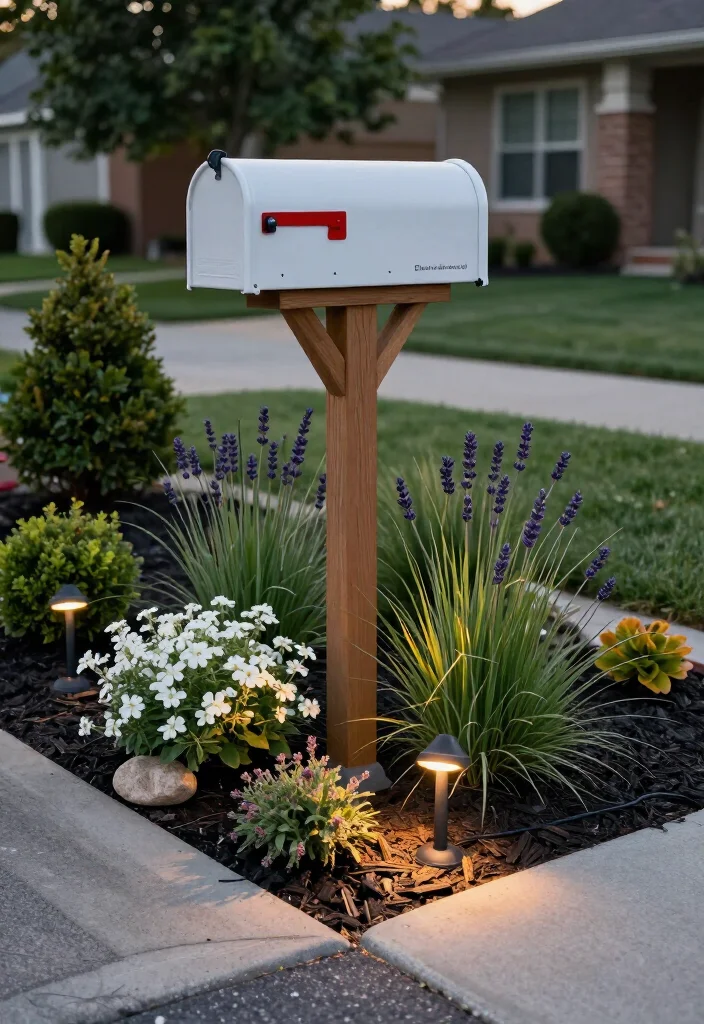
Soft lighting helps your mailbox remain inviting after sunset. Warm fixtures can highlight the post, plants, and edging without creating glare for drivers or neighbors. Use low-voltage path lights, small stake lights, or outdoor solar fixtures beside dark mulch, silver grass, and pale flowers. Keep the light gentle.
Place one fixture near the front edge and another behind the box, aiming both downward. Outdoor-rated connectors and hidden wires improve safety. Solar lights cost less to install, while low-voltage systems offer steadier brightness in shaded areas.
Arrange the lighting with these useful steps:
– Install warm-white lights along the front edge
– Aim fixtures downward to reduce nighttime glare
– Hide cords beneath mulch away from sidewalks
– Clean solar panels at the start of each season
Thoughtful illumination adds comfort and direction without overwhelming the planting. Warm light also brings out natural stone, tan mulch, and silver foliage beautifully.
A Softly Lit Mailbox Bed
Editor’s Choice



5. A Native Pollinator-Friendly Border
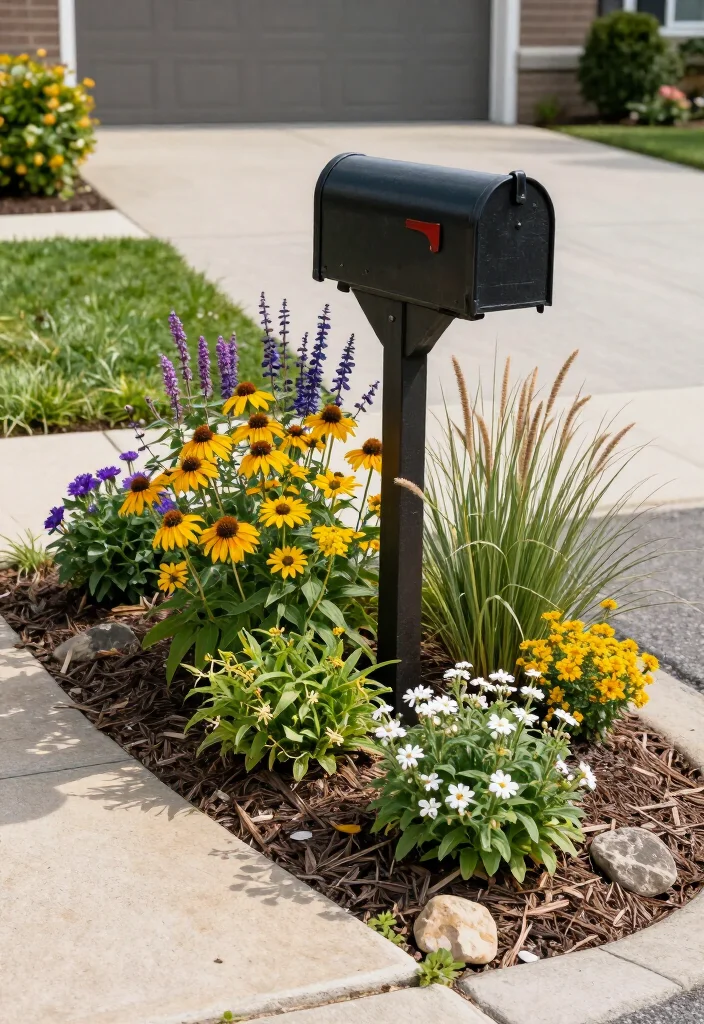
A native mailbox border can brighten your curb while supporting bees and butterflies. Regional plants handle local weather, soil, and rainfall better than many imported varieties. Consider coneflower, bee balm, aster, goldenrod, liatris, butterfly weed, or little bluestem. Check with a local nursery for the best choices.
Group matching flowers so pollinators can feed easily, and choose plants with different bloom times. Place taller varieties behind the box and shorter ground covers toward the street. Leave some seed heads standing through winter for birds.
Create a useful habitat with these choices:
– Choose three native species suited to your soil
– Group purple coneflowers for easier pollinator access
– Leave seed heads for winter bird food
– Edge the bed with stone or brick
A defined border keeps the natural planting tidy. Moving flowers and textured foliage bring life to the mailbox without creating a fussy garden.
6. Brick Edging for a Classic Finish
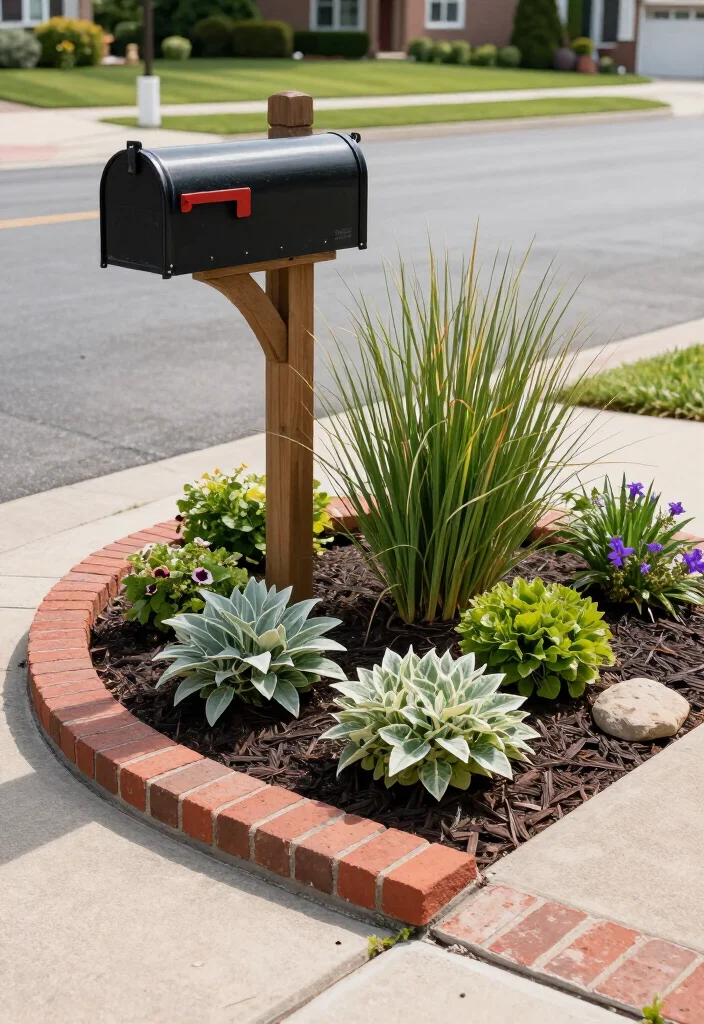
Brick edging gives a mailbox garden a clean, timeless frame. The warm material works beside cottages, ranch homes, brick houses, and modern exteriors. Use a garden hose to test a shallow curve before digging, making sure the carrier has room to stand safely. Keep the mailbox door open and accessible.
Set bricks on compacted sand or crushed stone so they stay level. Reclaimed brick adds character, while new pavers offer a more uniform finish. Fill the bed with catmint, coral bells, lamb’s ear, dwarf hydrangea, or compact grass.
Finish the border with these practical moves:
– Match brick tones to nearby walkways
– Set bricks slightly above the soil line
– Leave a maintenance gap around the post
– Keep mulch below the brick tops
A firm edge holds mulch, blocks grass, and simplifies trimming. Soft foliage against warm brick makes the entire mailbox area feel polished and welcoming.
7. Black-and-White Contrast That Feels Fresh
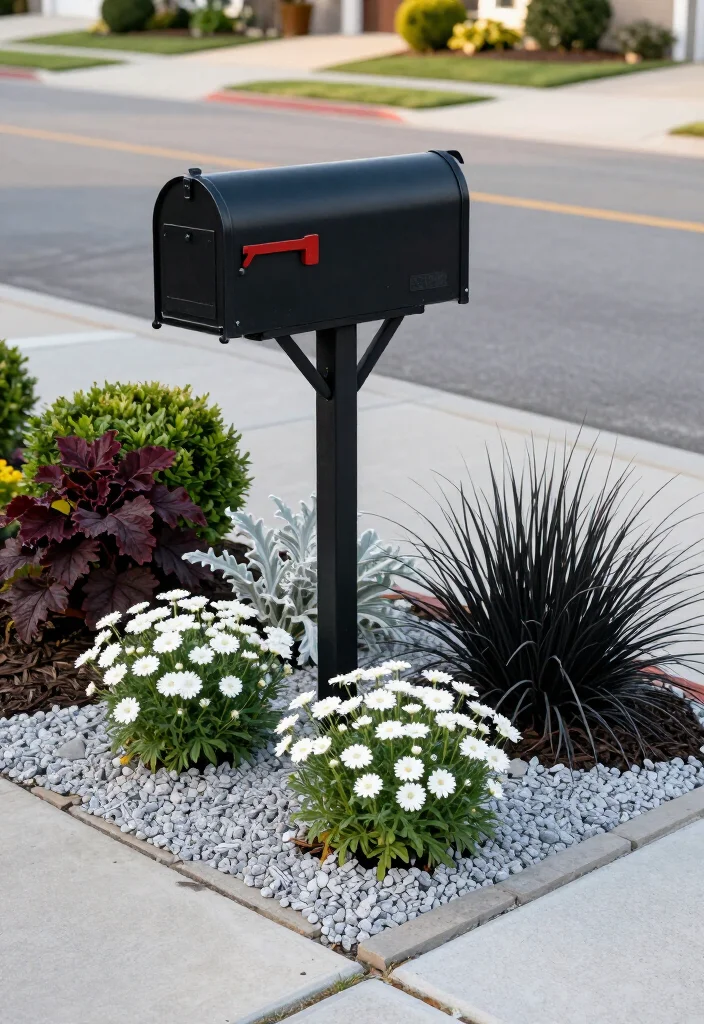
Black and white contrast makes a small mailbox bed easy to notice. A dark mailbox looks crisp beside pale gravel, white flowers, and bright green foliage. Try white yarrow, Shasta daisies, white gaura, lamb’s ear, or silver plants. Add dark green shrubs to keep the palette from feeling flat.
Use light gray pavers, limestone, or pale river rock instead of artificial white mulch. Repeat black in a light fixture or narrow edging strip. A little tan mulch or natural stone can soften the strong contrast and make the space feel more welcoming.
Balance this bold palette with simple details:
– Pair white flowers with dark green shrubs
– Add silver foliage near pale gravel
– Repeat black through a small light fixture
– Keep tall plants behind the mailbox
Strong color blocks look especially sharp in geometric beds. Mixed leaf textures and clean spacing create a fresh design that stays easy to maintain.
You might also like

8. Two Matching Planters at the Base
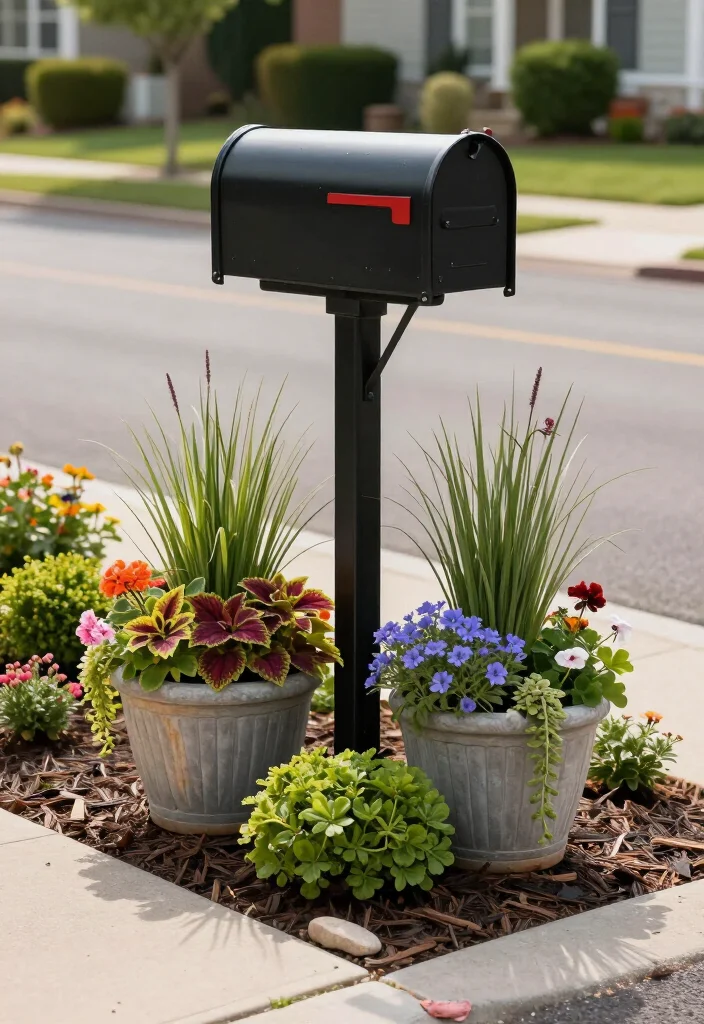
Matching planters bring instant balance to an unfinished mailbox area. Place one container on each side of the post, then keep the planting beneath them simple. Choose weatherproof resin, fiberstone, or glazed ceramic that fits the space without narrowing the sidewalk. Larger pots usually look more settled than tiny ones.
Fill each container with a tall focal plant, fuller middle plants, and one trailing accent. Ornamental grass, coleus, geraniums, bacopa, sedum, and thyme offer flexible combinations. Use plants with similar sunlight and water needs in both pots.
Make the containers work beautifully with these steps:
– Choose matching planters sized for the mailbox area
– Add ornamental grass for vertical interest
– Use trailing bacopa to soften container edges
– Raise pots slightly above wet pavement
Seasonal plants let you refresh the look without rebuilding the bed. Repeated shapes create order, while changing flowers keep the entrance lively throughout the year.
9. A Curved Stone Garden with Blue and White Blooms
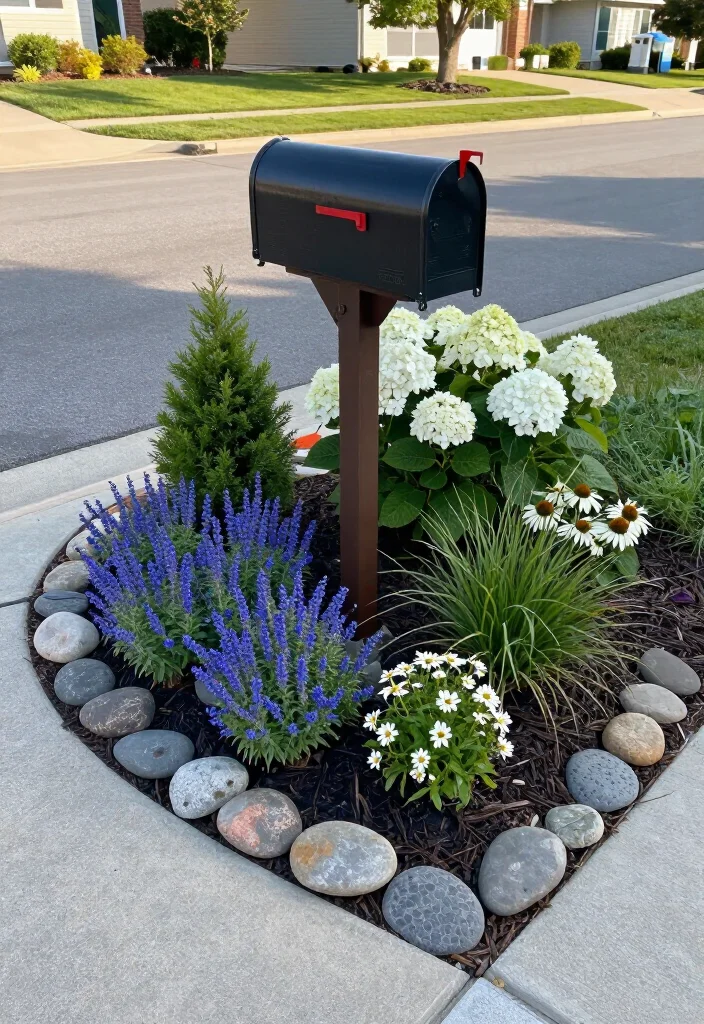
A curved stone garden can make the mailbox a true front-yard centerpiece. Gray boulders, blue flowers, white blooms, and soft grasses create a calm palette that still catches attention. Build a broad crescent instead of a tight circle, giving every plant room to grow without blocking the box.
Set large stones partly into the soil so they look naturally placed. Add river rock near the front, then plant blue salvia, nepeta, blue fescue, white coneflower, or a compact evergreen. Drip irrigation helps new plants establish beneath the mulch.
Shape this memorable design with these elements:
– Place large fieldstones along the back edge
– Plant blue salvia beside white blooms
– Add ornamental grass behind the post
– Keep stones clear of vehicles and snowplows
Blue and white flowers soften hot pavement while stone provides lasting structure. A clean lawn edge completes the polished, showstopping effect.
A Curved Stone Garden with Blue and White Blooms
Editor’s Choice



Top Varieties for Different Conditions
Your mailbox sits where guests and neighbors see it first. The right plants can add color, texture, and front yard curb appeal without creating extra chores. Use these mailbox landscaping ideas to match your weather, soil, sunlight, and the style of your home. Keep plants at least 12 to 18 inches from the post so the box stays easy to reach and easy to see.
1. Cottage Flower Mix
– Best conditions: Full sun, temperate weather, and homeowners who want a soft, welcoming look.
– Main features: Pair coneflowers, salvia, daisies, and creeping thyme for blooms from late spring into fall. Mix plants from 12 to 30 inches tall so the bed looks full without hiding the mailbox.
– Considerations: This choice needs regular trimming and watering during dry spells. Use a thick layer of mulch to slow weeds.
2. Gravel and Ornamental Grass Bed
– Best conditions: Sunny spots, small front yards, and low-maintenance landscaping plans.
– Main features: Use 2 to 3 inches of tan or gray gravel with blue fescue, dwarf fountain grass, or liriope. The clean lines suit modern homes and keep mud away from the post.
– Considerations: Add landscape fabric below the gravel if weeds are a major issue. Grass may need cutting back once each year.
3. Evergreen Layered Planting
– Best conditions: Cold winters, year-round curb appeal, and areas with partial sun to full sun.
– Main features: Combine dwarf boxwood, juniper, and compact ornamental grasses for green color in every season. Place short plants in front and taller shrubs toward the back.
– Considerations: Check the mature width before planting. Some evergreens spread more than expected and can block the mailbox door.
4. Native Pollinator Border
– Best conditions: Sunny beds where you want bees and butterflies to visit.
– Main features: Try native asters, black-eyed Susans, milkweed, and bee balm suited to your region. These plants often handle local rain and soil better than imported flowers.
– Considerations: Native plants may look sparse during their first season. Remove spent stems in late winter instead of cutting everything down in fall.
5. Water-Wise Succulent and Stone Bed
– Best conditions: Hot, dry regions with fast-draining soil and strong sunlight.
– Main features: Mix hens-and-chicks, sedum, agave, and smooth stones for a bold look with little watering. A gravel mulch helps keep leaves dry and reduces soil splash.
– Considerations: Many succulents cannot handle wet winter soil or hard freezes. Pick cold-hardy types, or move tender plants into pots before winter.
6. Woodland Shade Planting
– Best conditions: Mailboxes beneath trees or on north-facing beds with two to four hours of filtered light.
– Main features: Use hostas, coral bells, ferns, and ajuga for rich leaf color and soft texture. Their broad leaves can make a plain post feel settled into the yard.
– Considerations: Tree roots may compete for water. Add compost to the top few inches of soil, and avoid digging deeply near large roots.
Climate and Condition Guide
– Temperate areas: Choose mixed perennials, ornamental grasses, and small shrubs. A 2- to 3-inch mulch layer helps plants handle warm summers and cool winters.
– Continental areas: Pick cold-hardy evergreens, sedum, and native perennials. Protect new plants from freeze and thaw cycles with mulch around, not against, the stems.
– Coastal areas: Select salt-tolerant plants such as beach grass, yucca, lavender, or seaside goldenrod. Keep delicate flowers away from roads that receive winter salt.
– Hot and dry areas: Focus on succulents, gravel, and drought-tolerant grasses. Water deeply once or twice each week while plants establish, then reduce the schedule.
– Humid areas: Give plants extra space for air movement. Choose disease-resistant flowers and avoid soggy soil around the mailbox post.
Growing Tips: Check the bed for six hours of sunlight before buying plants. Water new plants slowly at the roots for the first four to six weeks. Keep branches, flowers, and mulch clear of the mailbox door and house numbers. ✔
Avoid: Skip thorny shrubs, tall plants, and aggressive vines near the box. They can scratch you, hide the address, or make mail collection hard. Avoid thirsty flowers in hot, dry areas unless you can water them often.
10. Seasonal Color That Changes with the Year
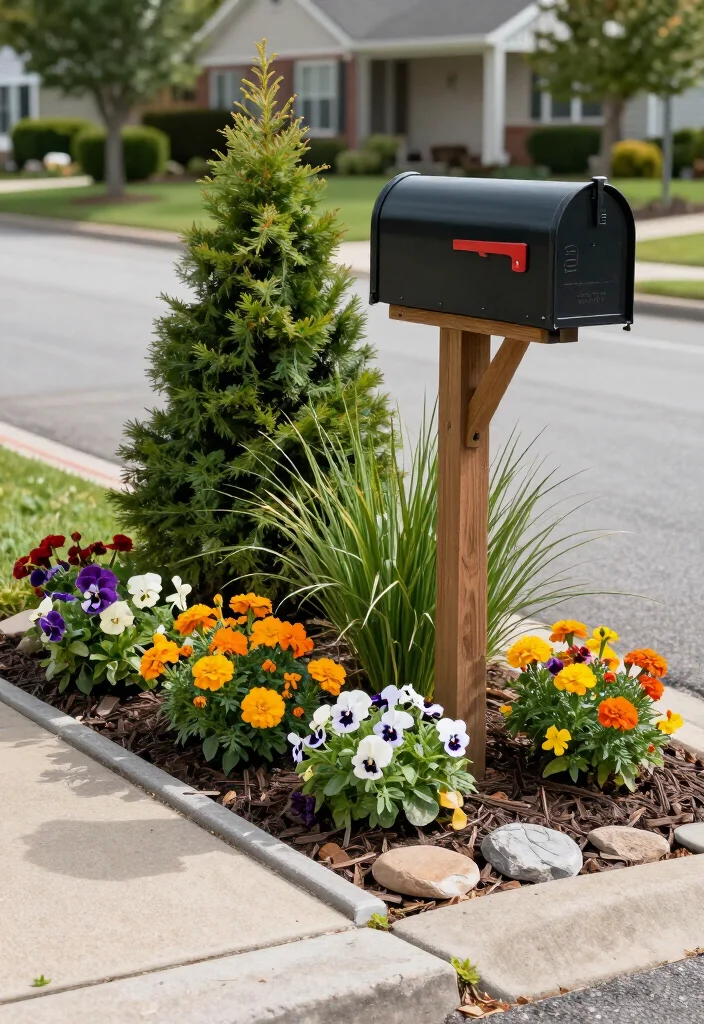
Seasonal planting lets your mailbox change color without a full redesign. Keep shrubs, grasses, edging, and mulch permanent, then reserve the front strip for rotating flowers. Spring bulbs, summer annuals, autumn pansies, and winter seed heads can keep the area lively through every season.
Plant daffodils, crocuses, or alliums in fall, then add zinnias, salvia, or marigolds for summer. Replace tired plants with pansies, asters, mums, or ornamental kale when temperatures cool. Choose colors that connect from one season to the next.
Plan the rotation with these useful choices:
– Plant spring bulbs beneath permanent foliage
– Add summer zinnias for bright, lasting color
– Replace annuals with pansies in autumn
– Keep evergreen shrubs for winter structure
A stable framework makes seasonal updates quick and affordable. Your mailbox stays fresh, cheerful, and connected to the wider landscape all year.
11. A Water-Wise Succulent and Stone Bed
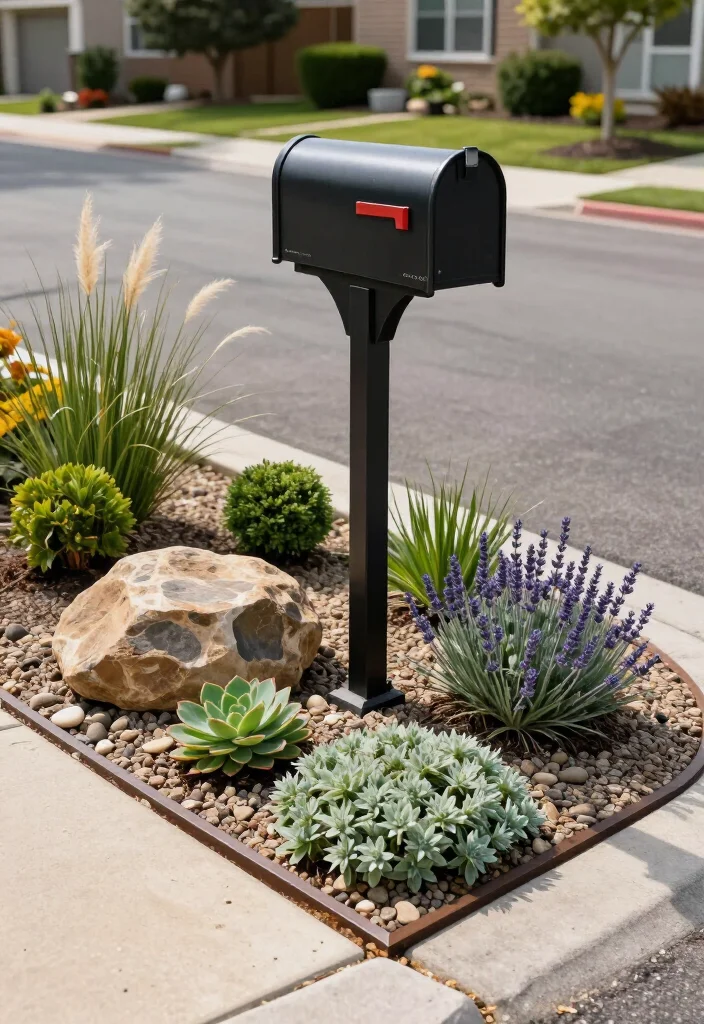
A water-wise mailbox bed saves time in hot, dry weather. Succulents, sedums, lavender, yucca, and drought-tough grasses offer strong shapes without constant watering. This approach works especially well beside driveways where reflected heat quickly dries ordinary flowers. Good drainage remains essential for healthy roots.
Improve heavy soil with compost and coarse material, or raise the bed slightly above the lawn. Combine one bold boulder with smaller gravel and smooth stones for visual depth. Water deeply during the first season, then reduce watering as roots develop.
Build a resilient bed with these choices:
– Group sedum and lavender by water needs
– Add blue fescue for soft movement
– Use gravel mulch around drought-tough plants
– Avoid thorny varieties near the sidewalk
Natural stone keeps the design interesting between blooms. The finished bed looks neat, handles dry spells, and reduces watering without feeling harsh or overly desert-like.
12. Rustic Farmhouse Details with Natural Texture
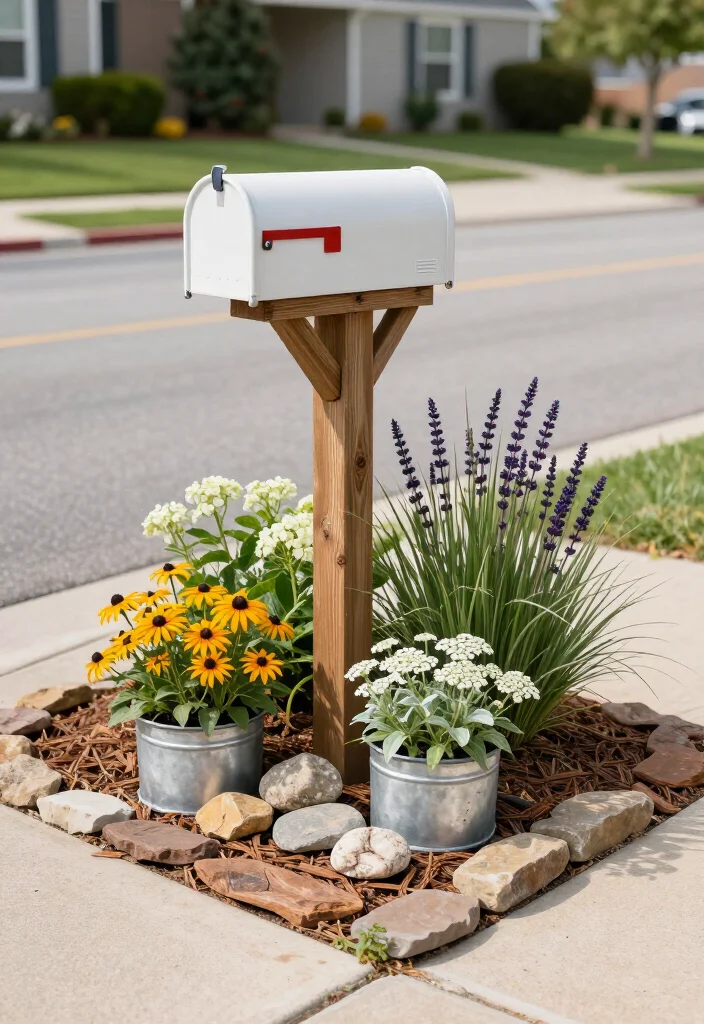
Rustic mailbox landscaping feels welcoming because it uses familiar, honest materials. Cedar, galvanized metal, fieldstone, bark mulch, and relaxed flowers create a natural look beside farmhouses, cottages, ranches, and suburban homes. Keep the details simple so the area feels charming rather than crowded.
Seal a wooden post against ground moisture, and choose a sturdy mailbox finish. Use Russian sage, yarrow, black-eyed Susans, lamb’s ear, switchgrass, or compact hydrangea for easy texture. Reclaimed brick or fieldstone can define the bed while keeping the shape relaxed.
Add farmhouse character with these thoughtful touches:
– Pair cedar wood with a galvanized mailbox
– Edge the bed with natural fieldstone
– Plant ornamental grasses behind the post
– Repeat one warm flower color throughout
Rustic does not mean neglected. Fresh mulch, trimmed foliage, and a clean mailbox help natural materials look intentional and inviting.
13. A Narrow Bed for Small Front Yards
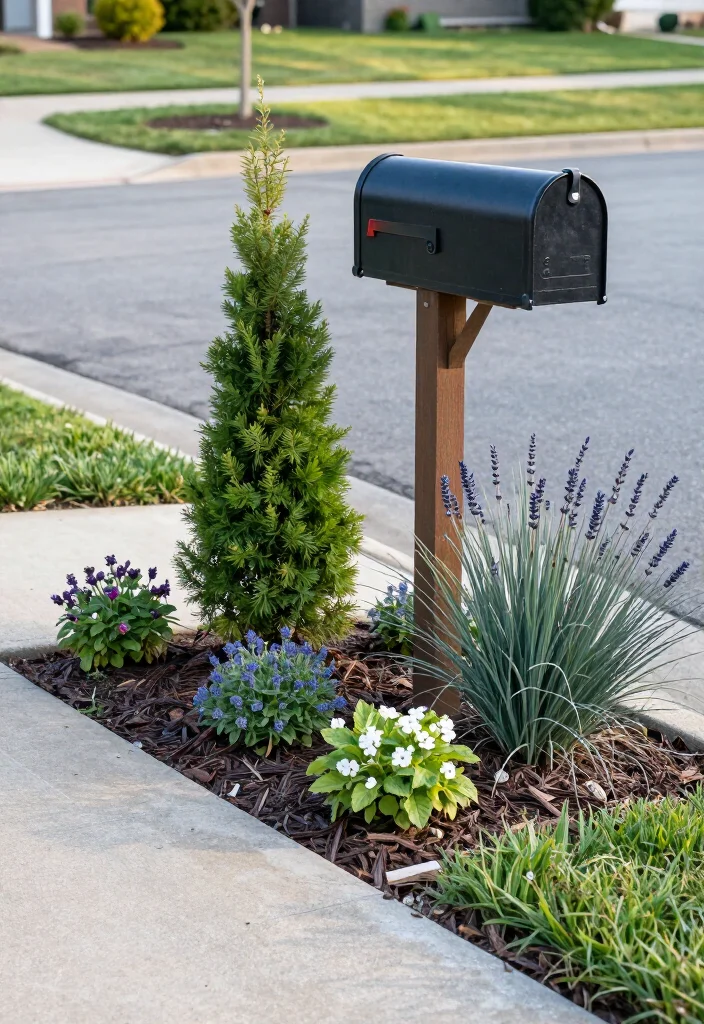
A narrow mailbox bed can still look polished when every plant earns its space. This approach suits townhomes, compact lots, and sidewalks close to the road. Measure the area first, including the carrier’s reach, driveway clearance, and mailbox door swing. Mature plant width matters more than nursery size.
Choose upright forms such as columnar juniper, dwarf arborvitae, blue fescue, lavender, or compact spirea. Add low ground cover along the front and use one gravel or brick strip to prevent soil from splashing onto pavement. Repeat a few plants instead of mixing too many varieties.
Make the tight space feel larger with these choices:
– Select upright shrubs for height without wide growth
– Repeat blue fescue along the front edge
– Leave a clear gap around the mailbox post
– Use flush edging beside the sidewalk
Simple repetition creates calm in a small area. Careful spacing makes the bed feel deliberate, open, and easy to maintain.
You Might Also Like
14. A Short Walkway That Makes the Mailbox Feel Placed
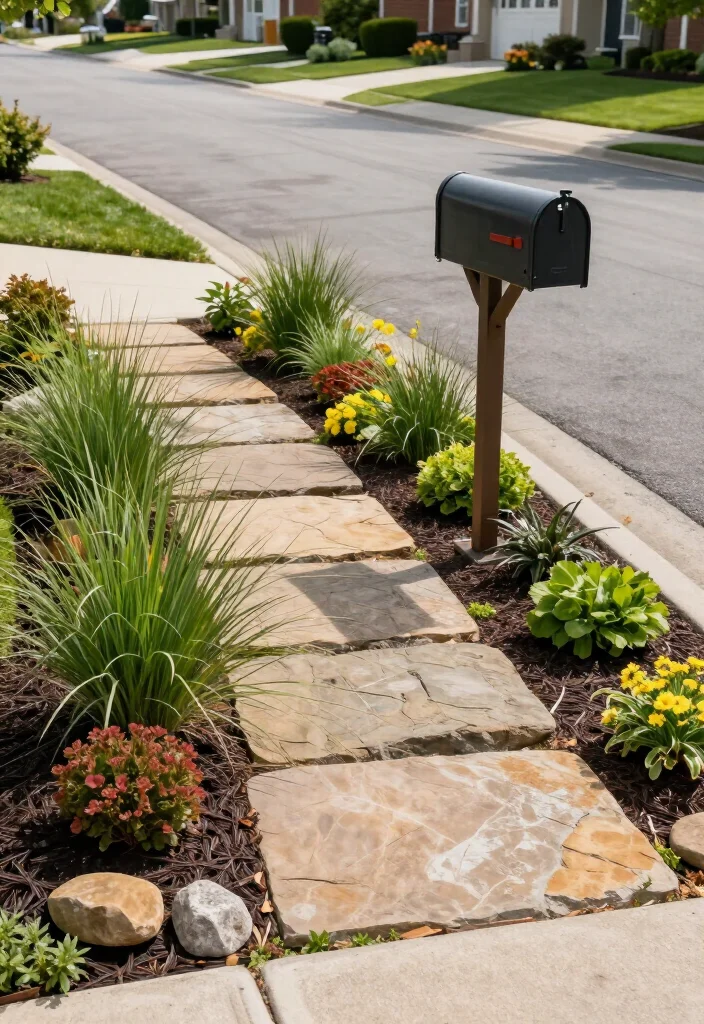
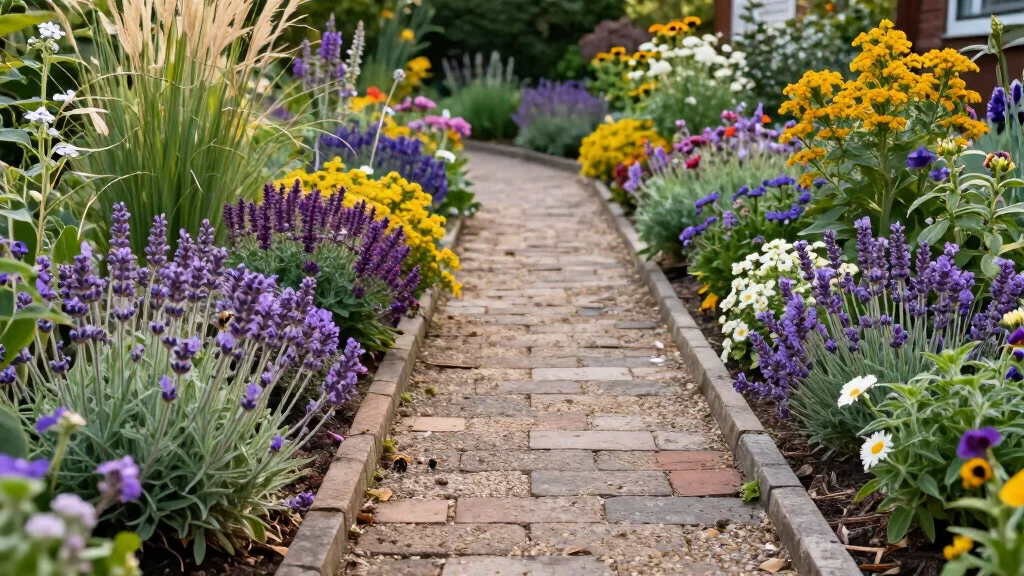
A short walkway connects the mailbox to the rest of your property. Even a few flat stones from the driveway can make the area feel planned instead of stranded beside the road. Match the path to existing brick, bluestone, concrete, or natural stone for a more connected look.
Keep each stepping stone level, stable, and wide enough for safe footing. Curve the route beside the planting rather than through its thickest section. Low ground cover can soften the edges, while taller grasses behind the box add texture without blocking access.
Build a safer route with these practical steps:
– Match path materials to nearby hardscaping
– Set stones on a compacted, level base
– Trim foliage away from walking surfaces
– Add narrow edging to hold gravel
A useful path improves mail pickup, trimming, and weeding. It also gives the mailbox a stronger relationship with the house and front yard.
A Short Walkway That Makes the Mailbox Feel Placed
Editor’s Choice


15. Shade-Loving Woodland Texture
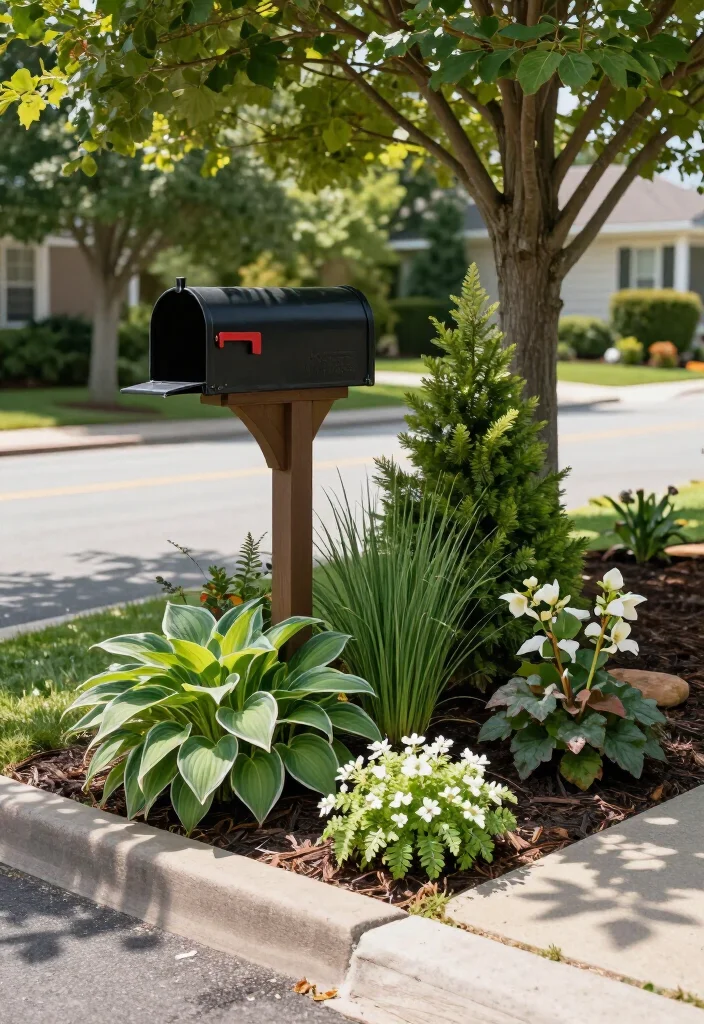
Shade plants can turn a dim mailbox corner into a cool woodland retreat. Broad leaves, ferns, soft ground covers, and pale flowers provide richness without relying on bright summer blooms. First watch the area through the day, since morning sun, deep shade, and dry tree-root conditions require different plants.
Try heuchera, hostas, ferns, hellebores, foamflower, sweet woodruff, or Japanese forest grass. Place taller foliage behind the post and lower plants near the sidewalk. Use bark or decorative stones to define the bed without making it feel too formal.
Give the shaded border lasting texture with these steps:
– Plant heuchera for colorful, lasting foliage
– Add ferns beneath mature trees
– Keep ground covers away from the mailbox door
– Remove leaves before they smother plants
Shade gardens feel peaceful and often need less deadheading. Clean edges, healthy foliage, and a well-kept post keep the lush look attractive rather than overgrown.
Shade-Loving Woodland Texture
Editor’s Choice



16. Classic Red, Green, and White Planting
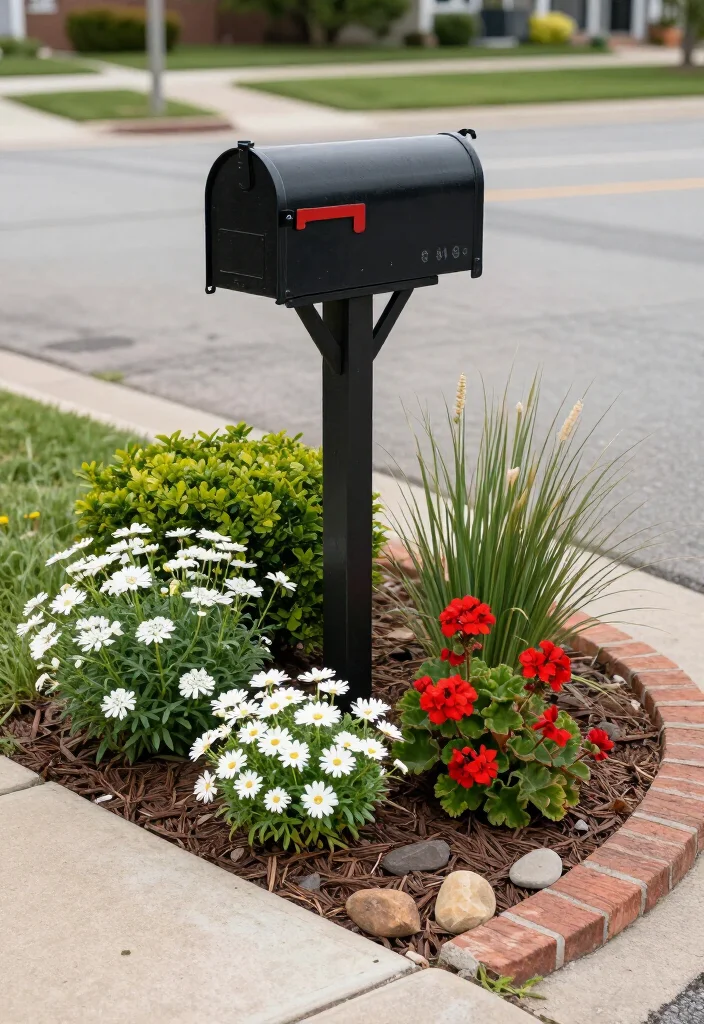
Red, green, and white create a cheerful mailbox palette with lasting traditional appeal. Red flowers provide the spark, white blooms soften the display, and evergreen foliage holds everything together. Try red salvia, geraniums, coral bells, white alyssum, daisies, gaura, boxwood, or inkberry.
Use a curved brick or stone edge to give the colors a classic frame. Place green shrubs behind the box, white flowers through the middle, and red accents in small repeated groups. Natural brown mulch keeps the palette warm without competing with the plants.
Keep this familiar combination fresh with these choices:
– Repeat red flowers in two or three clusters
– Add white blooms along the front edge
– Use evergreen shrubs for year-round green
– Choose disease-resistant plants for your climate
The result feels welcoming without looking dated. Regular trimming and light deadheading keep this dependable palette bright through busy seasons.
17. A Budget-Friendly Weekend Refresh
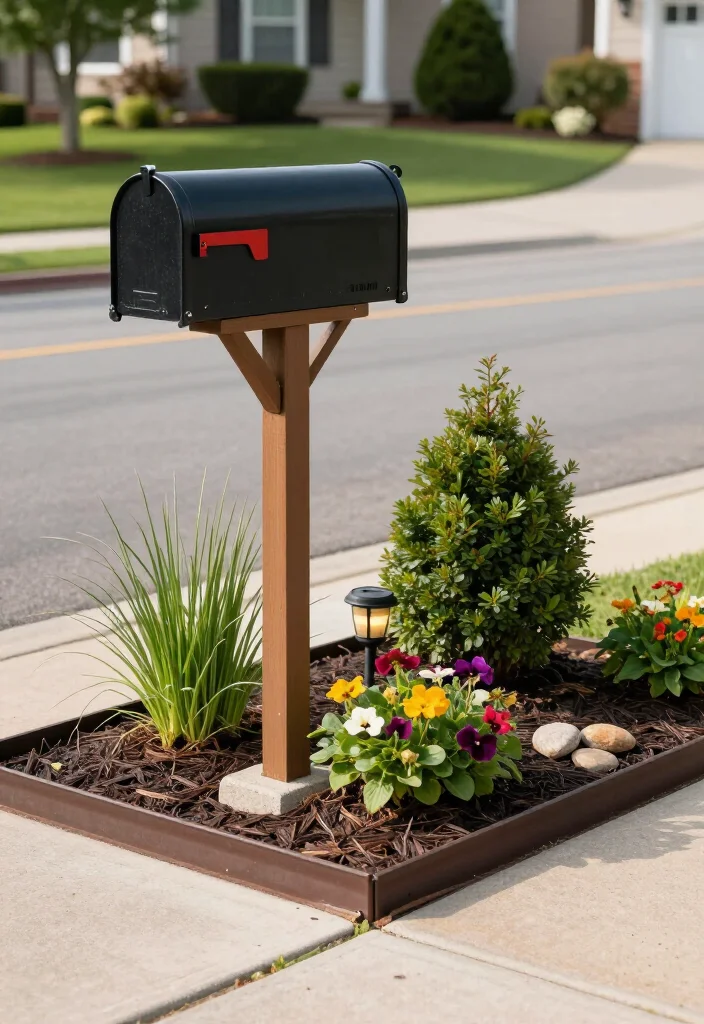
A weekend refresh can improve a tired mailbox without a full landscape renovation. Start by removing weeds, dead growth, loose hardware, and damaged plants. Check the post for rot, wash the box, and touch up outdoor paint before adding anything new. Small repairs often create the biggest visual change.
Mark a simple bed with a hose, add inexpensive pavers or recycled brick, and finish with mulch or gravel. Choose one compact shrub, one ornamental grass, and one flowering perennial, repeating each for a connected look. Water deeply after planting.
Make the makeover affordable with these steps:
– Measure the bed before buying new plants
– Choose three reliable varieties for repetition
– Add fresh mulch after removing weeds
– Install one solar light only if needed
Restraint makes budget landscaping look polished. Fresh edges, healthy plants, and clean materials can give your mailbox noticeably better curb appeal in one weekend.
A Budget-Friendly Weekend Refresh
Editor’s Choice


Conclusion: Give Your Mailbox Its Moment
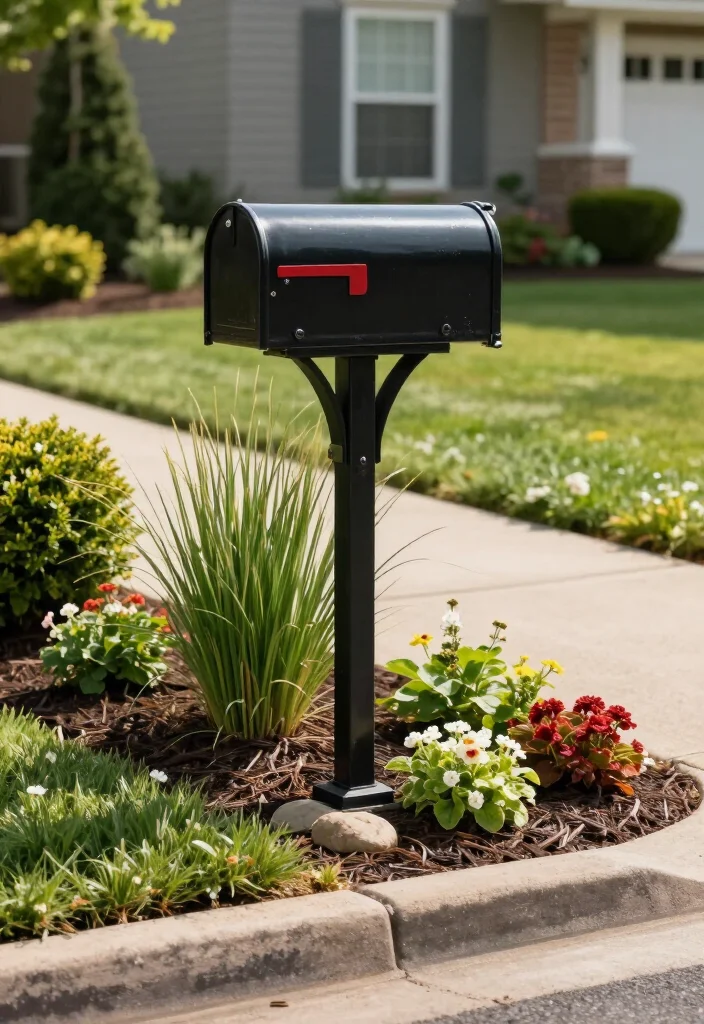
The best mailbox landscaping ideas balance beauty with everyday function. A defined bed, well-sized plants, fresh mulch, and one strong design detail can give your whole property more front yard curb appeal without creating a maintenance headache.
Choose the style that suits your home, start with a manageable weekend project, and let the mailbox become a small but memorable welcome point. Which idea would you try first?
Note: We aim to provide accurate product links, but some may occasionally expire or become unavailable. If this happens, please search directly on Amazon for the product or a suitable alternative.
This post contains Amazon affiliate links, meaning we may earn a small commission if you purchase through our links, at no extra cost to you.
Frequently Asked Questions
Q. What plants are good around a mailbox?
Choose plants that suit your local climate, sunlight, and soil. Low-growing perennials, ornamental grasses, flowering plants, and compact shrubs are popular options.
Q. How can I landscape around a mailbox on a budget?
Start with a small planting bed, inexpensive edging, mulch, and a few reliable plants. You can expand the design gradually as the plants grow.
Q. Should I use mulch around a mailbox?
Yes. Mulch can give the planting area a finished appearance while helping retain soil moisture and suppress weeds. Keep it away from direct contact with the mailbox post.
Q. Can I plant flowers directly around my mailbox?
You can, provided the plants don’t obstruct access to the mailbox, cover the address, or interfere with the carrier’s ability to safely reach it. Check local postal or neighborhood requirements before planting.
Q. How do I make mailbox landscaping low maintenance?
Use plants suited to your growing conditions, group plants with similar watering needs, add mulch, and avoid species that quickly become oversized. A simple, well-planned bed is usually easier to maintain than an overcrowded one.
