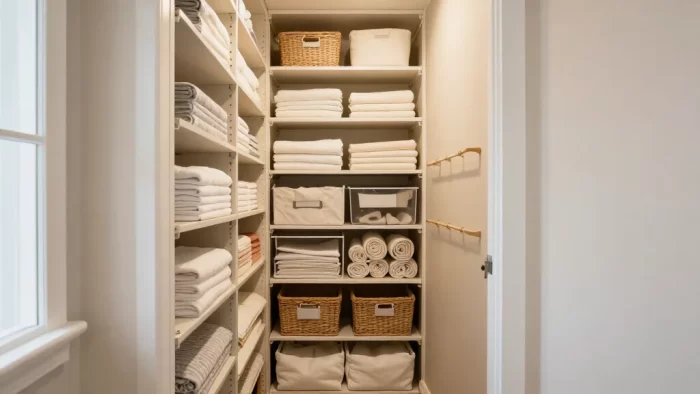
You open your linen closet to grab a clean towel, and suddenly, a pile of bedsheets comes tumbling down. Sound familiar? That’s exactly why these Linen Closet Organization Ideas are worth trying!
A few simple changes, like folding towels neatly, using labeled storage baskets, and keeping matching sheet sets together, can make your everyday routine so much easier.
My favorite organizing trick is storing each sheet set inside one of its pillowcases so nothing gets lost.
Whether you’re dealing with a tiny hallway closet or overflowing shelves, these small linen closet storage solutions will help you save space, reduce clutter, and keep your home feeling fresh and organized.
- 1. Start With a Ruthless Linen Closet Edit
- Start With a Ruthless Linen Closet Edit
- Bath Towel Wraps for Women After Shower Body Towel Wrap Grey 32×60
- Women's Spa Wrap Microfiber Bath Body Wrap, Black, 32"x60"
- 4 Pcs Towel Wrap for Women, 53 x 31 Inch Soft White Shower Wrap Towel fo…
- Elegant Comfort 6-Pack Cream Viscose Satin Pillowcase Set with Hidden Zi…
- King Standard Pillow Cases Set of 8 – Pillowcase Covers – Lavender Pink
- Start With a Ruthless Linen Closet Edit
- 2. Add Shelf Risers for Instant Double-Decker Storage
- 3. Roll Towels for a Neater, Easier-to-Use Shelf
- 4. Fold Fitted Sheets Into Compact Sheet Sets
- 5. Put Everyday Linens at Eye Level
- 6. Turn the Closet Door Into a Storage Wall
- 7. Install Pull-Out Baskets for the Back Row
- 8. Use One Calm Color Family to Reduce Visual Clutter
- 9. Store Blankets Vertically Like File Folders
- 10. Slip Baskets Under the Shelves
- 11. Use Clear Bins for Linen Backstock
- 12. Choose Narrow Baskets for Awkward Side Gaps
- Choose Narrow Baskets for Awkward Side Gaps
- Small Fabric Storage Baskets, 15x6x5 inch Narrow Storage Bins 4-Pack Lon…
- JAVANTI Long Narrow Wicker Basket, 15 x 6.7 x 5 Inch, 1 Pack | Toilet Pa…
- Univivi Small Narrow Fabric Storage Bins, Long Baskets, Gray, 4 Pack
- Narrow Storage Bins, Small Basket for Closet and Shelves, Bamboo Toilet …
- Onlytak Plastic Wicker Storage Baskets – Toilet Tank & Bathroom Baskets,…
- Choose Narrow Baskets for Awkward Side Gaps
- 13. Tuck Each Pillowcase Into Its Matching Set
- Tuck Each Pillowcase Into Its Matching Set
- SpaceAid 8 Pack Bed Sheet Organizers and Storage, Foldable Sheet Organiz…
- Bed Sheet Organizer 4 Pack – No Insects Entry Sheet Organizers and Stora…
- 8 Pack Sheet Organizers and Storage, Bed Sheet Organizer with Window
- Clear Bed Sheet Organizer Bags for Linen Closet 6 Pack
- Bed Sheet Organizers, Foldable Linen Closet Storage, 6 Pack, Beige
- Tuck Each Pillowcase Into Its Matching Set
- 14. Add a Tension Rod for Hanging Delicates
- Add a Tension Rod for Hanging Delicates
- Mesh Laundry Bags for Delicates – 2 XLarge Durable Net with Anti Rust Zi…
- The Laundress Mesh Laundry Bag Bundle, Helps Protect Fabrics, Small & Large
- 4-Piece Large Durable Organic Cotton Mesh Laundry Bags with Sturdy Zippe…
- Organic Cotton Mesh Laundry Bags for Delicates & Travel, 2 Pack
- STORAGE MANIAC 2-Pack Hanging Laundry Hamper, Front See-Through Mesh Bag…
- You Might Also Like
- Add a Tension Rod for Hanging Delicates
- 15. Give Stray Linens a Return Basket
- 16. Rotate Seasonal Linens to the Top Shelf
- 17. Use Stackable Drawers for Small Household Linens
- 18. Measure the Closet and Build Simple Zones
- 19. Create a Five-Minute Linen Closet Reset
- Conclusion: Make Every Inch Earn Its Place
- Frequently Asked Questions
1. Start With a Ruthless Linen Closet Edit
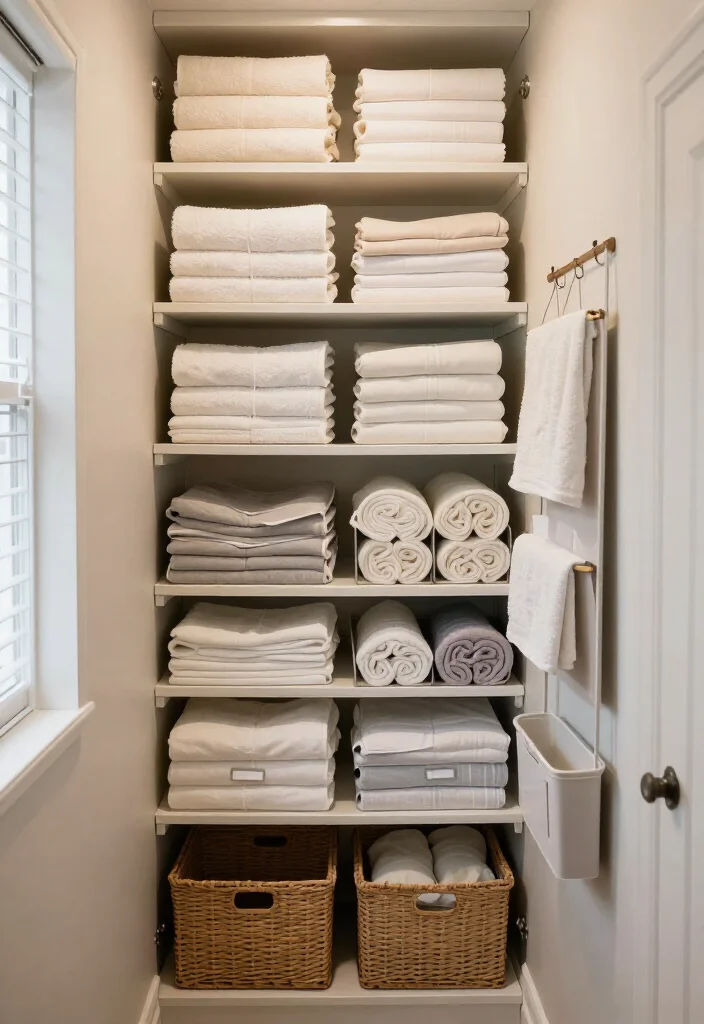
A small linen closet feels larger when you remove what no longer serves your home. Empty every shelf, then group towels, sheets, blankets, pillow protectors, and cleaning cloths together. This clear view reveals duplicates, damaged pieces, and items that belong elsewhere. Keep only linens your household uses and enjoys.
Donate gently used bedding, turn worn cotton towels into cleaning rags, and discard anything stained or scratchy. Count each category before buying baskets, since storage should fit your collection rather than encourage more clutter. Leave a little open space so every item comes out easily.
Try this simple sorting plan:
– Keep daily towels within easy reach
– Move guest linens to higher shelves
– Place bulky blankets in wider spaces
– Separate cleaning cloths from fresh bedding
An edited closet feels calmer, works faster, and makes ordinary shelves feel surprisingly generous.
Start With a Ruthless Linen Closet Edit
Editor’s Choice




2. Add Shelf Risers for Instant Double-Decker Storage
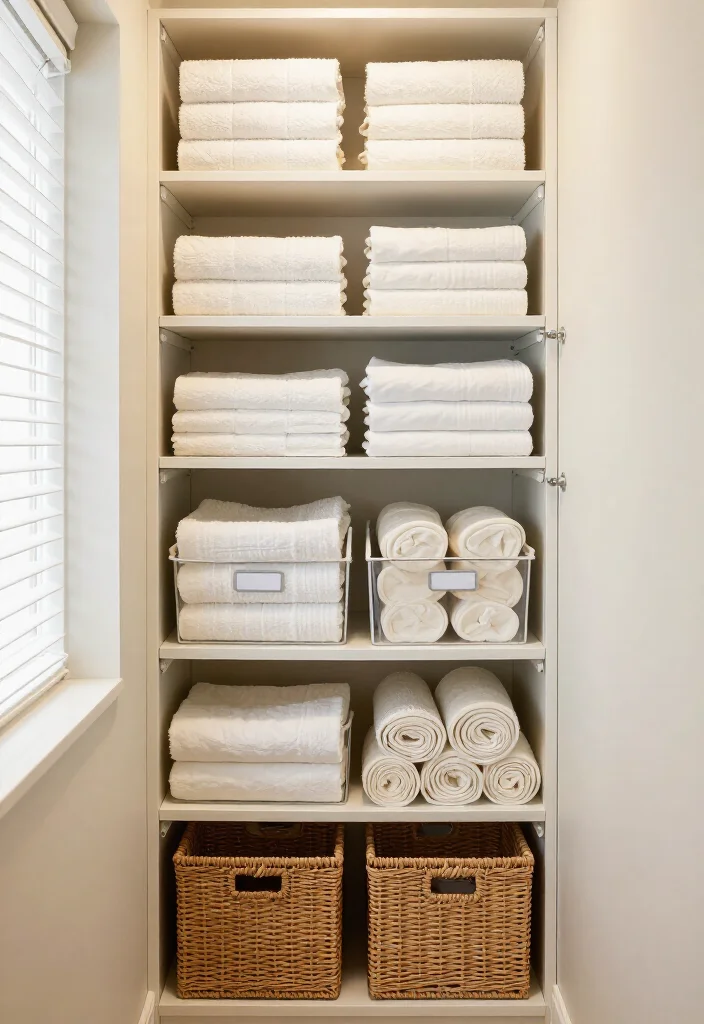
Shelf risers create a second level without construction, making tall closet shelves work much harder.
They are ideal for hand towels, washcloths, pillowcases, and slim sheet bundles that disappear beneath taller stacks. Wire risers feel light, while wood or acrylic versions offer firmer support for heavier linens.
Measure the shelf height before shopping, and leave enough room to lift items comfortably. Place the riser toward the back or center, then keep less-used pieces behind it.
Budget-friendly kitchen risers can work well when their surfaces are sturdy and wide enough.
Use this practical arrangement:
– Pair risers with hand towels above
– Store bath towels underneath
– Keep guest linens behind the riser
– Add non-slip pads on smooth shelves
This simple layer adds storage while keeping every stack visible and easy to reach.
3. Roll Towels for a Neater, Easier-to-Use Shelf
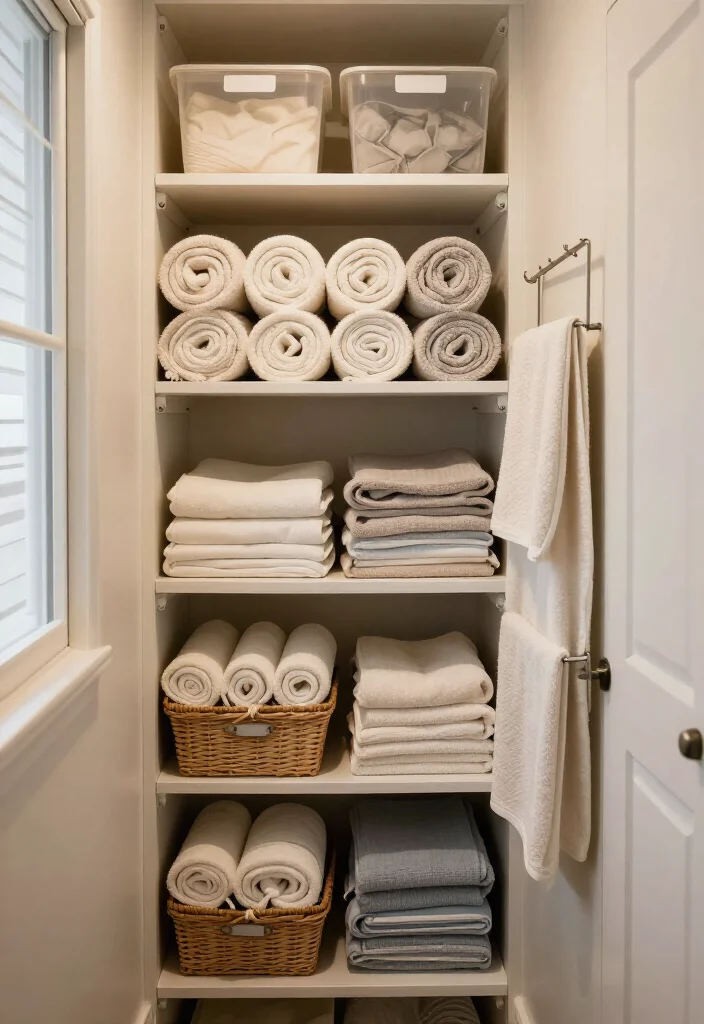
Rolling towels helps narrow or deep shelves feel less crowded. A firm roll can slide out without pulling down nearby stacks, making this method useful for bath sheets, beach towels, guest towels, and frequently used hand towels. The rounded shape also creates a relaxed, spa-like feeling.
Fold each towel lengthwise, roll it from one short end, and place it upright inside a basket or open bin. Keep the roll snug but not tight, and leave enough room to grasp it easily. Fold sheets flat instead, since rolling every linen can waste vertical space.
Organize rolls by size:
– Roll bath sheets in a lower basket
– Group regular towels on center shelves
– Place hand towels in a smaller bin
– Leave finger space between each roll
Visible towel edges make daily use simpler and bring soft cotton texture into the closet.
4. Fold Fitted Sheets Into Compact Sheet Sets
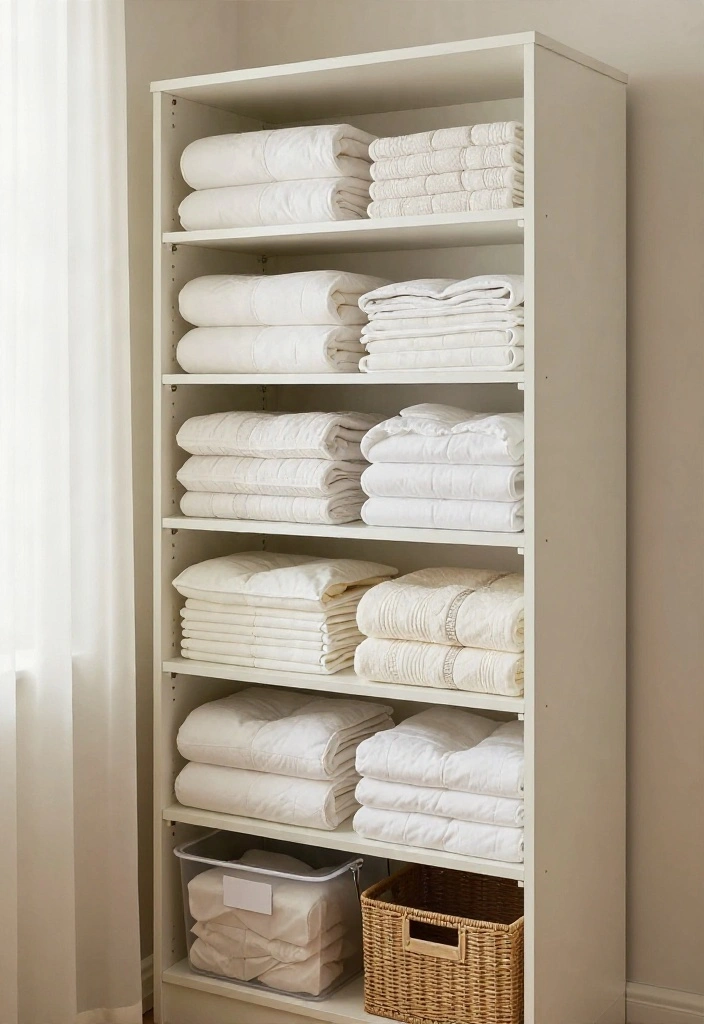
Fitted sheets often create the biggest mess because their elastic corners resist neat stacking. Folding each one into a compact set gives every bed a complete bundle and keeps laundry day from becoming a search through mismatched fabric. The result feels tidy without requiring perfect folding skills.
Tuck the fitted sheet corners together, fold the sides inward, and make a flat rectangle. Place the fitted sheet, flat sheet, and matching pillowcases inside one pillowcase. Store the finished package flat or upright, depending on your shelf height, and keep the most-used size closest to the front.
Build clear bedding zones:
– Group queen sets separately from twin sets
– Store mattress protectors beside matching sheets
– Place guest bedding on higher shelves
– Use dividers between different sizes
Complete bundles stay orderly, protect fabric from wrinkles, and make bed changes much faster.
📹 Related Video: HOW TO FOLD A SHEET SET: How to fold a fitted sheet and make a sheet bundle
5. Put Everyday Linens at Eye Level
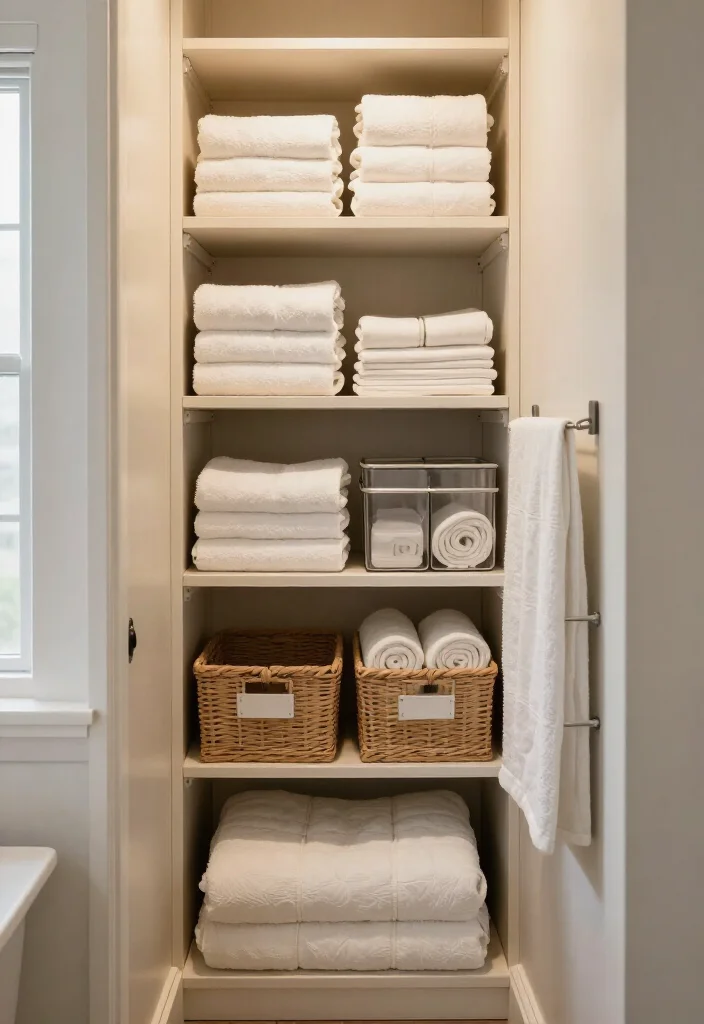
Your linen closet should reflect the way you actually live. Place daily towels between waist and eye level, keep backup bedding higher, and reserve lower shelves for heavy blankets or seasonal pieces. This layout prevents unnecessary digging and makes the closet feel easier to use.
Watch what your household reaches for most often before assigning zones. Families with children may need low towel storage, while homes with frequent guests may prioritize sheet sets. Open baskets can contain small pieces, and folded edges facing outward make supplies easy to check.
Arrange linens by frequency:
– Keep daily towels in the center zone
– Store backup sheets above them
– Place heavy blankets on lower shelves
– Set children’s towels within safe reach
When storage follows your routines, the closet stays calmer and items return to their homes naturally.
Put Everyday Linens at Eye Level
Editor’s Choice


6. Turn the Closet Door Into a Storage Wall
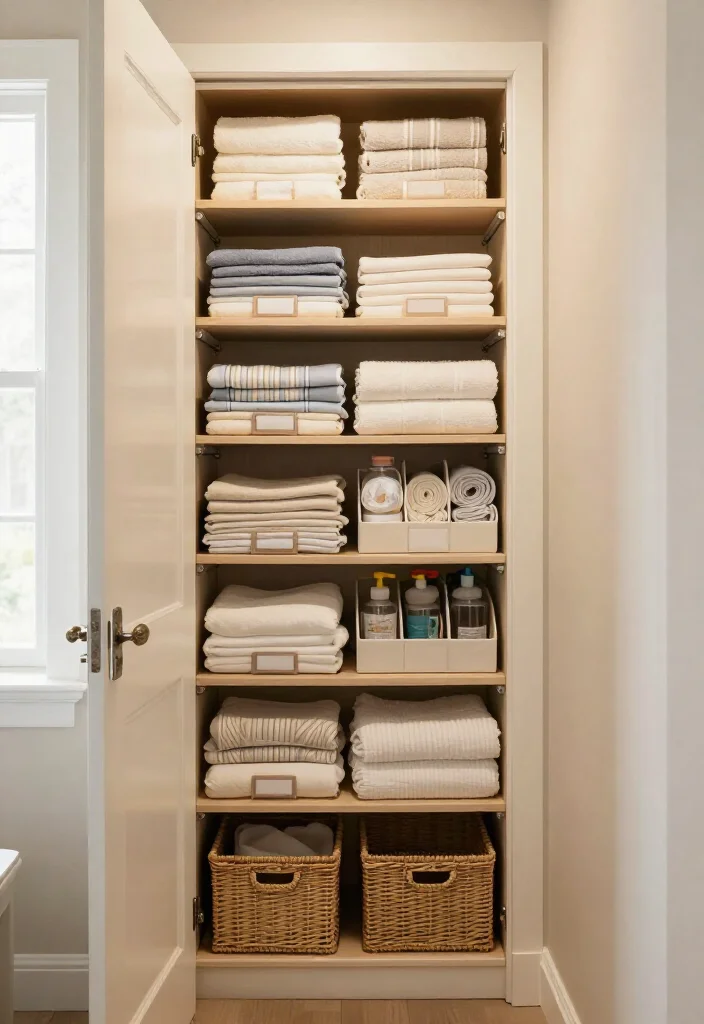
The inside of a closet door offers valuable storage in a narrow space. A slim rack, pocket organizer, or shallow caddy can hold washcloths, pillowcases, hand towels, and small household linens without taking shelf space. This flat surface becomes especially useful when adding another shelf is impossible.
Measure the door clearance first, including the distance between the closed door and stored items. Choose lightweight hardware for rentals, or use a sturdy over-door rack for heavier everyday pieces.
Keep cleaning products separate from fresh bedding, and avoid deep organizers that make the door difficult to close.
Make the door work harder:
– Store washcloths in upper pockets
– Place hand towels in middle baskets
– Hang laundry bags from lower hooks
– Choose low-profile racks for narrow doors
Used thoughtfully, the door adds capacity without turning into an overfilled catchall.
7. Install Pull-Out Baskets for the Back Row
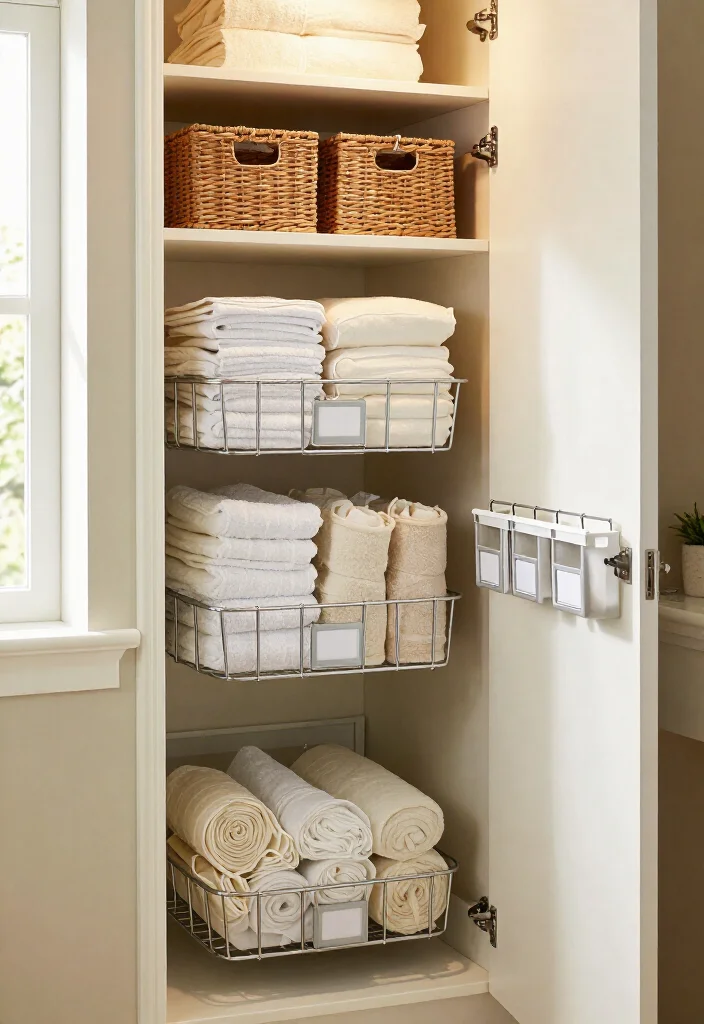
Deep shelves often hide useful linens behind everyday stacks. Pull-out baskets solve this problem by bringing the back row forward, so you can reach spare sheets and blankets without unloading the closet. This small upgrade makes deep storage feel far more practical.
Measure the shelf, door opening, and side clearance before installing sliding hardware. A freestanding handled basket offers a renter-friendly alternative, even without a smooth glide. Keep heavier contents low, and avoid filling baskets so tightly that they become difficult to pull forward.
Use pull-outs for these supplies:
– Store extra sheet sets in shallow baskets
– Keep guest towels in a middle drawer
– Place small blankets in lower storage
– Add shelf liners beneath delicate pieces
Pull-out storage improves visibility, simplifies cleaning, and turns forgotten depth into useful capacity.
8. Use One Calm Color Family to Reduce Visual Clutter
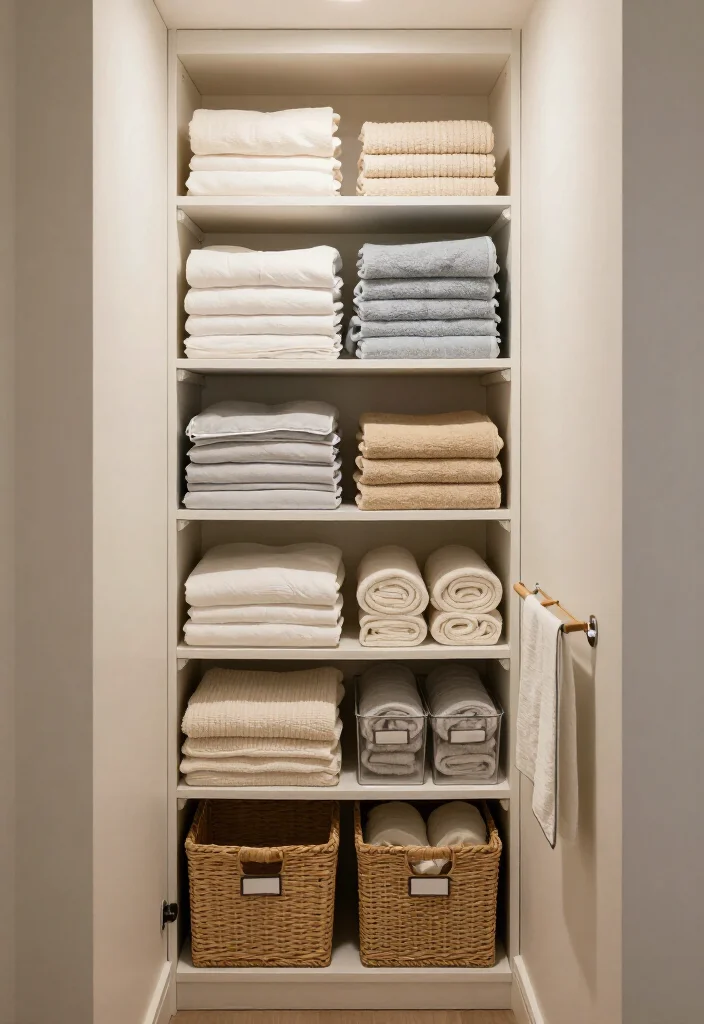
A restrained color palette can make a crowded linen closet look lighter and more organized. Soft white, cream, pale blue, warm beige, and gentle gray create visual harmony while helping stacks feel connected. You can create this effect by regrouping existing linens instead of replacing everything.
Place similar shades together, fold edges outward, and move loud patterns into one basket or higher shelf. When purchasing replacements, choose colors that support the current palette. Keep enough texture through waffle cotton, ribbed towels, and woven baskets so the space still feels warm.
Organize the palette with intention:
– Group light towels on center shelves
– Contain patterned linens in one basket
– Separate dark cleaning cloths below
– Reserve seasonal colors for upper storage
A calm palette reduces visual noise and makes open shelf space feel more noticeable.
You might also like


9. Store Blankets Vertically Like File Folders
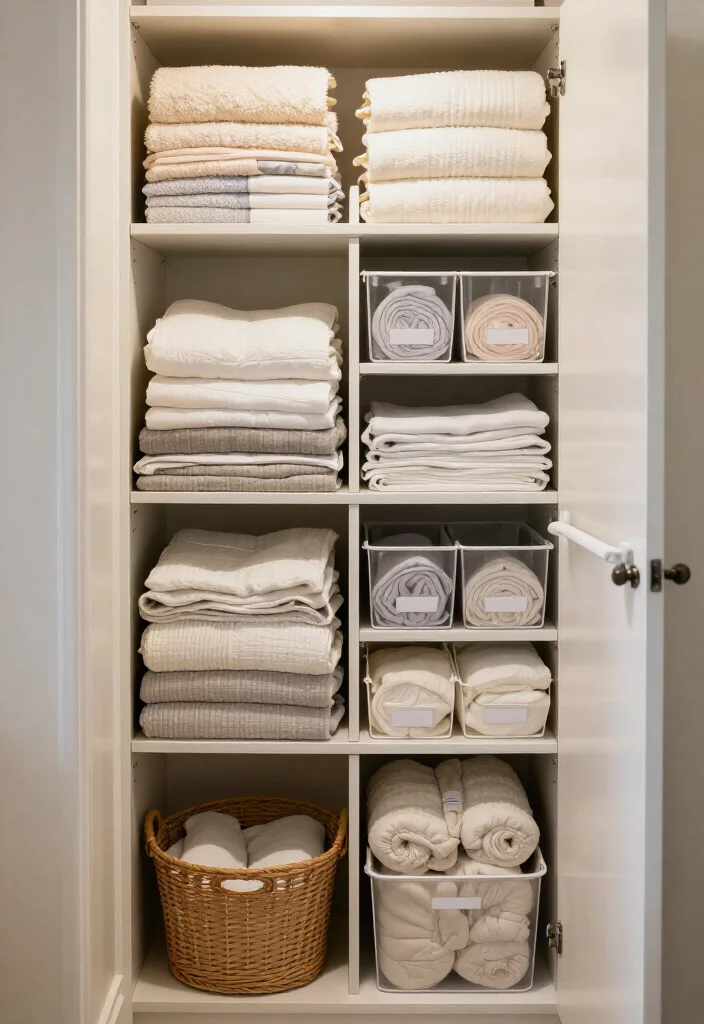
Blankets take over small closets when stacked in unstable piles. Store folded blankets vertically inside a wide basket or divided shelf, much like file folders. This arrangement lets you see every piece and pull out one throw without disturbing the rest.
Fold blankets into similar rectangles, then stand them with folded edges facing forward or upward. Use shelf dividers, sturdy bookends, or a fabric bin to prevent slumping. Breathable cotton bags work well for quilts, while thick duvets may need separate storage because they need more room.
Create useful blanket zones:
– Keep everyday throws in a lower basket
– Store guest blankets on middle shelves
– Place winter quilts in spacious storage
– Add dividers between soft stacks
Vertical storage improves visibility, protects shelf space, and keeps bulky textures from becoming a leaning wall of fabric.
10. Slip Baskets Under the Shelves
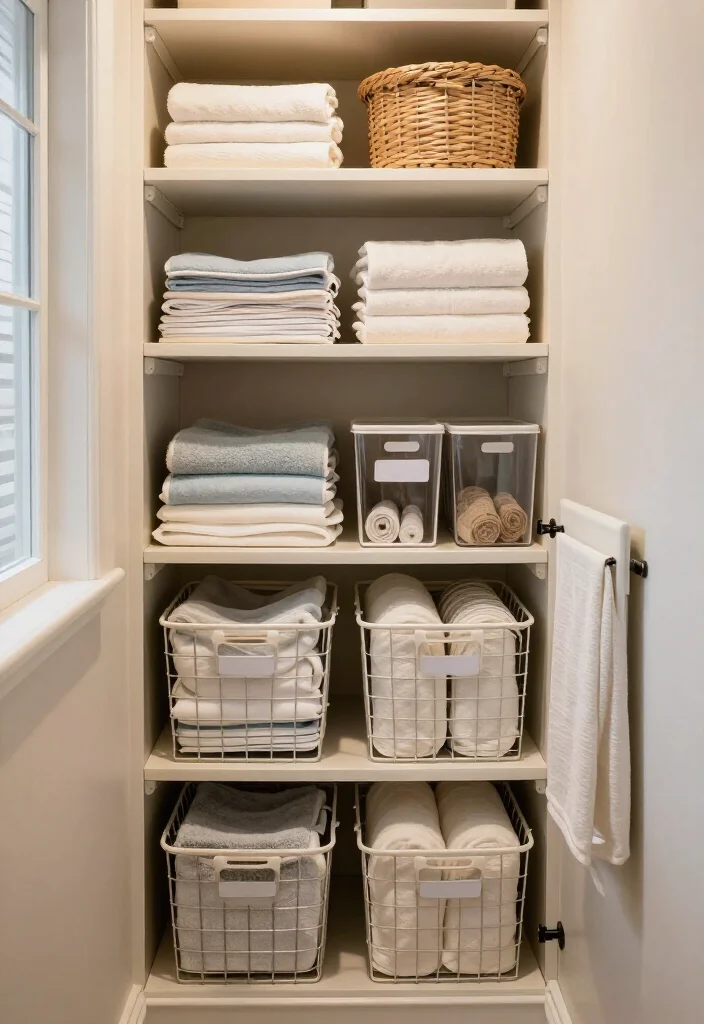
The unused space beneath a shelf can hold more than you expect. Shallow under-shelf baskets create an extra layer for washcloths, pillowcases, hand towels, or small cleaning cloths without taking floor space. They work best where tall items leave several inches of open air above the shelf below.
Measure shelf thickness and lower clearance before choosing a basket. Wire designs keep contents visible, while fabric versions protect delicate pieces. Avoid deep baskets that block the items underneath, and leave enough room to slide both the basket and lower stack out comfortably.
Use this hidden layer wisely:
– Tuck washcloths beneath hand towels
– Store pillowcases below sheet bundles
– Place guest towels beneath guest linens
– Separate cleaning cloths in washable bins
Under-shelf baskets capture dead space while keeping the main shelves open and easier to clean.
11. Use Clear Bins for Linen Backstock
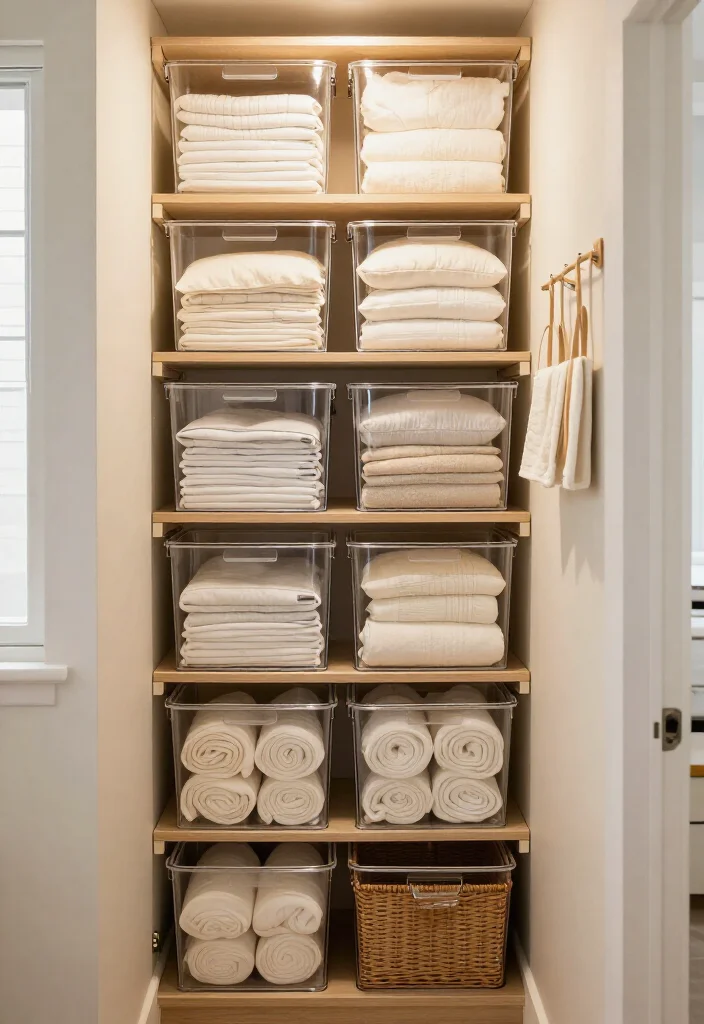
Clear bins keep backup linens visible, especially when they live on deep or high shelves. You can check spare pillowcases, mattress pads, guest towels, and seasonal sheets without pulling down every stack. Straight-sided containers use space better than tapered bins and slide out more smoothly.
Choose bins with handles and measure the doorway before buying. Keep them partly full so they remain easy to lift, and place smaller pieces inside a fabric pouch to prevent scattering. For sunny closets, lightly tinted containers can protect white linens from fading or yellowing.
Contain backstock by category:
– Store extra sheets in one clear bin
– Group pillow protectors together
– Keep guest towels in a separate container
– Label seasonal bedding with simple tags
Visible backstock prevents duplicate purchases and helps forgotten linens return to regular use.
12. Choose Narrow Baskets for Awkward Side Gaps
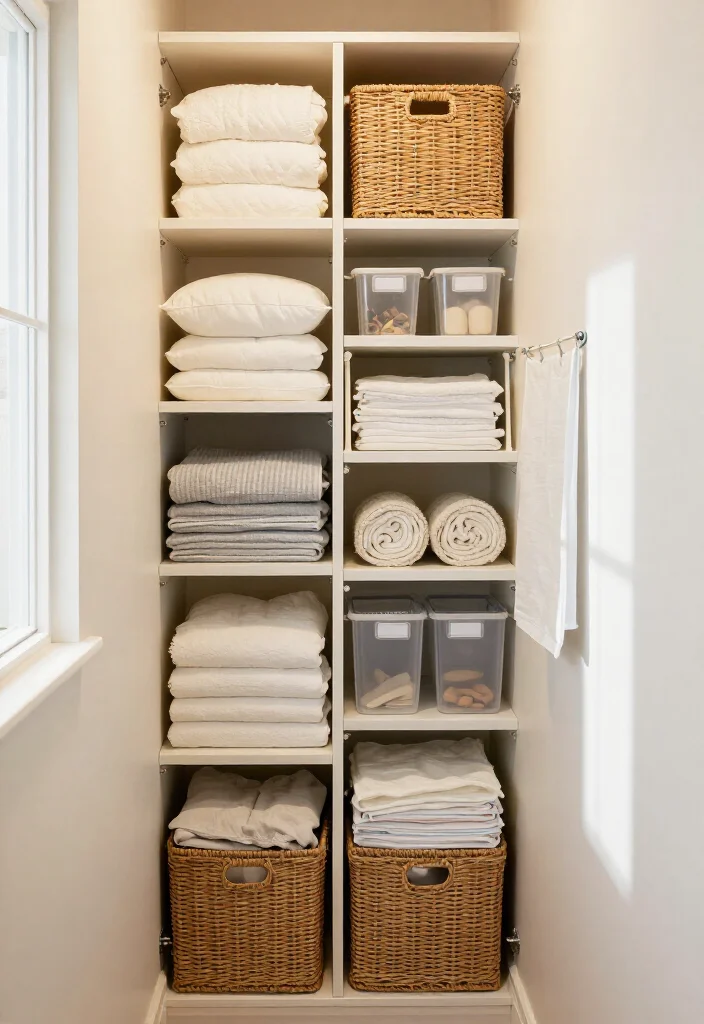
Narrow gaps beside shelves can become useful storage when you choose containers that fit precisely. Slim baskets work well for rolled washcloths, pillow protectors, spare soap, or small household linens. They give loose items a boundary without making the closet feel packed.
Measure the narrowest part of each gap, since walls and trim may not be perfectly straight. Choose handles for easy pulling, soft bins for uneven spaces, or rigid baskets for daily use. Leave enough finger room so the container does not scrape nearby stacks or walls.
Fill awkward spaces with purpose:
– Place washcloth baskets beside towels
– Store pillow protectors near sheets
– Use tall baskets for rolled throws
– Protect delicate linens with lidded bins
One or two narrow baskets can turn overlooked gaps into attractive, practical storage zones.
Choose Narrow Baskets for Awkward Side Gaps
Editor’s Choice


13. Tuck Each Pillowcase Into Its Matching Set
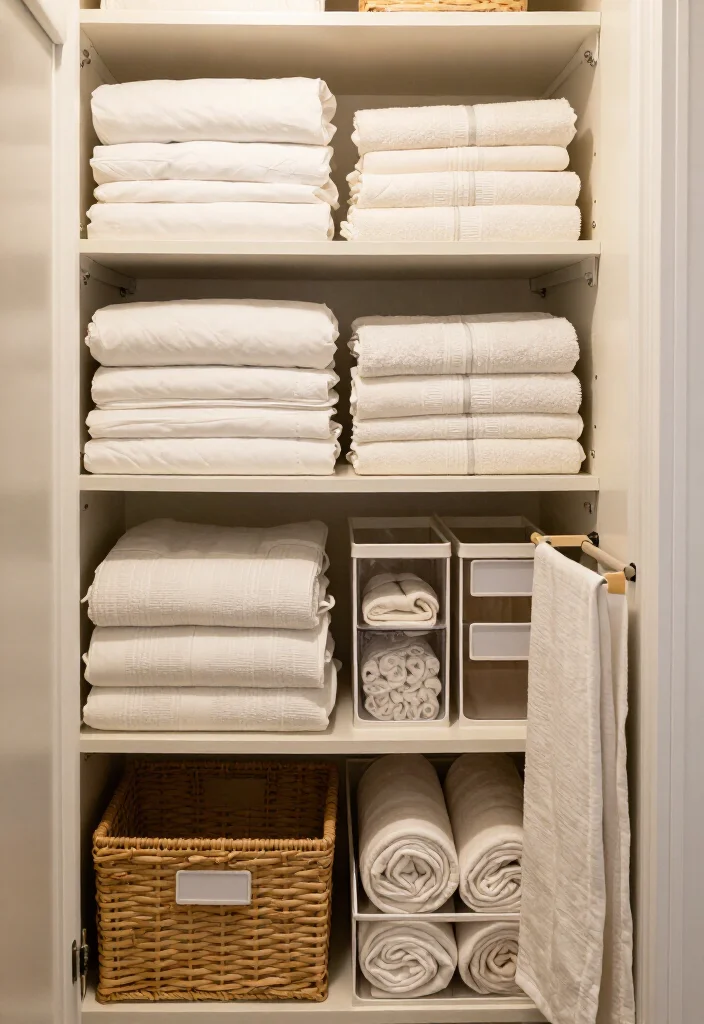
Loose pillowcases quickly disappear behind larger linens and create frustrating mismatches. Tucking matching cases inside their sheet set keeps every bed package complete, compact, and ready to use. The pillowcase acts as a soft wrapper that contains the entire bundle.
Fold the fitted and flat sheets into a rectangle, place matching pillowcases on top, and slide everything inside one case. Fold the opening underneath, then store the bundle flat or upright. Separate bed sizes clearly, especially when several sets share similar colors or patterns.
Keep bedding packages easy to identify:
– Group sheet sets by mattress size
– Place favorite sets near the front
– Store protective cases beside bundles
– Separate decorative cases in a basket
Complete packages save space, reduce laundry confusion, and make changing sheets feel much less tedious.
Tuck Each Pillowcase Into Its Matching Set
Editor’s Choice


14. Add a Tension Rod for Hanging Delicates
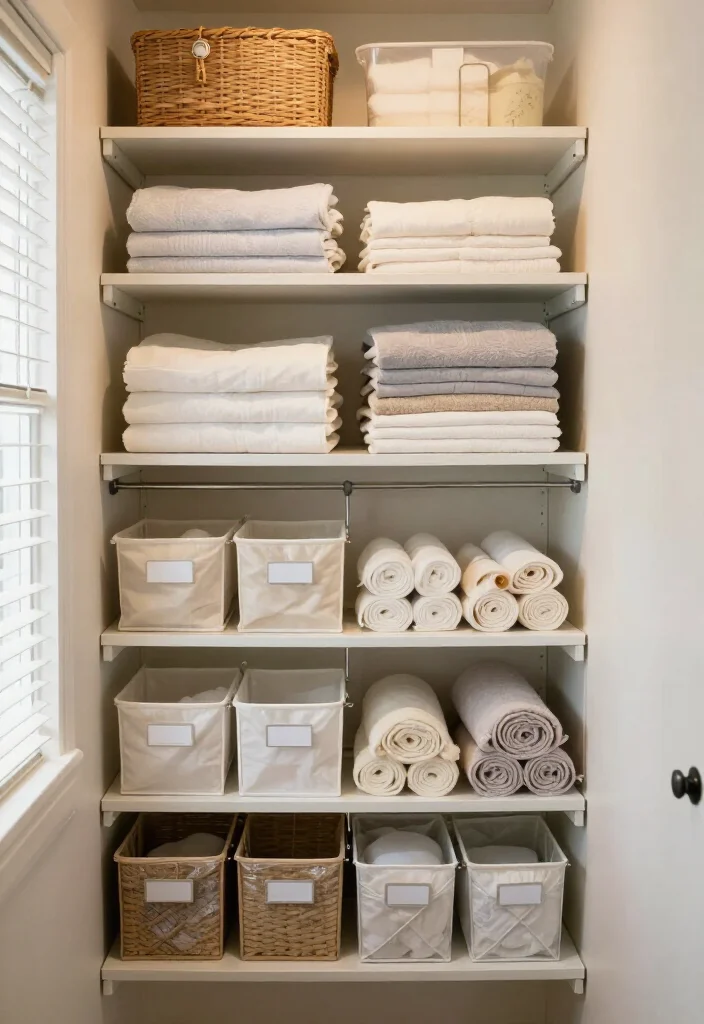
A tension rod gives unused vertical space a useful purpose without requiring permanent construction. Use it to hold table linens, fabric laundry bags, mesh washing bags, or lightweight pillow protectors. This solution works especially well beneath a high shelf where folded storage feels awkward.
Measure the wall width and check the rod’s weight limit before installing it. Choose rust-resistant materials for bathroom closets, and leave clearance so hanging fabrics do not touch damp walls or block the door. Keep the rod lightly loaded, since heavy items can loosen it over time.
Hang these lightweight items:
– Drape tablecloths over the rod
– Suspend laundry bags from hooks
– Air lightweight linens briefly
– Organize mesh bags in fabric pockets
A slim rod turns overlooked height into flexible storage while keeping delicate materials visible and accessible.
Add a Tension Rod for Hanging Delicates
Editor’s Choice


You Might Also Like

15. Give Stray Linens a Return Basket
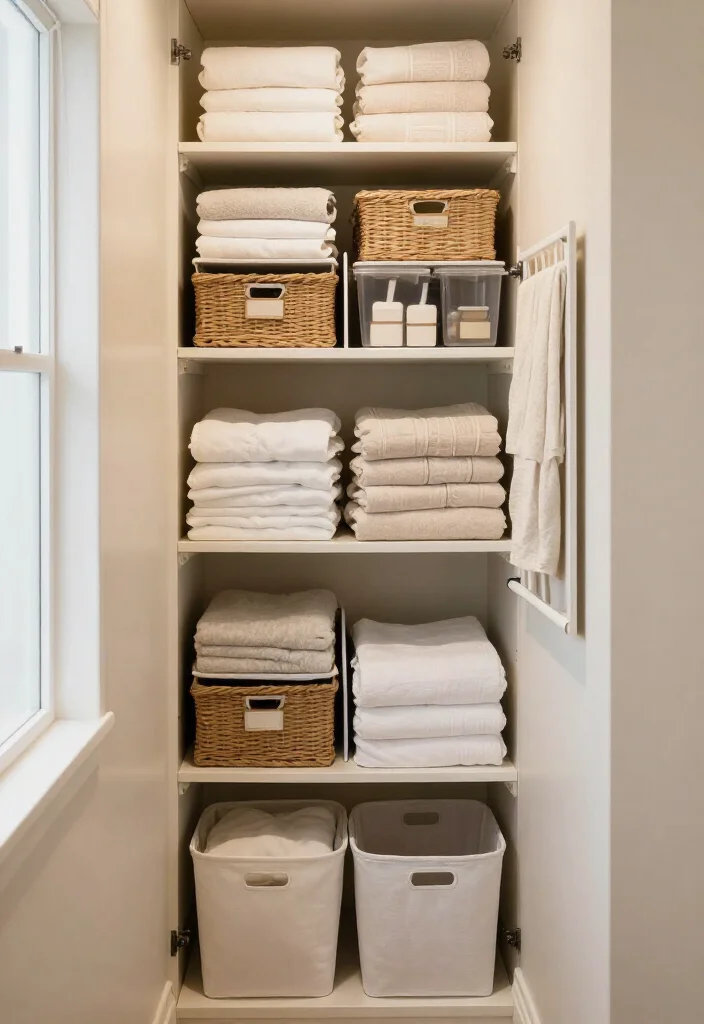
A small return basket gives misplaced linens somewhere to wait without spreading across the closet. Use it for dry items that need folding, matching, mending, or returning to another room. This simple landing spot supports real household habits instead of expecting perfect daily resets.
Choose a shallow basket that fills within a few days, then place it on the lowest shelf or floor corner. Do not use it for wet towels or damp laundry. Empty it once or twice a week, and notice which items repeatedly wait there because their assigned storage may be inconvenient.
Keep the reset basket useful:
– Return clean linens to assigned shelves
– Hold unmatched cases until laundry day
– Separate damaged towels for repairs
– Remove other-room items promptly
A modest basket contains temporary clutter and keeps small problems from becoming a full closet mess.
16. Rotate Seasonal Linens to the Top Shelf
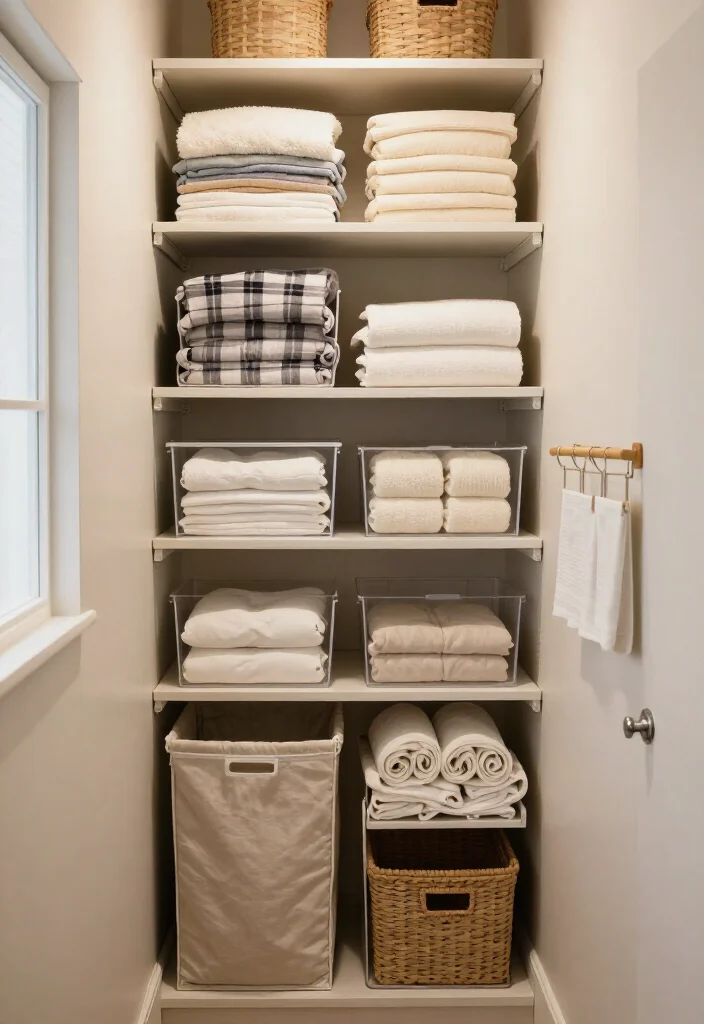
Seasonal rotation keeps winter blankets and summer sheets from competing for prime shelf space. Move off-season pieces to a high shelf, clear bin, or under-bed container, then bring the next group forward before temperatures change. This gives everyday linens more breathing room throughout the year.
Wash and dry everything completely before storage, and inspect fabrics for stains, odors, or loose seams. Use breathable cotton bags for quilts and wool blankets, while sturdy synthetic blankets can handle limited compression. Keep all containers away from bathroom moisture and direct floor contact.
Rotate these categories by season:
– Store flannel sheets during warmer months
– Move beach towels into summer storage
– Protect winter quilts in breathable bags
– Group holiday textiles separately
Seasonal editing also reveals unused pieces, helping you keep only linens that earn valuable closet space.
17. Use Stackable Drawers for Small Household Linens
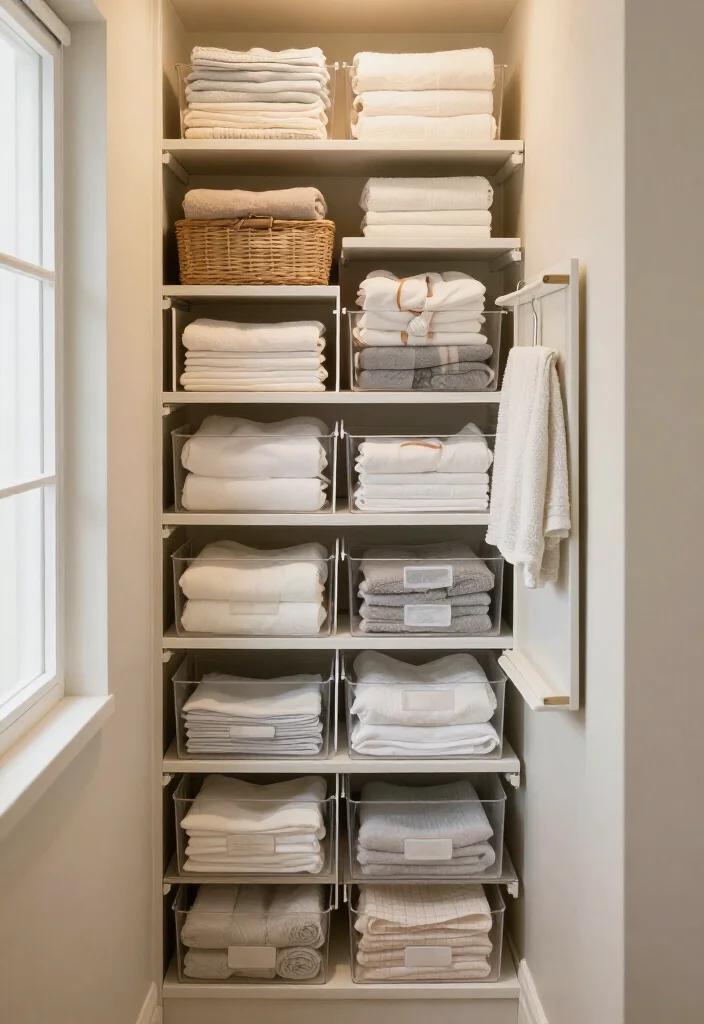
Stackable drawers contain the small linens that refuse to stay neatly folded. Washcloths, cleaning cloths, spare pillowcases, fabric napkins, and mop pads fit well inside shallow drawers. Unlike tall stacks, drawers let you remove one category without disturbing everything nearby.
Measure the shelf width, depth, and height before purchasing. Clear or frosted drawers make contents easy to identify, while nonslip pads keep the unit steady. Choose shallow compartments, since deep drawers encourage small pieces to become compressed and difficult to sort.
Assign every drawer a purpose:
– Place washcloths in the top drawer
– Separate cleaning cloths below
– Store pillowcases in the middle
– Keep fabric household items underneath
Stackable drawers add structure without the cost of custom cabinetry and make small-linen laundry much easier.
18. Measure the Closet and Build Simple Zones
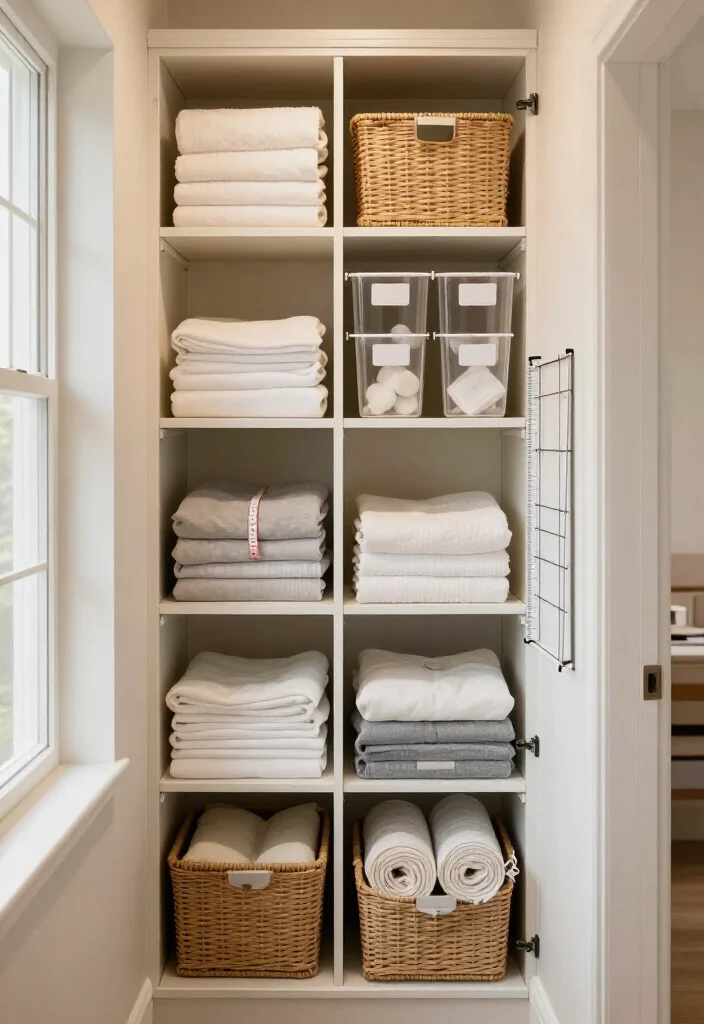
A tape measure can prevent more clutter than another storage purchase. Record the closet width, depth, shelf thickness, height, and door clearance before choosing baskets or risers. Small differences matter when containers must slide past trim or fit behind a closed door.
Sketch the space, mark fixed shelves, and assign categories before shopping. Place daily towels in the center, sheets on one side, blankets below, and small accessories in baskets or door storage. Test the arrangement for a week, then adjust anything that feels awkward.
Measure before organizing:
– Check the narrowest points of each shelf
– Record the door opening and clearance
– Leave room to grip basket handles
– Test bulky items through the closet doorway
A measured plan prevents wasted purchases and leaves enough open space for easy cleaning and future laundry.
19. Create a Five-Minute Linen Closet Reset
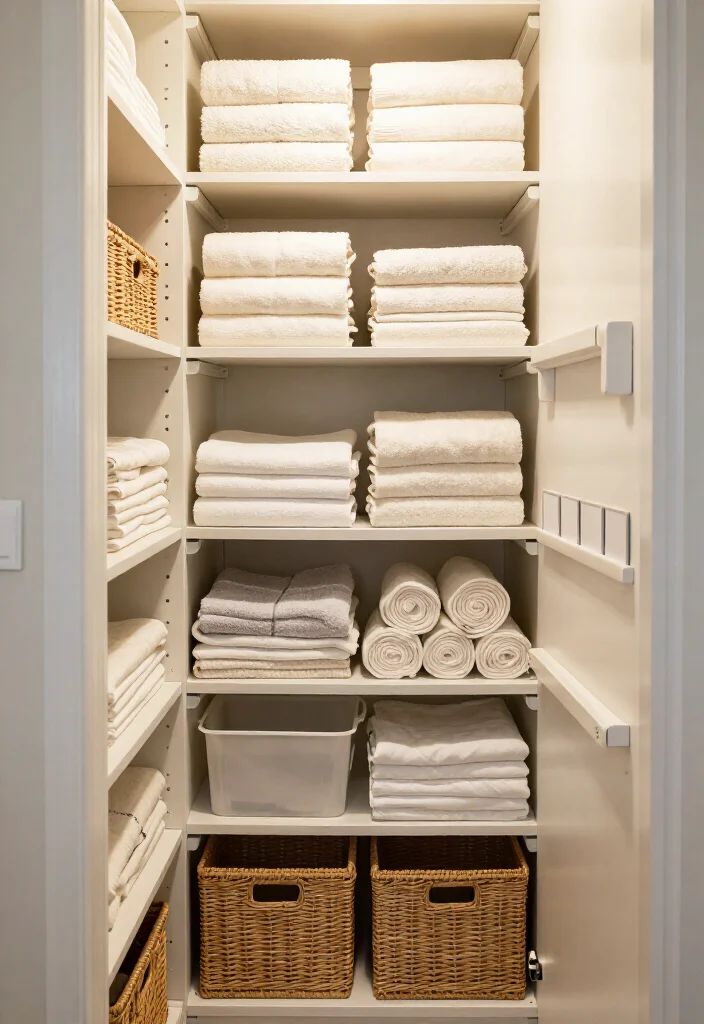
A short weekly reset keeps a linen closet orderly without demanding a full reorganization. Return loose pieces to their zones, refold slipping towels, match stray pillowcases, and remove items that belong elsewhere. Five focused minutes can prevent small problems from becoming an overwhelming pile.
Check for dampness, dust, empty packaging, and overflowing categories. Empty the return basket, straighten dividers, and move seasonal linens back to higher storage. If one group constantly spills out, edit the collection or choose a better-sized container instead of forcing everything inside.
Follow this quick routine:
– Straighten daily towels first
– Match sheet sets and pillowcases
– Check baskets and dividers
– Leave one open area for laundry
A repeatable reset keeps the closet calm because the system supports your daily habits rather than fighting them.
Conclusion: Make Every Inch Earn Its Place
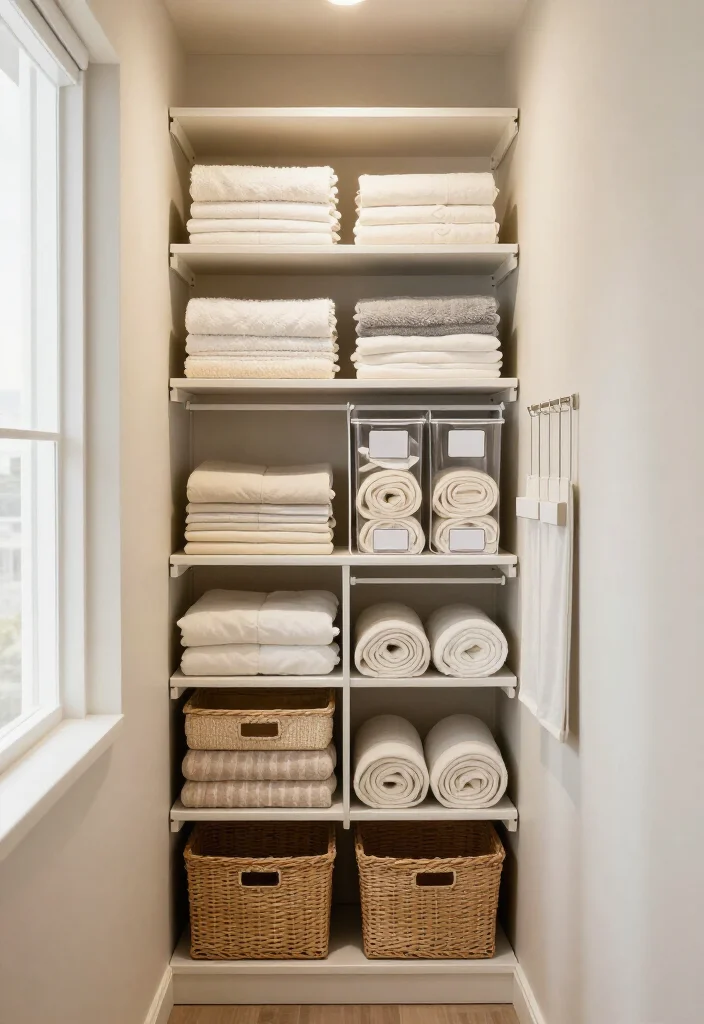
A tiny linen closet does not need a fancy makeover to feel bigger. With edited supplies, vertical storage, useful baskets, clear zones, and a quick weekly reset, every towel and sheet can have a home that makes sense.
Start with one shelf or try the pull-out basket from number 7, then build from there. The best linen closet organization is practical, easy to reach, and flexible enough for real life. Save your favorite idea, measure before buying, and enjoy the extra breathing room.
Note: We aim to provide accurate product links, but some may occasionally expire or become unavailable. If this happens, please search directly on Amazon for the product or a suitable alternative.
This post contains Amazon affiliate links, meaning we may earn a small commission if you purchase through our links, at no extra cost to you.
Frequently Asked Questions
Q. What is the best way to organize a linen closet?
Start by removing everything and sorting your towels, sheets, blankets, and extra linens into categories. Donate items you no longer use, then arrange the remaining linens by type and frequency of use. Keep everyday essentials on easy-to-reach shelves.
Q. How do I organize a small linen closet with deep shelves?
Use pull-out baskets, clear storage bins, or shelf dividers to make items at the back easier to reach. Store frequently used towels and sheets toward the front, and place seasonal bedding in labeled containers.
Q. How can I keep bedsheet sets organized in a linen closet?
Fold the fitted sheet, flat sheet, and matching pillowcases together, then place the entire set inside one pillowcase. This simple method keeps everything together and makes changing your bedding much easier.
Q. What should I store on the top shelf of a linen closet?
The top shelf is ideal for lightweight, rarely used items such as extra pillowcases, seasonal blankets, or guest bedding. Avoid placing heavy storage bins overhead, especially if they’re difficult to lift safely.
Q. How can I organize a linen closet without spending much money?
Reuse baskets, shoeboxes, and containers you already own. Try simple folding methods, homemade labels, and inexpensive shelf dividers. You can also roll towels to save space and make them easier to grab.
