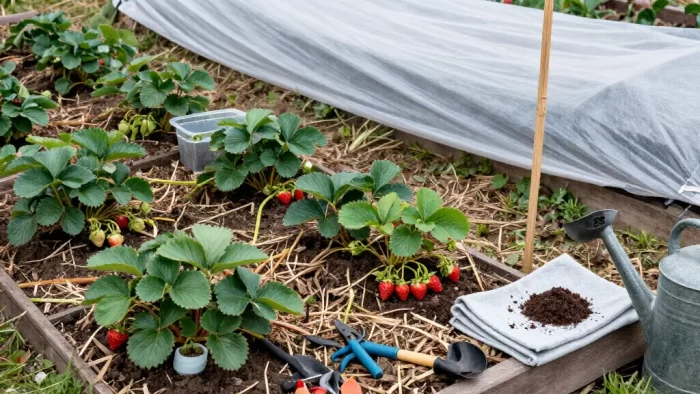
Your strawberry plants gave you sweet, juicy berries all summer. Now, as winter approaches, a little care can make a big difference in next year’s harvest! 🍓
Learning how to Winterize Strawberry Plants helps protect their roots and crowns from freezing temperatures, harsh winds, and sudden weather changes.
One gardening tip I always recommend is waiting until the plants are dormant before adding protective mulch. Covering them too early can create more problems than it solves.
Whether you’re growing strawberries in raised beds, garden soil, or containers, these simple winter strawberry care tips will help you protect your plants and prepare them for healthy spring growth.
- 1. Clean the Bed Without Cutting Away Next Year's Harvest
- 2. Water Deeply Before the Ground Freezes
- Water Deeply Before the Ground Freezes
- Flat Soaker Hose 100FT for Garden, 2Pack 50FT Upgrade Drip Irrigation Ho…
- 100 FT Flat Soaker Hose (2 x 50 FT) – Drip Irrigation for Garden Beds, R…
- 3-Pack Short Soaker Hose 15 Ft for Garden Vegetable Beds
- Moisture Meter for Plants,7-in-1 Digital Soil Tester Kit
- NERUB 2 Gallon Watering Can for Outdoor Plants, Large Garden Watering Ca…
- Water Deeply Before the Ground Freezes
- 3. Set Every Crown at the Right Depth
- Set Every Crown at the Right Depth
- Measuring Transplanting Trowel, 13.78" Stainless Steel Garden Shovel wit…
- Vego Garden 19″ Stainless Steel Garden Trowel with FSC Certified Wood Ha…
- Fiskars Non-Stick Softgrip Micro-Tip Pruning Snip, 2 Pack
- Fiskars 3-Piece Garden Hand Tools Set w/Trowel, Transplanter & Cultivator
- Garden Guru Seed Planting Shovel Trowel Transplanter Widger Stainless St…
- Set Every Crown at the Right Depth
- 4. Add the Right Mulch at the Right Time
- 5. Anchor Frost Cloth Before the Coldest Night
- 6. Protect Containers and Raised Beds From Deep Cold
- Protect Containers and Raised Beds From Deep Cold
- 4 Pack Plant Winter Protection Pot with Drawstring and Zipper,17.7" x19….
- Natural Wheat Straw Mulch, 2.2 LB Compressed Straw for Winter Garden Bed…
- PJT 50FT x 40IN Natural Burlap Plant Covers for Winter Freeze Protection
- Plant Covers Freeze Protection, 2 Pack, Fits 4 x 8 ft Raised Beds
- 2 Pack Plant Winter Protection Pot, 17.7"x19.7" Burlap Plant Pot Covers
- You Might Also Like
- Protect Containers and Raised Beds From Deep Cold
- 7. Check the Bed Through Winter and Reveal It Slowly
- Check the Bed Through Winter and Reveal It Slowly
- 10 FT x 50 FT Frost Cloth Kit with 7 Garden Hoops
- Plant Covers Freeze Protection Kit, 10 x 30Ft Frost Cloth and 6Pcs Fiber…
- 10x33FT Plant Covers Freeze Protection, Frost Cloth with 20 Clips
- Plant Covers Freeze Protection Frost Blankets for Plants 10'x50' 1.2oz F…
- Upgraded 200 PCS Garden Clips, Greenhouse Clamps 100% Stainless Steel He…
- Key Takeaways
- Check the Bed Through Winter and Reveal It Slowly
- Conclusion: Small Winter Jobs, Sweeter Spring Rewards
- Frequently Asked Questions
1. Clean the Bed Without Cutting Away Next Year’s Harvest
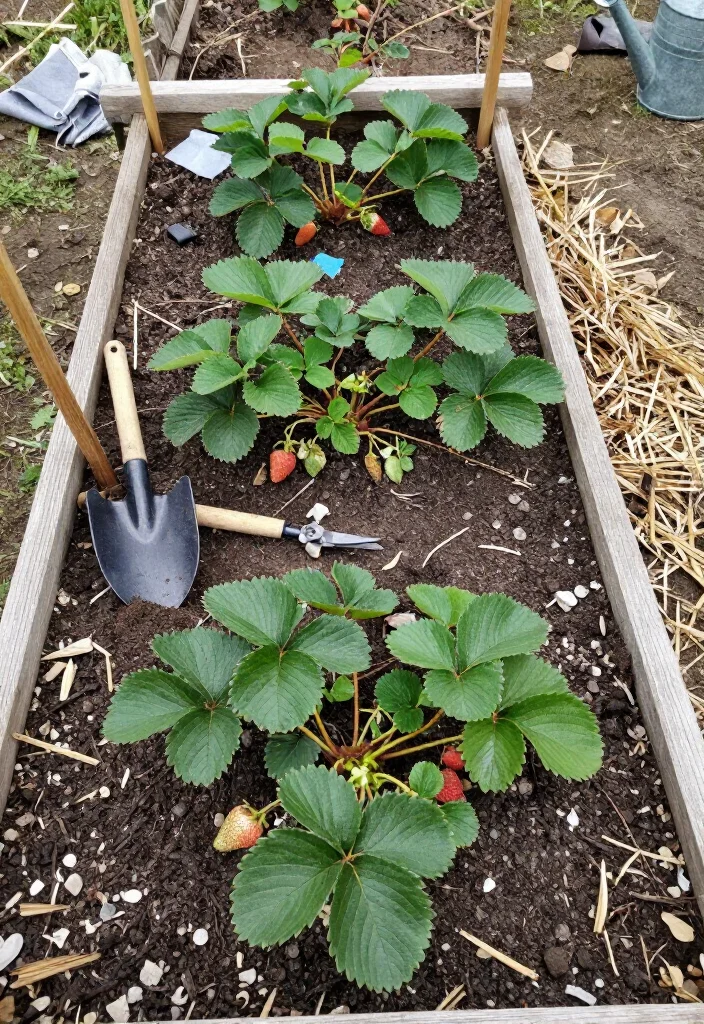
Your strawberry bed needs a gentle reset before winter settles in. Remove rotten berries, dead flower stems, weeds, and spotted leaves, but keep healthy green foliage attached. That living canopy stores energy in the crown for spring flowers and fruit.
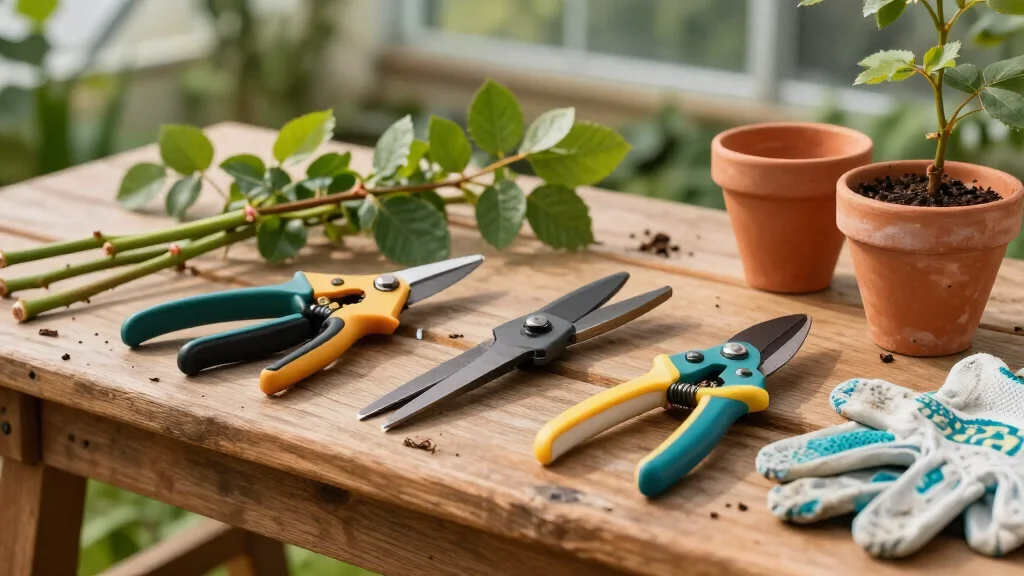
Snip damaged leaves with clean shears, leaving the firm center untouched. Tuck useful runners into the soil, while cutting loose runners that crowd paths or drain the mother plant.
Use these cleanup moves:
– Remove rotting fruit and moldy plant debris.
– Pull weeds before mulch hides their roots.
– Keep green leaves protecting the crown.
– Cut unwanted runners with sanitized shears.
A clean, airy bed reduces pests and disease while protecting next year’s harvest.
2. Water Deeply Before the Ground Freezes
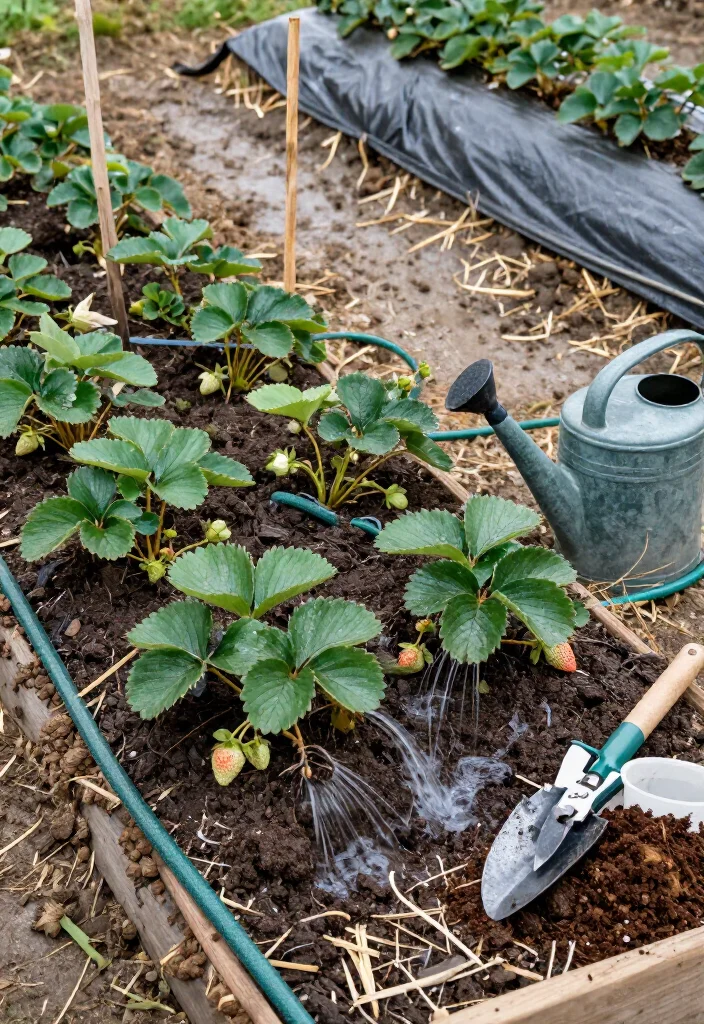
Dry roots enter winter weak, while soggy roots can rot. Aim for evenly moist soil before freezing, especially because strawberry roots stay near the surface. Water slowly when the top inch feels dry, then let the bed drain fully.
Use a soaker hose at the soil line in the morning. Sandy beds may need extra checks, while clay needs less water and better drainage; containers dry faster and need a complete soak.
Follow these watering habits:
– Give roots deep drinks, not daily sips.
– Check moisture beneath mulch or one inch down.
– Empty container saucers after watering.
– Stop routine watering once the soil freezes.
Steady moisture limits winter stress and helps crowns support vigorous spring growth.
Water Deeply Before the Ground Freezes
Editor’s Choice




3. Set Every Crown at the Right Depth
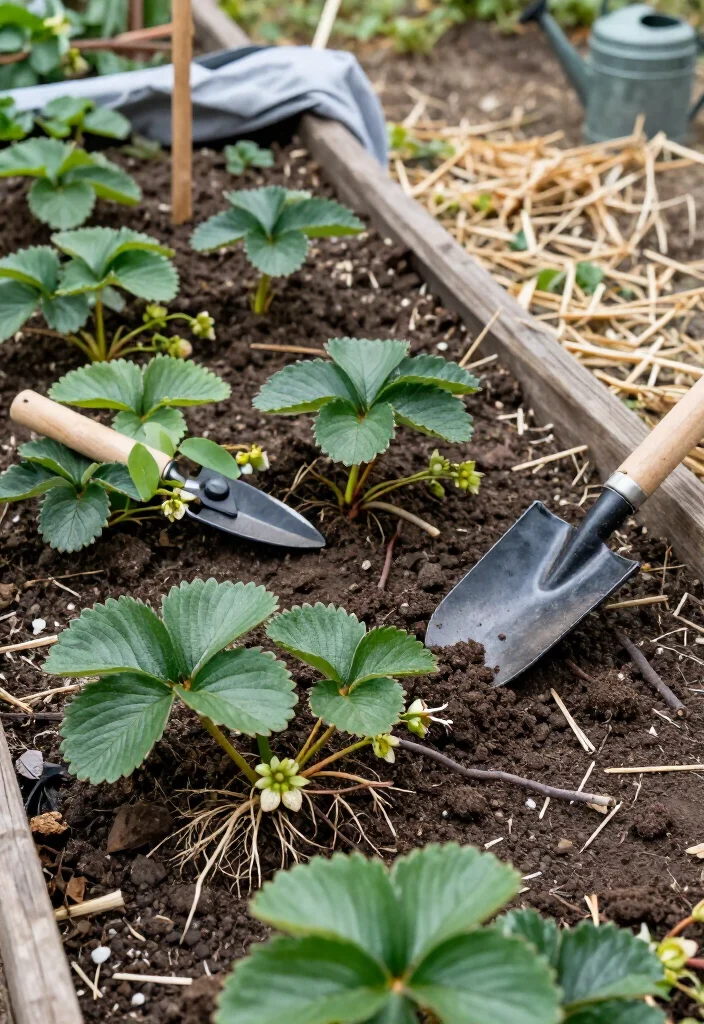
A strawberry crown is the thick center where roots and leaf stems meet. It must sit level with surrounding soil: too high invites frost heaving, while buried crowns can stay wet and rot. This small check protects next year’s flower buds.
After watering settles the bed, brush loose soil away or draw it around exposed roots. Handle rooted runners gently, and snip weak dangling runners instead of pulling them from the mother plant.
Check each plant for:
– Exposed roots above the soil.
– A crown sitting in a water-holding dip.
– Cracks caused by dry soil or frost.
– Mulch already touching the center.
Correct depth keeps plants stable, dry, and ready for dependable spring growth.
Set Every Crown at the Right Depth
Editor’s Choice


4. Add the Right Mulch at the Right Time
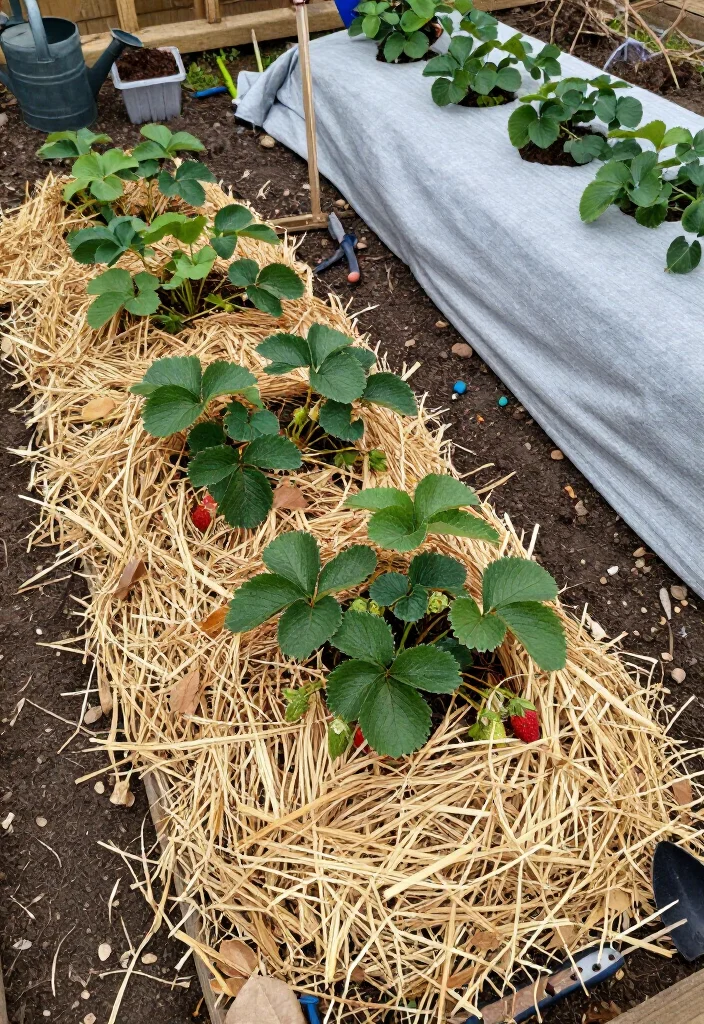
Mulch shields strawberry roots from freezing winds and repeated thawing, but the wrong material can trap moisture. Wait until plants are mostly dormant and the soil feels cold, usually after several light frosts. Clean straw works well because it stays loose and airy.
Spread three to six inches, using more in cold, windy areas and less in mild climates. Pine straw or loose dry leaves can work too; avoid whole wet leaves, hay, fresh clippings, and packed compost.
Choose these mulch habits:
– Cover soil with clean, dry straw.
– Keep the layer fluffy around each crown.
– Fill gaps along raised-bed edges.
– Check and replace windblown spots.
Proper mulch protects roots now and keeps developing berries cleaner later.
Add the Right Mulch at the Right Time
Editor’s Choice



You might also like

5. Anchor Frost Cloth Before the Coldest Night
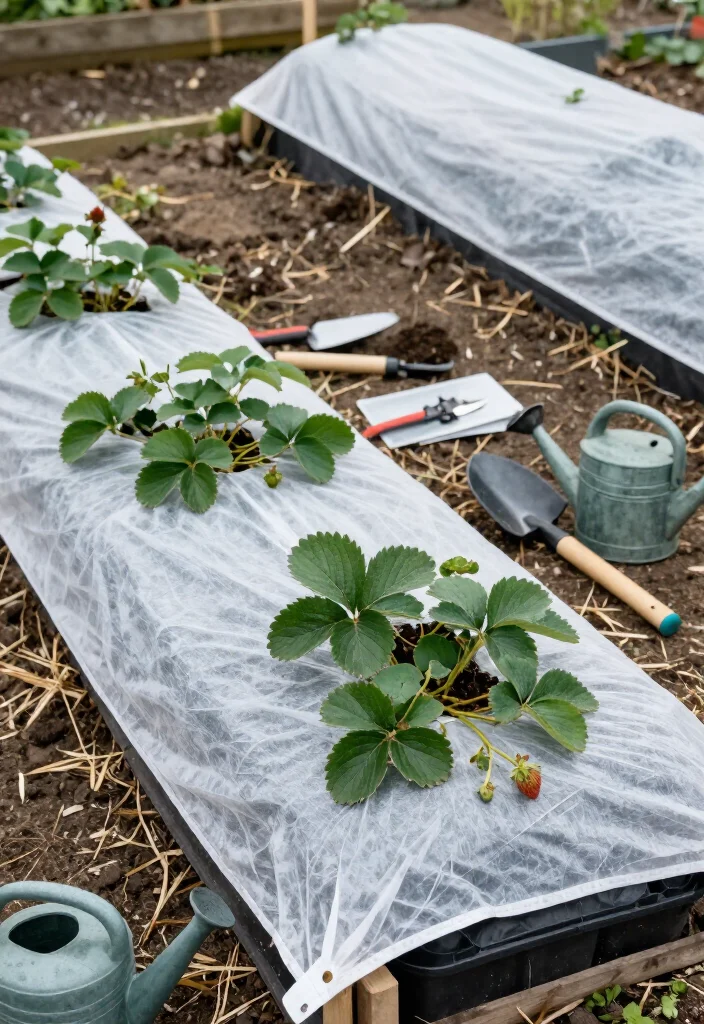
Straw protects roots, but frost cloth guards leaves and flower buds from drying wind and sudden freezes. This often-missed layer matters most for exposed beds, newly planted strawberries, and containers. Choose breathable garden fabric, never plastic pressed against foliage.
Place hoops or stakes over the bed, leaving an air gap above the leaves. Drape cloth loosely, then secure every edge with pins, stones, or soil so wind cannot lift it.
Anchor your cover this way:
– Use breathable frost cloth, not sealed plastic.
– Keep fabric above crowns and leaves.
– Fasten edges before the coldest night.
– Lift covers during warm, damp spells.
A secure cover works with straw to reduce winter injury and protect spring flower buds.
📹 Related Video: Using Frost Cloth and Hoops in the Garden
6. Protect Containers and Raised Beds From Deep Cold
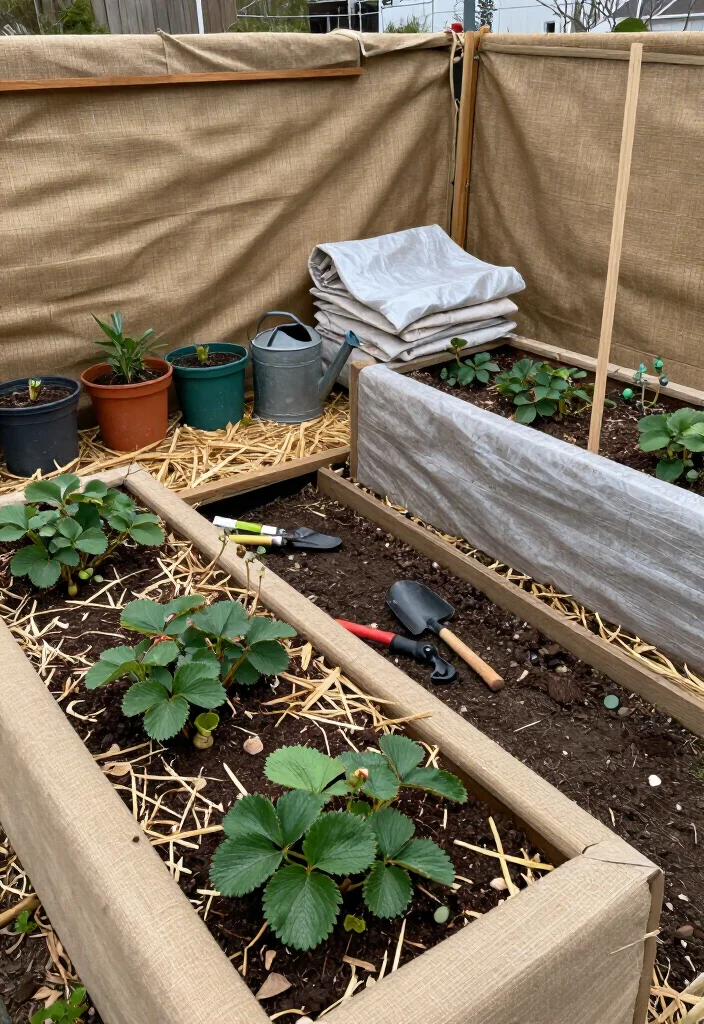
Container strawberries face cold from every side, unlike plants insulated by ground soil. Move pots beside a wall, fence, or unheated garage before the hardest freeze, keeping them cold enough for dormancy but sheltered from wind. Raised beds also lose heat quickly through exposed sides.
Group pots together, wrap containers with burlap or breathable insulation, and keep drainage holes clear. For raised beds, add straw over the surface and bags of dry leaves along outer walls without blocking water flow.
Protect vulnerable roots by:
– Checking drainage holes after every thaw.
– Wrapping pots without sealing the soil.
– Shielding metal or thin bed walls.
– Watering only when soil is open and dry.
These steps reduce root damage, leaving more healthy plants for spring harvest.
Protect Containers and Raised Beds From Deep Cold
Editor’s Choice


You Might Also Like

7. Check the Bed Through Winter and Reveal It Slowly
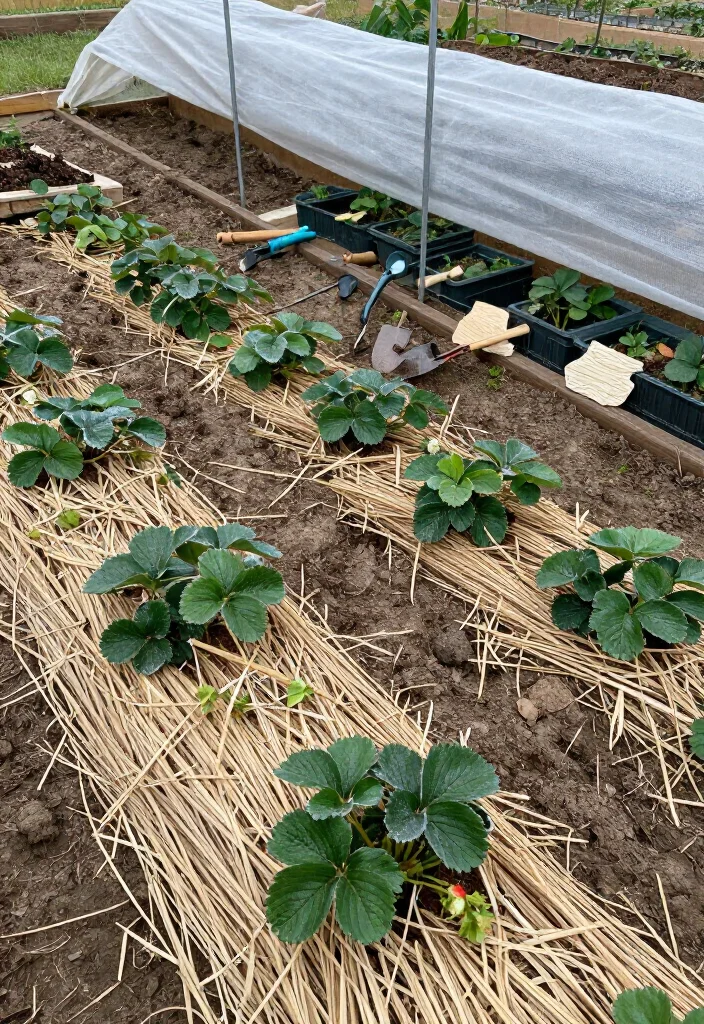
Winter care continues after mulch goes down. Every week or two, inspect for exposed roots, standing water, torn fabric, mold, and mouse tunnels beneath straw. A quick check prevents small problems from damaging crowns during long cold spells.
During thaws, lift one small mulch area and feel the soil. Replace only wet or spoiled material, then pull mulch back gradually when new leaves appear. Keep a light straw layer beneath plants and cover flowers again when late frost threatens.
Use these seasonal checks:
– Clear moldy mulch from crowns.
– Repair loose covers after storms.
– Watch for slugs, aphids, and dead centers.
– Add compost beside crowns in spring.
Slow uncovering protects buds and turns winter preparation into a fuller, cleaner harvest.
Check the Bed Through Winter and Reveal It Slowly
Editor’s Choice


Conclusion: Small Winter Jobs, Sweeter Spring Rewards
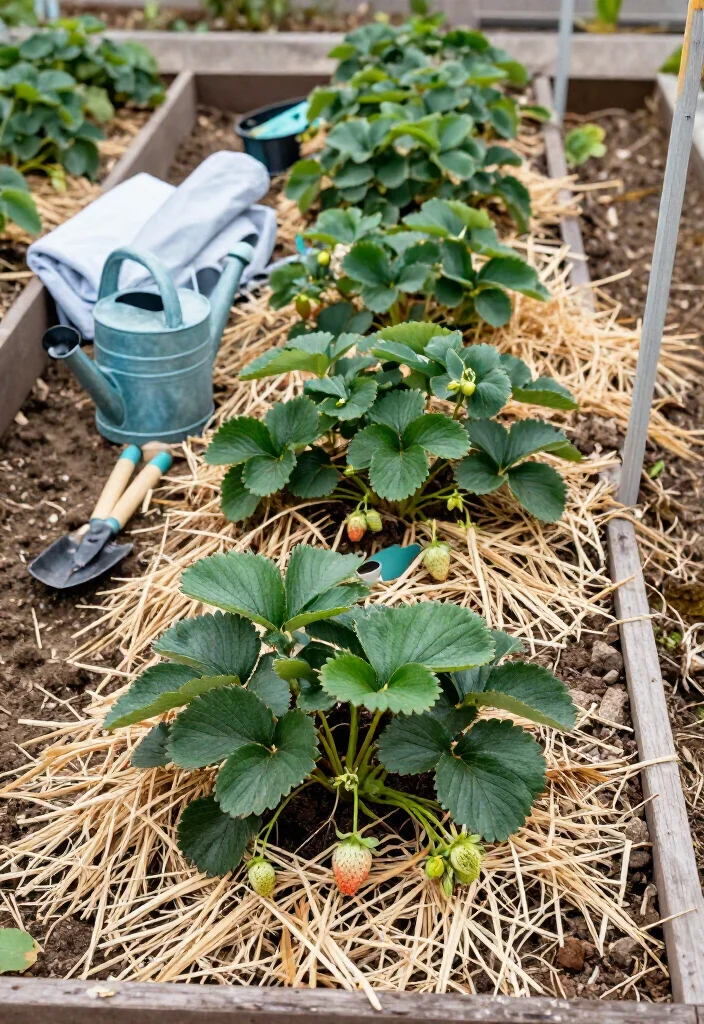
To winterize strawberry plants well, focus on the crown, roots, moisture, mulch, and cover. Clean gently, correct the planting depth, protect containers, and keep checking after storms; most importantly, do not skip the anchored frost cloth when a hard freeze is coming.
With these seven simple habits, your strawberry bed can enter spring healthier and better prepared to flower. Keep this checklist close, and share which step makes the biggest difference in your garden.
Note: We aim to provide accurate product links, but some may occasionally expire or become unavailable. If this happens, please search directly on Amazon for the product or a suitable alternative.
This post contains Amazon affiliate links, meaning we may earn a small commission if you purchase through our links, at no extra cost to you.
Frequently Asked Questions
Q. When should I winterize strawberry plants?
Winterize strawberries after they become dormant, usually following several hard frosts and when temperatures are consistently cold. In many colder U.S. regions, this happens in late fall. Timing varies by climate, so avoid covering actively growing plants too early.
Q. What is the best mulch for protecting strawberry plants in winter?
Clean, weed-free straw or pine needles are commonly used for winter protection. In cold climates, apply approximately 3–4 inches of loose mulch after dormancy, covering the plants without tightly packing the material around their crowns.
Q. Should I cut back strawberry plants before winter?
Avoid cutting healthy strawberry leaves down to the crowns in late fall. June-bearing strawberries may be renovated shortly after their summer harvest, but aggressive fall pruning can reduce winter protection. Remove diseased or dead material carefully.
Q. How do I winterize strawberry plants in pots or containers?
Move containers to a sheltered, unheated location where they remain cold but are protected from severe freezing and drying winds. Insulate pots with straw, leaves, or other suitable materials, and check soil moisture occasionally. Container-grown roots are more vulnerable to freezing than roots in garden beds.
Q. When should I remove winter mulch from strawberry plants?
Begin removing or pulling back winter mulch in early spring when new growth starts and the risk of prolonged severe freezing has decreased. Keep the mulch nearby so you can temporarily cover the plants again if a late frost threatens.
